


 Sundaymail Editor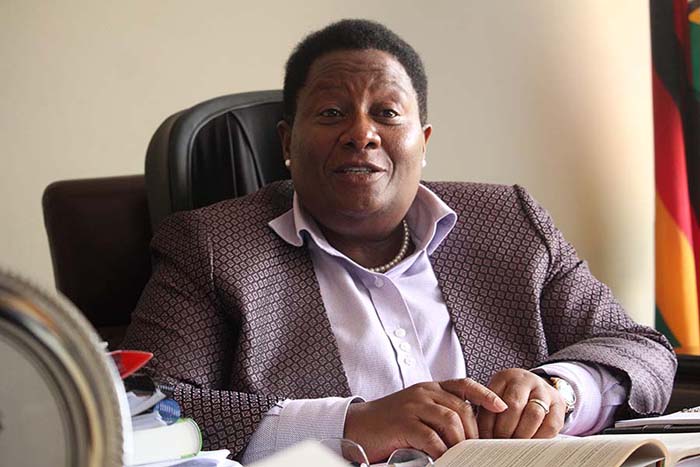
The Zimbabwe Anti-Corruption Commission (ZACC) was established as one of the key constitutional bodies charged with fighting corruption. Last year, it investigated more than 250 cases of corruption, with 134 being forwarded for prosecution. Our Correspondent, WALLACE RUZVIDZO (WR), spoke to ZACC chairperson Justice Loyce Matanda-Moyo (LMM) on a range of issues, including the commission’s performance in 2022.
***************
WR: Can you give an outline of ZACC’s performance in 2022?
LMM: I am pleased that the commission surpassed its targets for 2022, given the negative effects of the Covid-19 pandemic for the past two years.
The strategic thrust of the commission for the year 2022 placed more emphasis on ensuring implementation and rebranding of the ZACC image.
The commission’s strategic focus is to ensure an increase of its services by digitalising ZACC services, decentralisation, and recruitment and capacitation of critical staff.
Strategically, the commission established a selection committee to ensure the prioritisation of investigations of cases of high value, matters involving high-profile figures and matters that have an impact on society and the economy.
In addition, the commission ensured prioritisation of asset recovery involving high values, and prevention programmes by conducting anti-corruption awareness campaigns in rural areas.
WR: Can you outline some of the milestones the commission achieved last year?
LMM: From the 253 cases approved by the selection committee for investigations, the commission investigated a total of 157 and referred 134 dockets to the National Prosecuting Authority.
In addition, the commission referred 20 case files for both unexplained wealth orders and civil forfeiture to the National Prosecuting Authority (NPA).
The value involved is US$29 million.
The commission also seized several assets — including properties such as houses, trucks, trailers and vehicles with an estimated value of US$12 million.
We also conducted five extra-territorial investigations, with some resulting in freezing and seizure orders being granted against properties under investigations.
Since our anti-corruption drive is not only motivated by arrests, the commission also ensured 27 parastatals, public entities and local authorities established integrity committees within them.
These committees were set up to ensure strict adherence to good corporate governance, thereby prevent corruption, and also ensure all recommendations in the Auditor-General’s reports are implemented.
The commission conducted extensive and comprehensive compliance assessments; spot checks; and review assessments of systems and processes in local authorities and (Government) ministries.
In addition, the commission conducted 28 rural district campaigns in Masvingo, Midlands, Matabeleland North and Mashonaland Central provinces.
It conducted 12 urban campaigns, as well as nine radio and four television presentations.
The commission decentralised to Manicaland, Masvingo and Mashonaland West provinces, making our services available in six provinces.
In terms of capacity building, several trainings on cyber security investigations and financial investigations were conducted for ZACC officers; they were facilitated by development partners such as SADC (Southern African Development Community).
On the regional and international fronts, the commission made significant strides in strengthening collaboration in the anti-corruption fight.
The inaugural engagement was through the Ministry of Foreign Affairs and International Trade with the diplomatic community during the commemoration of the African Anti-Corruption Day on July 11.
This engagement was part of efforts for Zimbabwe to learn best practices in the anti-corruption fight and create relations and partnerships in international cooperation.
ZACC was the first institution to receive training from SADC under the first responder training for cyber security.
I was nominated as a member of the board of the African Association of Anti-Corruption Authorities.
Finally, the commission received a certificate for public relations and communication excellence in recognition of its media relations campaign.
This was a team effort, and I would like to congratulate ZACC commissioners and staff for their hard work and commitment.
WR: How many cases that you handled resulted in convictions?
LMM: A total of 32 cases were prosecuted and completed in 2022. From these cases, 23 led to convictions.
This, therefore, translates into a conviction rate of 72 percent.
It is also important to reiterate that ZACC investigates while the other Chapter 13 institution — NPA — prosecutes.
WR: What were some of the high-profile cases that you handled?
LMM: We handled cases involving senior officials from Cottco (Cotton Company of Zimbabwe); NSSA (National Social Security Authority); TIMB (Tobacco Industry and Marketing Board); ministries; and local authorities such as Victoria Falls, Rusape, Mutare, Chegutu, Norton, Kariba, Umzingwani, Seke/Manyame and Harare.
Apart from these cases, there are several others that are still under investigation and arrests will be made once investigations have been completed. It is, however, unfortunate that the local press has not been reporting on the majority of these cases but tends to focus on minor ones.
WR: What is your reaction to those who accuse ZACC of doing little to combat graft?
LMM: Zimbabwe has the National Anti-Corruption Strategy 2020-2024, which provides a multi-stakeholder approach in dealing with corruption.
All institutions — Government, Parliament, the Judiciary, civil society and the public – have roles to play in fighting corruption.
It is not only ZACC’s fight but a stakeholders’ effort.
All sectors should be involved for this scourge to be dealt with effectively.
As ZACC, we are leading in this fight and require maximum support from all sectors.
Some of the criticism is based on limited understanding of ZACC’s functions and not being acquainted with the fact that corruption cannot only be fought from a criminal perspective.
The fight needs all hands on deck. That includes individuals, civic society, churches, institutions and politicians. There is also need to see the importance of public education, compliance and knowledge to buttress the efforts to fight corruption.


 Bongani Ndlovu
 Online Reporter