Online Reporter
Theseus Shambare, Harare Bureau
THE newly-launched anti-sanctions book is being hailed as a landmark publication that reaffirms Africa’s freedom, dignity and sovereignty while promoting home-grown solutions to accelerate economic growth and safeguard the continent’s rich cultural and natural heritage.
The ground-breaking volume — Standing Against Illegal Sanctions: Resistance, Policy Innovations and Advocacy — was launched yesterday during the 2025 Sadc Anti-Sanctions Day commemorations at Heritage Village in Harare.
Spanning 262 pages, the book captures Zimbabwe’s intellectual and political response to Western-imposed sanctions, bringing together insights from 20 contributors, including political commentators, academics and university researchers.
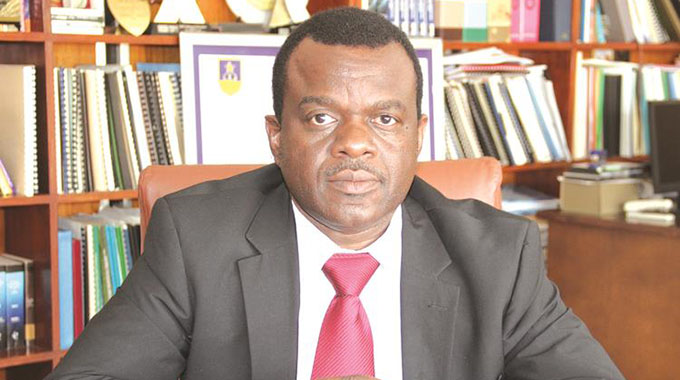
The publication was edited by University of Zimbabwe Vice-Chancellor Professor Paul Mapfumo, Mr Richard Mahomva, director of International Communication Services in the Ministry of Information, Publicity and Broadcasting Services and Dr
Tawanda Zinyama, an academic at the University of Zimbabwe.
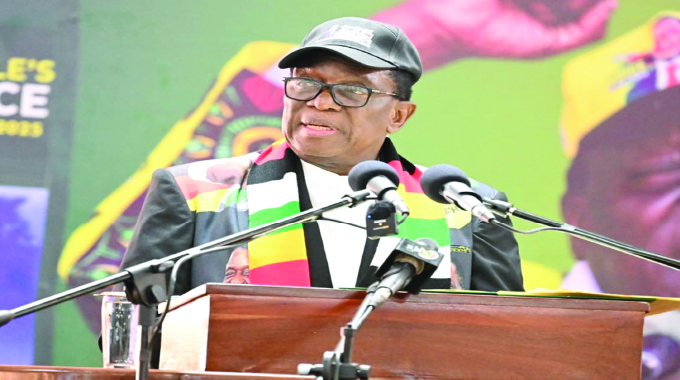
In his remarks during the launch, Prof Mapfumo described the book as both a historical record and a strategic framework for understanding sanctions.
“The first chapter traces the history of sanctions and their impact on ordinary Zimbabweans,” he said.
“It also exposes the crisis within neo-colonialism, showing how human rights rhetoric is often misused to prevent African Governments from reclaiming their land and resources.”
He added that the book explores how pseudo civil society organisations and Western-backed opposition groups have sought to undermine Zimbabwe’s wealth-decolonisation efforts.
“Chapters Three and Four provide scholarly evidence of the egregiousness of sanctions, including analyses of United Nations Special Rapporteur reports on their devastating impact,” said Prof Mapfumo.
Speaking on the sidelines of the commemorations, Mr Mahomva said the publication reflects the intellectual evolution of Zimbabwe’s anti-sanctions movement.
“I belong to the pioneering group that formed the first Zanu-PF research unit when the Second Republic was established under President Mnangagwa,” he said.
“We organised the inaugural anti-sanctions conferences, which later evolved into the Sadc Anti-Sanctions Solidarity Summit.”
He said the book represents the culmination of five years of rigorous political research and analysis.
“This publication articulates that under President Mnangagwa, there has been policy regeneration and renewal of statecraft.
“These developments challenge the very premise of sanctions and demonstrate the practical role of political science in governance,” said Mr Mahomva.
Dr Zinyama highlighted the book’s role in connecting academia and policy-making, showing how research can guide governance and national transformation.
“Our work demonstrates how research and innovation can help shape policies that strengthen resilience while advancing African-led solutions,” he said.
Prof Mapfumo also urged Zimbabweans and Africans alike to maintain unity and resolve in opposing sanctions.
“For anyone who stands aside passively or acts in complicity with those imposing sanctions on our country, it is not only an abomination but a violation of civil rights,” he declared.
As the event drew to a close, Heritage Village came alive with vibrant performances, song, and dance. Thousands of Zimbabweans —draped in national flags and Sadc regalia — sang along to anti-sanctions anthems performed by traditional groups and school choirs.

The atmosphere reached a crescendo when President Mnangagwa and First Lady Dr Auxillia Mnangagwa joined the celebrations, waving to jubilant crowds chanting, “Sanctions Must Fall!”
In his keynote address, President Mnangagwa said the Second Republic remained committed to telling Zimbabwe’s story through its own lens.
“Under the Second Republic, we are committed to telling our story from a Zimbabwean and African perspective — anchored on our rich liberation history, heritage and post-independence experiences,” he said.
“In this spirit, it is most opportune that today we unveil a new book entitled Standing Against Illegal Sanctions: Resistance, Policy Innovations and Advocacy.
“This well-thought-out and thoroughly researched literary work offers insightful perspectives from diverse scholars and sectors on the road we have walked since the imposition of the illegal economic sanctions.”
The launch, attended by thousands from across the country, reinforced Zimbabwe’s enduring call for unity, resilience and African self-determination in the face of external pressures.