Vusumuzi Dube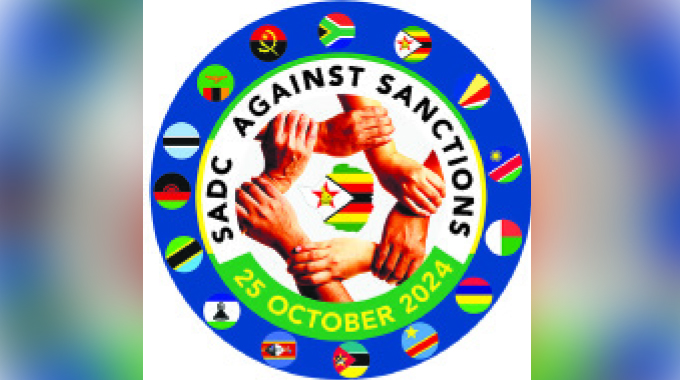
Gibson Mhaka, Zimpapers Politics Hub
THE late former UN Secretary-General, Kofi Annan, aptly highlighted the detrimental consequences of sanctions, particularly on developing countries.
It was clear from the late vocal advocate for human rights observation that sanctions have never been the best way to settle any contentious issues among nations.
A study by the United Nations Development Programme (UNDP) found that sanctions have a significant negative impact on poverty, hunger, and child mortality rates in developing countries. The World Bank has also warned of their potential to hinder economic growth and development, particularly in fragile states.
Humanitarian organisations have raised concerns about the impact of sanctions on the delivery of essential services, such as health care and education.

Since 2000, Zimbabwe has been under the siege of illegal and unjustified sanctions. These unilateral and punitive measures pose a myriad of challenges that hinder the country’s development.
The illegal sanctions imposed on Zimbabwe by the United States and its Western allies are detrimental to business growth as they frustrate fresh potential investments, constraining economic growth.
However, in the face of continued illegal sanctions, Zimbabwe remains resolute and unwavering in its commitment to achieving Vision 2030, an aspiration for an upper-middle-income economy.
The echoes of determination resound in the call for reliance on home-grown solutions, undeterred by external pressures.
As preparations for Anti-Sanctions Day gather pace, there is a strong need to highlight the detrimental impact of sanctions on the country’s progress towards achieving Vision 2030 and implementing the National Development Strategy (NDS1).
The Anti-Sanctions Day, held on October 25 every year, was adopted by the 39th Southern African Development Community (SADC) Summit held in Dar es Salaam, Tanzania, in August 2019.
The summit designated October 25 as a day of solidarity with Zimbabwe against the illegal sanctions imposed by the US. The day serves as a platform for Zimbabweans to express their opposition to these sanctions and to call for their removal.
This year’s Anti-Sanctions Day will coincide with the Zanu-PF 21st Annual People’s Conference, which will be held from 22 to 27 October 2024, in Bulawayo.

The event will be held under the theme, “Embracing Innovation Towards Vision 2030: The relentless fight against illegal sanctions”.
The theme is consistent with the 44th SADC Summit theme. The theme also acknowledges the efforts by the Second Republic to strengthen the economy through science, technology and innovation, which will go a long way in addressing the negative impacts of illegal sanctions in the key sectors of the economy.
President Mnangagwa is expected to deliver a National Address. He will also deliver a statement on Anti-Sanctions Day in his capacity as the Chairperson of SADC.
The connection between Anti-Sanctions Day and the Zanu-PF 21st Annual People’s Conference lies in their shared goal of highlighting the negative impact of Western sanctions on Zimbabwe.
By raising awareness of the detrimental effects of these sanctions, Zimbabweans can build a stronger case for their removal and pave the way for a more prosperous future.
Furthermore, by uniting in their opposition to the sanctions, Zimbabweans can demonstrate a united front against external pressures and strengthen their national resilience.
This solidarity can also inspire international support for Zimbabwe’s cause and encourage other countries to advocate for the lifting of the sanctions.
These sanctions are meant to stifle development, paralyse government sectors, and pauperise Zimbabweans through the loss of international markets for manufactured products. Additionally, they preclude the Government from using its own resources to develop and maintain essential infrastructure.
The Second Republic, under the astute leadership of President Mnangagwa, has set the country’s economy on a recovery path through an ambitious Vision 2030, aligning with the global sustainable development plan.
Vision 2030’s agenda aims to achieve a “Prosperous and Empowered Upper Middle-Income Society by 2030” through a sequential and systematic methodology that leaves no one behind, including in terms of housing delivery in cities and other human settlements.

President Mnangagwa has been rallying Zimbabweans to prioritise national interests and contribute to the attainment of Vision 2030 by promoting development.
It is imperative that all Zimbabweans, regardless of political affiliation, condemn the illegal sanctions imposed on the country, as we are all victims of their detrimental effects.
There is no doubt that condemning the sanctions can foster unity and solidarity among Zimbabweans, demonstrating a shared commitment to the country’s development and sovereignty.
President Mnangagwa has been actively advocating for the revocation of sanctions on Zimbabwe at various international platforms. He passionately argues that these sanctions hinder Zimbabwe’s prosperity and violate its sovereignty.
The President urges the international community to reconsider its stance, allowing Zimbabwe to pursue a path towards sustainable development and prosperity.
During his address at the World Governments Summit in February this year in Dubai, United Arab Emirates, President Mnangagwa said Zimbabwe’s story is one of resilience, innovation, people-centred policies, and the undying resolve to defeat illegal Western sanctions that have continued to pound the country for over 23 years.
“Since the advent of the Second Republic, in 2018, the Government of Zimbabwe has implemented multi-pronged strategies for sustainable development, economic growth and a higher quality of life that leaves no one and no place behind.
“Due to the illegal sanctions imposed on our country, Zimbabwe has no lines of credit from International Financial Institutions. Instead of burying our heads in the sand, we resolved to be innovative and leverage our own domestic resources to drive a sustainable, realistic and achievable people-centred development agenda.
“Our National Vision and National Development Strategy outlines the national strategic objective being the realisation of an upper middle-income economy by 2030,” said President Mnangagwa.
“Stability is being pursued through complementary channels namely, fiscal prudence; tight monetary policy; currency reforms; and long-term investment.
“To this end, the Government has maintained budget deficits of no more than 1,5 percent of GDP per annum. Our Central Bank continues to maintain positive real interest rates thereby discouraging excessive borrowing, consumption and speculative behaviour.
“The post-2018 period has seen my Government adopt innovative financial ingenuity to back the domestic currency with a stable and globally priced asset such as gold.”
South African President Cyril Ramaphosa has also consistently called for the lifting of sanctions.
He has noted that these sanctions are inhibiting Zimbabwe’s ability to achieve progress.
In a recent statement, he asserted, “The sanctions against Zimbabwe are unjust. It is time they were lifted.”
Commenting on how sanctions have hindered Zimbabwe’s progress towards achieving Vision 2030, entrepreneur and climate change advocate Mr Anglistone Sibanda said since the imposition of sanctions in 2001 by the United States and its allies, Zimbabwe has been unable to access lines of credit to support its economic development initiatives.
He said almost all the objectives of NDS1 and its predecessors were stifled by capital flight due to the executive orders that made it impossible for Zimbabwe to access funding.

It also drove away foreign direct investment, listed Zimbabwe as a high-risk country for investment, scaring away investors.
“The embargoes, disguised as targeted or so-called soft sanctions, were aimed at damaging the economy, weakening Zimbabwe’s economic growth, and causing colossal and untold suffering among the citizens.
“It is also important to note that while Zimbabwe was put under sanctions, millions of dollars were channelled by the same countries into Zimbabwe through various agencies like USAID, Department for International Development (DFID), the National Endowment for Democracy, George Soros’ Open Society Initiative, and others, to civic society to ‘strengthen democracy,’ increase civic participation, and support electoral processes.
“Numerous activists were trained through various programs funded by the US agencies, all aimed at instigating regime change. Sanctions became the tool for stifling the economy through the Office of Foreign Assets Control (OFAC) executive orders, which penalised any financial institution that moved money into Zimbabwe.
“A good example is Standard Bank, which was fined over US$4 million for ‘breaching OFAC executive orders’ and dealing with ‘sanctioned entities,” said Mr Sibanda.
He said the Zimbabwe Democracy and Economic Recovery Act (ZDERA) 2001 was enacted as a reaction to two historic actions carried out by Zimbabwe.
“The successful DRC campaign that thwarted the US-backed invasion of the DRC by Rwandan and Ugandan rebels, and the landmark land reform. ZDERA listed numerous state-owned enterprises that provided a lifeline to the economy, suffocating Zimbabwe’s economic growth, destroying productivity, and creating a consumer economy that increased the market for neighbouring South Africa,” he said.

Mr Sibanda said the sustained diplomatic offensive, coupled with advocacy initiatives by citizens in Zimbabwe and, more importantly, those residing in those countries, increased civic action as well as leveraged the available alternative institutions for international co-operation, such as BRICS (Brazil, Russia, India, China, and South Africa), will not only mitigate the impact of sanctions but also open new frontiers for international co-operation that can unlock access for investment and stimulate economic growth towards the attainment of Vision 2030.
Political analyst and media academic Mr Methuseli Moyo said sanctions tend to present the country as a risky investment destination, discouraging billions of potential investments.
He said this hinders Zimbabwe’s progress towards achieving Vision 2030 and its economic development goals.
“Lack of investment leads to stunted economic growth. New investors tend to bring new, cheaper, and more efficient production systems, which helps to transfer skills and technology.
“A country under sanctions is denied all of this. Sanctions also affect people directly by preventing job creation. These factors hinder Zimbabwe’s progress towards achieving Vision 2030 and its economic development goals,” he said.
“SADC, the AU, and the rest of the developing world have voiced their concerns about the sanctions and called for their total removal.
“However, the implementers of the sanctions have not done so. Since the imposition of sanctions was a unilateral action in the first place, we cannot expect the implementers to listen to anyone.
“As preparations for Anti-Sanctions Day intensify, there is a compelling need to emphasise the devastating effects of sanctions on the country’s progress towards achieving Vision 2030,” added Mr Moyo.
From Mr Moyo’s observation, it is imperative that the illegal sanctions are condemned by all Zimbabweans regardless of political affiliation as we are all victims.


 Online Reporter