Online Reporter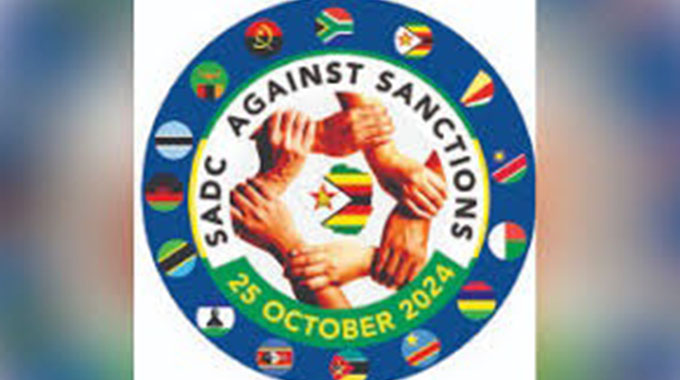
Gibson Mhaka
Zimpapers Politics Hub
AS Zimbabwe and the Sadc member states gear up to observe the Anti-Sanctions Day on Saturday, October 25, there is a resounding call for the nation’s youth to also rise above political divisions and forge a unified front in demanding the unconditional removal of illegal economic sanctions.
This illegal and unilateral embargo continues to hamper the country’s development and directly affects the future prospects of the young generation.
Since 1980, Zimbabwe has consistently regarded its youth — a large portion of the total population as the vanguard of the country and the future.
Their eagerness, zeal and enthusiasm to participate in the nation’s social, economic, and political affairs are a source of great pride for the Government.
The advent of the Second Republic, under the leadership of President Mnangagwa, has elevated youth empowerment as a cornerstone of the national strategy, positioning them as key drivers for the attainment of Vision 2030 goals.
ZANU PF City Centre District Youth Chairman in Bulawayo, Cde Joseph Majoni, unequivocally stressed that collective youth unity is the most potent weapon in this struggle.
“The removal of sanctions is a pressing issue that affects our generation in many ways. These sanctions are unfair and harm our economy, limiting our opportunities and making life more challenging,” Cde Majoni said.
“I believe that collective action and unity by the youth is key to pushing for their removal. We need to stand together as one people, transcending party lines, to demand that the international community lifts these restrictive measures.”
It is clear from Cde Majoni’s call that the youth possess the vigour, visionary spirit, and entrepreneurship necessary to drive economic growth and shape the future of Zimbabwe.
To embrace the challenges posed by sanctions, young people must also cultivate a culture of hard work, critical thinking, and innovation.
They should draw inspiration from the country’s freedom fighters who, as young individuals, overcame immense hardships during the war of liberation. Sanctions, although burdensome, must be seen as an opportunity for innovative solutions and to foster homegrown self-sufficiency, embodying the President Mnangagwa’s clarion call, “Nyika inovakwa nevene vayo/ilizwe lakhiwa ngabanikazi balo — a nation is built by its own people.”
Despite the chilling effect of illegal economic sanctions, the Government should be commended for its continued efforts to empower a new generation of entrepreneurs and farmers.
This high-level commitment is backed by direct policy from President Mnangagwa, who has directed all Government ministries and agencies to fully support youth entrepreneurship initiatives, enabling young people to transition into mainstream business.
The Government has also mobilised significant financial resources toward youth empowerment, rolling out various ventures through mechanisms like the Presidential Youth Empowerment Scheme.
The Government’s commitment to youth empowerment is further demonstrated through tangible support across key economic sectors where many young people are actively involved in money-making ventures, spanning agriculture, mining, and tourism.
To boost the success of young entrepreneurs, the Government has also actively prioritised high-value projects in livestock and horticultural production.
This focused approach ensures the youth are supported in key growth areas.
However, Cde Majoni detailed how the sanctions torpedo these efforts by severely restricting the nation’s access to international lines of credit, foreign direct investment, and global capital markets.
“The unilateral sanctions imposed on Zimbabwe have a far-reaching and detrimental impact on the daily lives of citizens, particularly the youth,” he stated.
“These restrictions create severe economic constraints by limiting the country’s access to foreign direct investment, essential technology, and global markets, thereby stifling overall economic growth and development.”
“Critically, for the majority of the population, the sanctions dramatically curtail youth opportunities, making it exceedingly difficult for young people to secure gainful employment or successfully launch their own businesses,” Cde Majoni said.
The financial fallout from sanctions extends deeply into crucial services and youth-led initiatives, creating significant barriers to development.
Entrepreneurship is severely restricted, as sanctions effectively throttle the scale-up capacity of youth-led businesses, preventing them from accessing the necessary foreign currency, specialised equipment, and large-scale funding required to transition from small ventures to mainstream economic contributors.
In the agriculture sector, the Government’s commendable efforts to provide assets like tractors are undermined.
Sanctions complicate the procurement of essential spare parts, maintenance services, and specialised inputs, which in turn inflates operational costs and critically reduces the longevity and efficiency of the equipment given to young farmers.
Furthermore, the financial institutions dedicated to youth development, such as Empower Bank, struggle to secure robust re-financing options internationally.
This constraint makes it exponentially harder for them to expand and sustain vital soft loan schemes needed to meet the high demand from the rapidly growing youth population.
Since the illegal sanctions were imposed in 2001, primarily as punishment for the land reform programme, Zimbabwe is estimated to have lost a staggering US$42 billion and an estimated US$4.5 billion in annual donor support.
It is clear that the youth, despite their political affiliations, must join the Government and SADC member states to amplify the unequivocal calls for the unconditional removal of these measures.
The sanctions are illegal, unjustified, and counter-productive, hindering the people of Zimbabwe from enjoying their fundamental human rights to sovereignty, independence, unfettered development and prosperity.
The youth must remain vigilant in defending the country’s sovereignty and resolute in resisting the use of these sanctions and other manoeuvres as tools of regime change.
The unconditional removal of these unjustified economic measures is not merely a political talking point but an essential prerequisite for unlocking the full potential of Zimbabwe’s dynamic young population and ensuring that the Vision 2030 agenda can be fully realised.
These illegal and unjustified, measures directly sabotage the very foundation of the Government’s youth-centred agenda.
The high-level commitment to transforming youth into mainstream economic drivers and achieving Vision 2030 is currently running into an immovable barrier.
These restrictions directly limit the scale-up capacity of youth-led businesses and obstruct financial institutions dedicated to their development, effectively throttling the potential for generational prosperity.
Because these programmes are the essential blueprints for the youth’s economic future, the very means of realising self-sufficiency and innovation, it is the young generation itself, as the most acutely impacted stakeholders, who must now rise to the forefront of the advocacy efforts.
As the designated vanguard of the nation, the youth possess the vigour, creativity and collective energy required to champion this cause.
Their participation in the fight for the unconditional removal of sanctions is not merely a political necessity but a moral imperative to secure their own economic destiny.
By uniting collectively, transcending political affiliations, and amplifying the call across all platforms, Zimbabwe’s future generation can lead the charge to dismantle this unjust embargo.
This decisive action will finally allow the full potential of national development to be realised, ensuring that the Second Republic’s commitment to Vision 2030 is fully achievable for those who stand to benefit from it most.



 Bongani Ndlovu