Online Reporter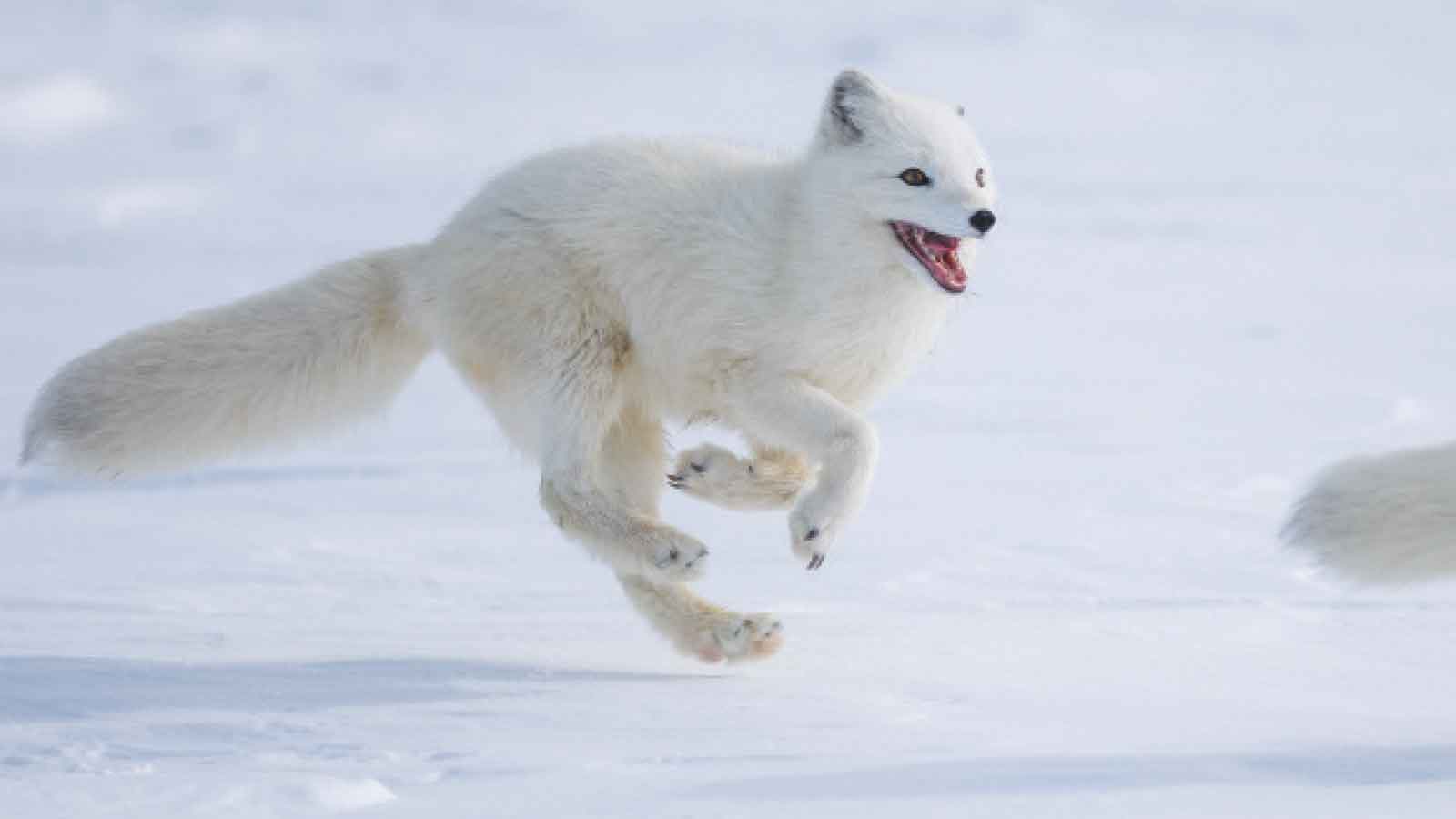
Arthur Marara-Point Blank
In the stark, wind-scoured expanse of the Arctic tundra, where the very ground freezes solid and winter darkness lasts for months, survival seems an implausible feat.
Yet, here thrives one of nature’s most agile and resilient specialists: the Arctic fox. This small predator does not dominate its ecosystem with sheer size or strength. Instead, it embodies a more powerful strategy: perpetual, anticipatory adaptation.
Its world is not one of stable seasons, but of radical, predictable extremes. In response, the fox has become a master of reinvention, teaching a profound lesson to businesses navigating their own volatile climates.
The fox’s survival is built on a trinity of instincts: scheduled metamorphosis, opportunistic scavenging, and distributed caching. Together, they form a blueprint for thriving in conditions of permanent uncertainty.
I. Seasonal Morphing: The Scheduled, Strategic Pivot
The Arctic fox’s most iconic adaptation is its coat: a brilliant white in winter, a dusky brown or grey in summer. This is not a passive change, but a proactive, total-system redesign driven by deep biological programming. It is a complete reinvention of its interface with the world — for camouflage, certainly, but also for thermal efficiency.
The winter coat is denser, with hollow hairs for superior insulation; the summer coat is lighter and better suited to the muddy tundra.
The Business Parallel: Engineered Pivots Over Panicked Reactions. Most companies change only when forced — by a collapsing market, a disruptive competitor, or a failing bottom line. The Arctic fox argues for a different model: the scheduled, strategic pivot. What if your organization had a built-in rhythm of reinvention? A deliberate, pre-emptive “molting” of legacy systems, product lines, or business models before they become liabilities?
Leadership Insight: Leaders can institutionalize this by mandating regular “seasonal reviews.” This is not a financial audit, but a strategic molt. It asks: “What is our current ‘coat’? Is it still the most efficient interface with our market ‘climate’? What must we shed to stay agile, and what new capabilities must we grow?” This transforms reinvention from a traumatic, reactive event into a disciplined, forward-looking rhythm. It is the difference between scrambling for a winter parka in a blizzard and having it ready, by design, when the first snow falls.
II. The Opportunistic Scavenger: Finding Value in the Barrens
The Arctic fox is not a proud, solitary hunter. It is a pragmatic and brilliant opportunist. It survives the brutal winter not by out-muscling larger prey, but by leveraging the entire ecosystem.
It is a notorious scavenger, famously following the true apex predator, the polar bear, to feed on the remnants of its kills. It listens for the cries of ravens, nature’s clean-up crew, to locate carcasses. It turns the success and waste of others into its own sustenance.
The Business Parallel: Ecosystem Scavenging in Lean Times. In economic winters, the instinct is often to hunker down and look inward. The fox teaches the power of looking outward with opportunistic intent. Where are the “polar bears” in your industry — the giants making bold moves or leaving behind “carcasses” in the form of abandoned markets, laid-off talent, or de-prioritised customer segments? Where are the “ravens” — the niche players, analysts, or data streams signalling where value is shifting?
Leadership Insight: This requires a shift from a purely competitive mindset to an ecosystem-aware, opportunistic one. It’s about strategic partnerships, acqui-hires of talent from stalled start-ups, or adopting open-source technologies abandoned by larger players. It’s about building the capability to quickly and cheaply test value in areas others have deemed barren. The leader’s role is to cultivate this external sensing apparatus and reward teams who bring in valuable “scraps” that can be turned into sustenance.
III. The Cache Mindset: Distributed Resilience Against Scarcity
Perhaps the fox’s most ingenious survival tactic is its spatial memory and caching behaviour. During times of abundance (like the summer lemming boom), it doesn’t just eat — it meticulously hunts and hides surplus food across a vast, complex territory.
It creates hundreds of small, scattered larders, remembering their locations for months. This strategy ensures that no single catastrophe—a stolen cache, a deep freeze—can lead to starvation.
The Business Parallel: Beyond the Centralized War Chest. Companies understand the need for a cash reserve—a central “fat tail” like the crocodile’s. The Arctic fox adds a critical dimension: distributed, anti-fragile redundancy. This means not putting all your nourishment in one hole. It’s about diversifying your talent pipeline across geographies and teams so the departure of one group isn’t crippling. It’s about backing up data in multiple, independent systems. It’s about developing multiple supply chain routes or revenue streams.
Leadership Insight: True resilience is not about having one big bunker; it’s about having countless hidden stashes. Leaders must engineer redundancy and distribution into the organization’s very architecture.
This means cross-training talent (creating skill caches), decentralizing decision-making (distributing authority caches), and investing in a portfolio of small, experimental projects (innovation caches). When a crisis hits, a cache-based organisation doesn’t have one point of failure — it has dozens of hidden points of recovery, allowing it to regroup and persist where a centrally dependent competitor would collapse.
Conclusion: The Specialist in Flux
The Arctic fox’s power lies in its rejection of a single, fixed identity. It is a creature of planned metamorphosis, pragmatic opportunism, and distributed resilience. It does not merely endure its harsh world; it uses the very extremity of that world as a strategic advantage, constantly reinventing itself to fit the moment.
For the modern leader, the fox is a spirit animal for the age of disruption. It teaches that agility is not about speed alone, but about scheduled transformation.
It shows that resourcefulness is not about having more, but about seeing value where others see waste. And it proves that resilience is not about building a bigger wall, but about scattering your seeds so widely that no storm can destroy them all.
In a business landscape defined by permanent whitewater, you cannot afford to be a static creature. You must become the Arctic fox: always watching for the shift in the wind, ready to change your coat, skilled at feeding on opportunity, and wise enough to never keep all your hope in one den. This is the path to becoming not just a survivor of volatility, but its master.
To be continued…
Arthur Marara is a corporate law attorney, keynote speaker, peak performance and corporate strategy speaker. With his delightful humour, raw energy, and wealth of life experiences, he captivates audiences and inspires them to unlock their full potential. He is also a leadership expert with extensive experience in leadership development and coaching. He is passionate about developing effective leaders and empowering individuals and organizations to achieve their full potential. Through his engaging talks and workshops, he imparts invaluable insights and practical strategies that empower individuals to lead with confidence and make a lasting impact.
Marara is the author of “Toys for Adults” a thought-provoking book on entrepreneurship, and “No One is Coming” a book that seeks to equip leaders to take charge. Send your feedback to bookings@arthurmararaattorneys.
com visit his website www.arthurmarara.com or contact him at +263772467255.