Online Reporter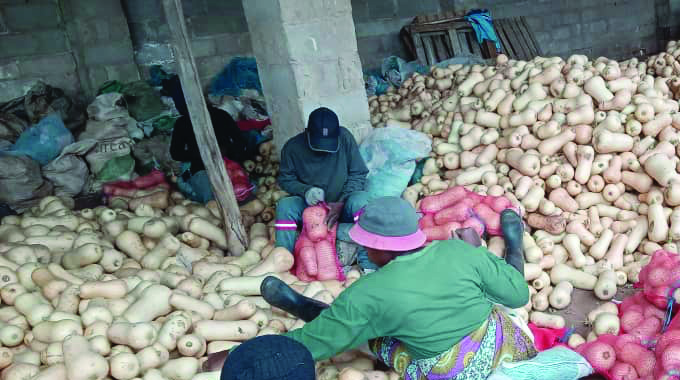
Sukulwenkosi Dube-Matutu, [email protected]
ARDA Antelope Estate in Matobo District is making significant progress in its winter wheat programme, having already planted 350 hectares out of a planned 550. The crop is tillering at the farm, a major agricultural producer in Matabeleland South and Zimbabwe.
This year, 250 hectares were allocated to summer maize, with harvesting already underway on 120 hectares. The estate also cultivated 15 hectares of butternut, achieving an impressive yield of 35 tonnes per hectare. Harvesting of 45 hectares of potatoes is set to commence shortly, while 22 hectares of sugar beans have now reached maturity.
Arda Antelope Estate Manager, Mr Aleck Chinyai, stated that despite challenges with water supply affecting their summer cropping area, the crops have performed well.
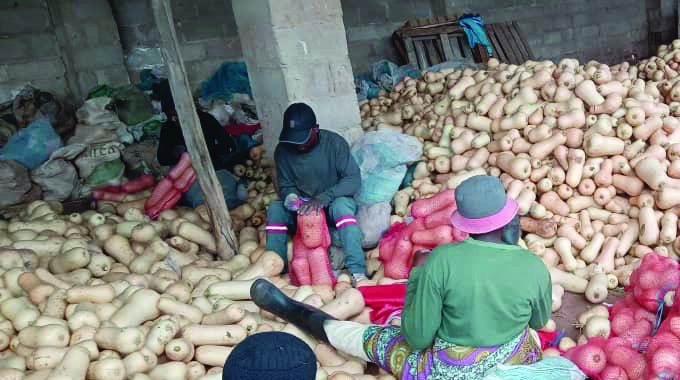
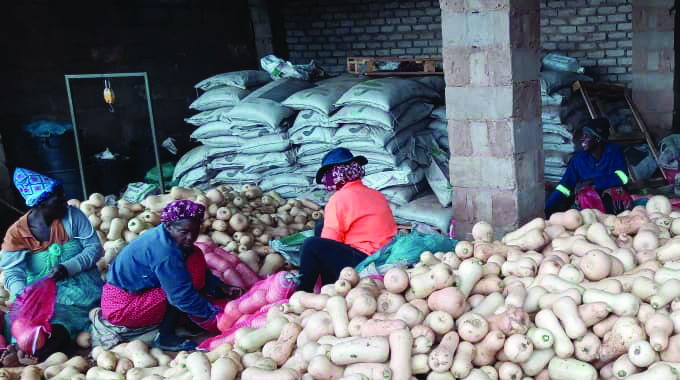
“We had 15 hectares under butternut, which yielded 35 tonnes per hectare. Workers are busy grading and packing the butternut for the market. Our maize crop spans 252 hectares at various stages of growth. Around 120 hectares are either at the soft dough stage or drying.
“We also have 22 hectares of sugar beans reaching maturity, and 45 hectares under potatoes.
“As we begin harvesting the potatoes, maize, and sugar beans, we will be freeing up land for wheat. Although we had to scale down our summer crop due to low water levels at Antelope Dam, we are increasing our winter wheat hectarage as the dam has since received significant inflows,” said Mr Chinyai.
He said that the estate supplies horticultural and cash crops such as butternut, sugar beans, and potatoes to markets as far afield as Bulawayo and Harare.
Land preparation for winter wheat production is in full swing across Matabeleland South, with the province targeting 2 300 hectares this season — a slight increase from last year’s 2 000 hectares.
Matabeleland South Agritex Deputy Director, Mr Bhekilizwe Ncube, said Arda Antelope Estate is one of the major contributors to the provincial target.
“Arda Antelope is a key contributor to food security not only within the province but nationally. Production at the estate aligns with Government’s vision of transforming the nation through agriculture, as their output targets the market and includes a variety of horticultural and cash crops, as encouraged by Government,” he said.
Mr Ncube also noted that the province has recorded a strong summer crop this year across all districts, and farmers are expected to begin deliveries to the Grain Marketing Board.
“Compared to the past two seasons, this year’s summer crop production is excellent. Even grazing areas for livestock are in good condition and are expected to sustain us until the next season. The best-performing and contributing schemes include Ingwizi, Antelope, Valley and Silalatshani. We also have individual farmers, who have done exceptionally well,” he said.
The Government is working towards transforming Zimbabwe into an upper middle-income economy by 2030, with agriculture playing a central role in this process. Zimbabwe’s Vision 2030 outlines a strategy to achieve this transformation, with the National Agricultural Policy Framework (NAPF) 2019–2030 providing a roadmap for creating a stable environment for agricultural investment and growth.
This framework aims to boost agricultural production, enhance rural livelihoods and promote sustainable economic development. Through its agricultural transformation plan, the Government seeks to transition subsistence farmers into commercial producers, integrating a majority of Zimbabwe’s workforce into the middle-income economy.
The agricultural sector is seen as a key driver in alleviating poverty in rural communities and improving their standards of living. Strategies implemented to develop the sector include empowering smallholder farmers, promoting private sector investment and creating a more enabling business environment.
Government is also advocating for climate-smart agricultural practices to ensure sustainable and resilient food production. In addition, there is a focus on leveraging technology and innovation, encouraging targeted production, and boosting agricultural exports to generate foreign currency and support economic growth. — @DubeMatutu