admin
admin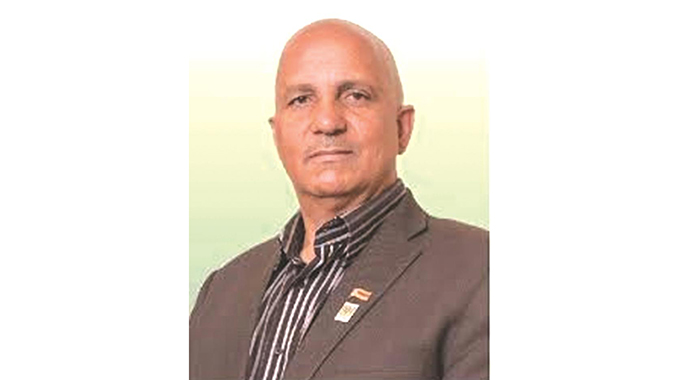
Elita Chikwati The Interview
Veteran agricultural extension expert Ivan Craig was recently appointed as the new Agricultural Rural Development Authority (ARDA) board chairman. In this report, our Senior Agriculture Reporter speaks Elita Chikwati (EC), to Craig (IC) on how he hopes to transform ARDA and boost the country’s strategic grain reserve in line with the Vision 2030 agenda.
EC: Mr Craig, congratulations on your appointment. How did you feel on your appointment as the ARDA board chairperson?
IC: I felt humbled and honoured that I was appointed out of all the million agriculturalists. The question I asked was, “what did they see in me to deserve this appointment?” On the other hand, I was saying if you find a person getting national appointments it shows you have a national flair. It’s such an honour by His Excellency the President and Lands, Agriculture, Fisheries, Water and Rural Resettlement Minister Dr Anxious Masuka. It means a lot to me for the faith and trust they have in me. There is a lot of work ahead of me because the Arda we are seeing today is different from the Arda I knew before. There is a lot of work to be done and am geared to go and hit the ground running.
EC: Given your wealth of experience, what do you hope to bring to the entity?
IC: If you look at my farming agricultural history in Zimbabwe, I have been inclined to agricultural extension work. I have been doing extension work for nearly 30 years now and I hope to utilise the knowledge I have gained to shape and influence the growth of ARDA. There are a whole lot of things that have to be done to make ARDA tick again for the benefit of the country.
EC: What challenges did you come across in your line of work?
IC: Drought has been a major challenge and when a drought hits, you cannot do anything except to supplement with irrigation. And, if there are no irrigation facilities there is nothing you can do. The experience I have will help Arda quite a lot in terms of productivity and producing for the nation and also helping communal farmers around Arda estates to produce.
I know what is missing at Arda estates, and at the rural farms around Arda estates. It’s an opportunity for me to work hard. The expertise apart from what I learnt from college I learnt quite a lot of stuff from other Agritex colleagues who are veterans in the industry and from the old communal farmers scattered across the country.
All this has given me an opportunity to learn about agricultural activities such as horticulture, orchards, livestock and conservation where my passion lies. For a farmer to continue enjoying the benefits of the soil you have to make sure the soils and natural resources are well looked after. To me conservation comes first to achieve greater heights in terms of productivity and continued support to the soils for future generations.
I also acquired knowledge from interacting with some non-governmental organisations, some veterans in the extension services and agricultural industries and farming communities and schools. I made it a point that everybody I meet, I part with something and I impart it to other people. I have to acknowledge all the people I worked with for the lessons I got from them, now its high time I make use of the experience for the success of the entity. I always tell college leavers that once you learn from here make sure you have a fraction of what you are going to learn from the people out there and practising agriculture in different sectors.
EC: What mandate were you given and what is the timeline like?
IC: Our mandate is simple. Our main mandate is ensuring enough grain for the Strategic Grain Reserve and improving our economy by producing export crops which we will value add before exporting. We are ready to move with that.
Currently, Arda is working on 13 000 hectares and the entity has 88 000 hectares which is ready. Potentially, Arda has 147 000ha. To me, the major mandate is not to increase hectarage, but I am looking at the National Strategic Grain Reserve for the country which is 500 000 tonnes.
When the minister was reading the mandate to us, he mentioned 500 000 which will be reviewed upwards. As Arda board we do not want the 500 000 we have set our target slightly higher at about 700 000 tonnes. We are planning to surpass this. As Arda management we have agreed to do it in two seasons not three years. We are looking at strategic crops — wheat, sorghum, maize, soyabean and sunflower. We will also look into livestock. Sunflower is a quick win in addressing the issue of cooking oil, as well as stockfeeds.
EC: What other strategic areas are you looking at?
IC: We are also looking at livestock, beef farming on a larger scale, aquaculture and apiculture (bee production), but on a small scale. There is huge demand for honey the world over.
EC: Do you think you can achieve the set objectives? What strategies are you going to use to achieve the set objectives?
IC: We need to put a strategy in place to address the issue of production and productivity. We have to make sure we move to all Arda estates and assess their current state. Some have been abandoned while others have deteriorated. We need to start clearing the land, equip the estates and ensure inputs are in place to carry out our operations.
We need to assess the estates and understand their needs. We have to put the right people as managers, those who have a good track record of good farming. If we do this, we will be in a position to increase our hectarage and improve the output per hectare.
Where there is no water we have a strategy of getting water on those estates and establishing centre pivots to supplement on irrigation. The other strategy we have for the people who are going to help us meet our target is to work with the people around us – NGOs and other partners.
EC: ARDA also deals with rural development, how are you going to accomplish this?
IC: If you unbundle the word Arda, the rural development aspect will help us achieve our target of surpassing the Strategic Grain Reserve of 500 000 tonnes. We are going to work hand in hand with people near Arda estates or communal farmers to achieve the set target.
Arda will be at the core and we will go around and establish irrigation schemes where we are going to capacitate the rural farmers. We are going to train farmers on production, help them with machinery implements and on operations.
Whatever they are going to produce, it will add into food security and the excess, we are going to sell and improve our economy. After identifying markets, we are also going to do the same with other farmers to export, macadamia, avocados and other horticultural produce. We want out communal farmers to contribute to the economy and uplift their livelihoods.
EC: Which areas at ARDA do you think will help you achieve the set objectives in terms of attaining the country’s Vision 2030 agenda?
IC: If we are to strategically position Arda estates, we have some estates which can address the issues of food security while others we can strategise to help on the development of the economy through production of export crops.
In terms of food security, we can work around estates to produce cereals for food security while in some estates we can produce export crops. In terms of Vision 2030, as Arda grows and develops we will also work with the communal farmers around the states to help them produce good quality yields.
We have to make sure goods are marketed viably so farmers can earn a living out of agriculture. Vision 2030 should evolve on rural farmers around Arda estates. The rural development part of Arda is not only started at areas around estates but even other communal areas where there are irrigation schemes.
Arda has a mandate to go in and assist the communal farmers to develop their agriculture to greater heights. We will be working towards achieving vision 2030. Our economy at the moment is centred around agriculture. What we only need to do is to capacitate the farms.
At the moment there are challenges because we do not have adequate machinery and irrigation facilities. The banks are readily available to help the farmers because they know exactly that once there is water and if you capacitate someone with the required inputs and support with experienced well-seasoned farm managers, the farmer will be able to produce and pay back loans.
Our estates are easily accessible, land is readily available with good soils, rainfall patterns and water bodies and qualify to get production loans.
EC: Arda has been involved in joint ventures, what is the current situation now? Do you intend to continue with these arrangements?
IC: The current joint ventures will continue until the end and we will review the terms and conditions if the need arises. Currently, the joint ventures are cordial and they are going on well. We have farmers growing export produce and some are into safari operations. Others are into fruits like macadamia, avocados and cereal production.
As we meet our partners we want them to understand that our vision is to feed the nation, see Vision 2030 succeeding. All this should improve our economy particularly on forex earnings. We need to share our vision and they must understand or be seen to support it. What is due to Arda should be paid. Partners should also be in a position to carry out some rural development projects around the estate. We are fully geared to implement our strategy and achieve the set targets.


 Online Reporter