Online Reporter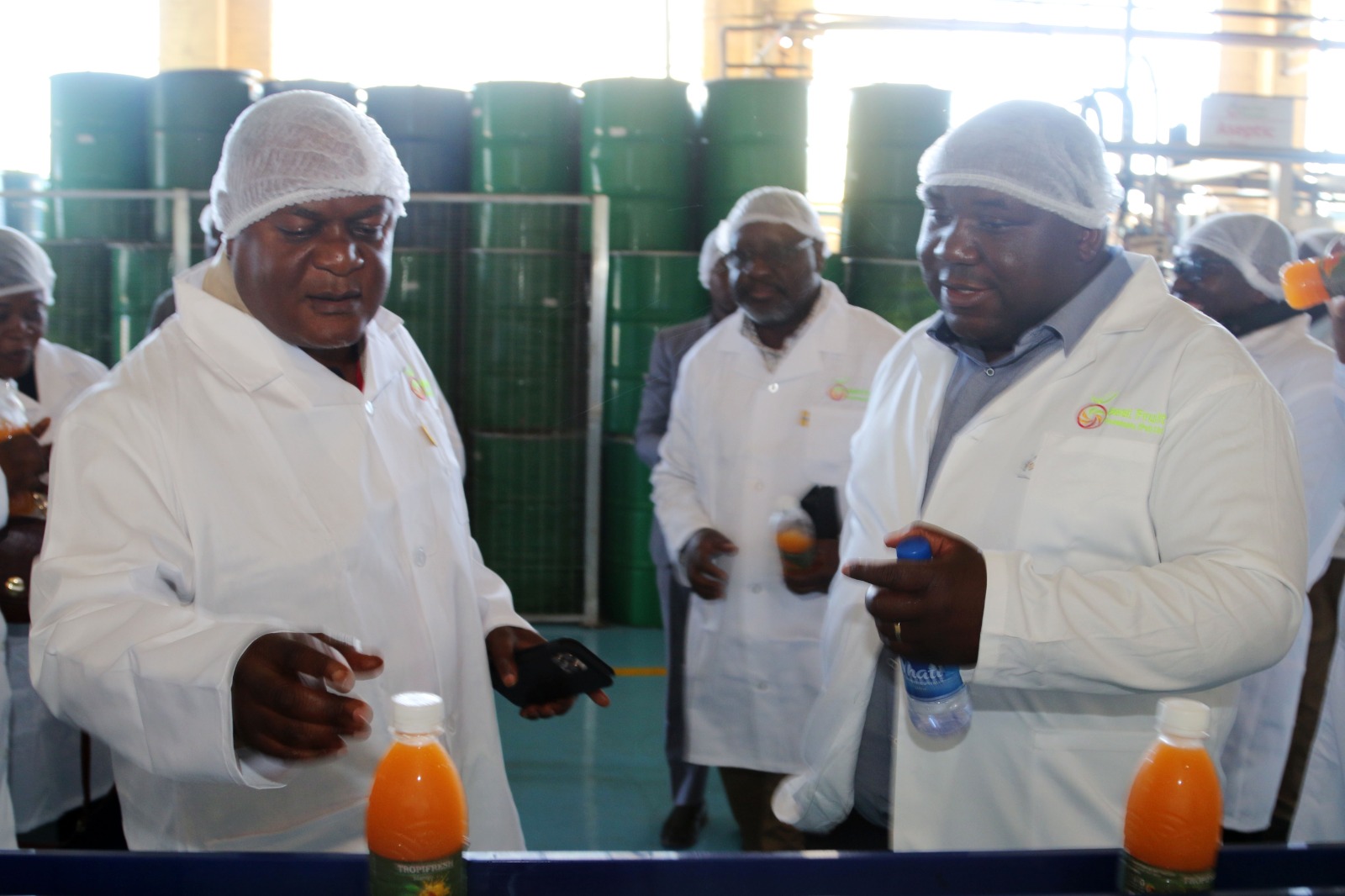
Theseus Mauruki Shambare
ZIMBABWE’S agricultural value-addition drive is attracting regional attention, with a Democratic Republic of Congo (DRC) delegation expressing interest in adopting an integrated model championed by the Agricultural and Rural Development Authority (ARDA) that links farmers, agro-processing industries and rural employment creation.
The delegation from Lualaba Province, led by Minister for Land Affairs, Agriculture, Fisheries, Breeding and Rural Development Mr Jean-Pierre Kalenga Mupatale, toured Best Fruit Processors, Aspindale Grain Marketing Board facilities and irrigation technology company DripTech on Wednesday as part of efforts to identify agricultural transformation models that can be replicated in the DRC.
The delegation from the Democratic Republic of Congo’s Lualaba Province is on a three-day fact-finding mission to Zimbabwe to learn about the country’s agricultural development strategies, value-addition initiatives and rural transformation programmes.
Speaking after touring Best Fruit Processors, Mr Mupatale said the model was practical and could be easily duplicated in his country.
“What we have seen, we can duplicate it easily in Congo because we have the raw materials. What remains is the processing side and how we organise rural communities to participate in the value chain,” he said.
He said the visit was aimed at seeking Zimbabwe’s support in establishing similar agro-processing systems in the mineral-rich Lualaba Province.
“We came to Zimbabwe humbly to ask for the assistance of the Zimbabwean Government to help us duplicate this experience,” said Mr Mupatale.
He said discussions on agricultural cooperation were already underway following engagements between Zimbabwe’s diplomatic representatives and provincial authorities in Lualaba.
“There has already been collaboration between the Zimbabwean ambassador and our governor. We came to concretise those discussions and finalise the engagements that started in Congo,” he said.
The visit highlights growing regional recognition of Zimbabwe’s efforts to promote value addition and beneficiation within agricultural value chains, a strategy that has been prioritised under the country’s rural industrialisation and agro-industrial transformation agenda.
ARDA Commercial Services director Mr Dominic Sadziwa said the integrated approach extends beyond processing and encompasses farmer contracting, primary production and employment creation across multiple agricultural enterprises.
“Starting from the field, we contract farmers to grow tomatoes, fruits and other crops that feed into the processing chain. If you put everything into consideration, we employ more than 4 000 people across various farms,” he said.
Mr Sadziwa said the processing facility itself operates two eight-hour shifts daily, employing about 60 workers per shift.
“That translates to about 120 factory workers, and when you include the office team, we are talking about close to 150 employees at the processing plant alone,” he said.
The employment figures underscore the broader economic impact of agricultural value addition, which creates jobs not only in factories but also in production, transport, logistics and marketing.
Best Fruit Processors has become one of the country’s flagship agro-processing facilities, converting locally produced fruits and vegetables into finished products while providing a reliable market for farmers.
For the DRC delegation, the model offers lessons on how agricultural production can be linked to industrial processing to generate employment, reduce post-harvest losses and increase the value of locally produced commodities.
The visit is expected to pave the way for closer agricultural cooperation between Zimbabwe and the DRC as the two countries explore opportunities for knowledge transfer, investment and agro-industrial development.


 Bongani Ndlovu