Chronicle Editor
Sikhumbuzo Moyo, [email protected]
The 16 Days of Activism against Gender-Based Violence (GBV) is a key international campaign to call for an end to violence against women and girls. It runs from 25 November (International Day for the Elimination of Violence Against Women) until 10 December, Human Rights Day.
In support of this campaign, the United Nations Secretary-General’s UNiTE by 2030 initiative calls for global action to increase awareness, galvanise advocacy efforts and share knowledge and innovations to help end all types of violence against women and girls. The campaign was started by activists at the inauguration of the Women’s Global Leadership Institute in 1991.
It is used as an organising strategy by individuals and organisations around the world to call for the prevention and elimination of violence against women and girls.
According to UNwomen.org, during its first phase, more than five million people signed a global petition to make ending violence against women a top worldwide priority. Between 2009 and 2013, the campaign also led to over five million actions in partnership with over 900 civil society organisations globally.
This year, commemorations were held under the theme; ‘UNiTE, Invest to Prevent Violence against Women and Girls’.
This year’s campaign also called on Governments worldwide to share how they were investing in gender-based violence prevention.
In Zimbabwe, Government remains committed to ending GBV in all its forms and efforts are being put in place to ensure that prevention and response services are available to everyone. Under the Global Spotlight Initiative programme, which is also being implemented in the provinces, Government with support from the United Nations and European Union has made a commitment and a declaration to ending GBV and harmful practices.
This commitment was made at the highest level through the signing and launch of the High-Level Political Compact on Ending Gender-Based Violence and harmful practices in Zimbabwe by President Mnangagwa together with other stakeholders from the independent commissions, traditional leaders, religious leaders, donor community, UN agencies and Civil Society Organisations.

Zimbabwe joined the rest of the global community in these commemorations with events being held at national, provincial and district level throughout the country.
In all these events, speaker after speaker spoke about the worrying statistics on gender based violence which keep on rising despite an enactment of a number of laws meant to curb the occurrence of such crimes. While in the past, women and girls were the most affected, latest trends now show that men and boys are becoming victims too.
Those that attended the commemorations in Bubi were told that according to the Multiple Indicator Cluster Survey statistics of 2019, 34 percent of girls in Zimbabwe are married before the age of 18 while five percent are married before their 15th birthday with two percent of boys being married before their 18th birthday.
The 2022 ZimStat census also showed that 133 455 women aged 20 to 24 years were married-off before the age of 18.
The Zimbabwe Republic Police, weighed in too with their equally disturbing statistics, where it said a total of 18 907 cases of domestic violence were recorded across the country from January to October this year compared to 17 244 cases that were reported in the same period last year.
The police report also showed that there is an increase in the number of men reporting abuse cases, with 2 463 reports compared to 1 782 cases that were reported last year while a total of 46 people lost their lives as a result of domestic violence; 31 of whom were women.
Globally, an estimated 736 million women — almost one in three — have been subjected to physical and/or sexual intimate partner violence, non-partner sexual violence, or both, at least once in their life.
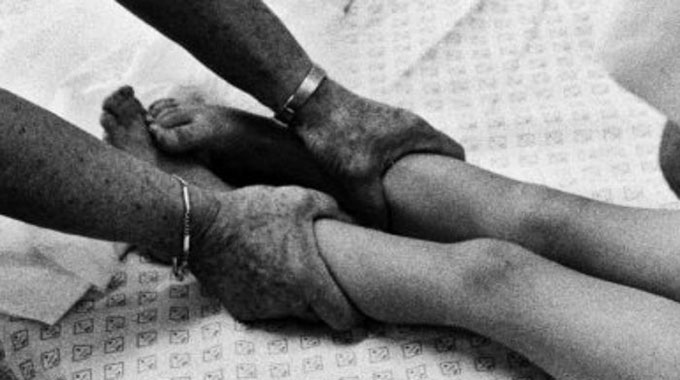
While it is necessary to have GBV statistics to show the gravity of the scourge and deter the would-be perpetrators, it may be paramount to decentralise statistics to be provincial or district specific so that locals can get to appreciate its seriousness.
Someone in Tsholotsho or Bubi for instance, may not really be worried about national statistics such as the one given by the Multiple Indicator Cluster Survey but if during the commemorations, they are specific statistics of girls being forced into marriage or number of women and men who were abused by their partners in Tsholotsho, such figures would most likely have an impact, a huge one for that matter.
As I attended various commemorations this year, I realised that the speech which was read in Harare was the same speech read in Bulawayo, Tsholotsho, Bubi etc. However, if the event organisers had prepared different and area-specific speeches, the impact would likely have been different.
In Bubi for example, the area is known for being gold rich and is awash with illegal gold panners, meaning a high likelihood of abuse of women or young girls being married to these illegal gold panners. The commemorations which were held at Turk Mine Hall on Friday last week should then have been used to highlight those issues and buttress them with specific statistics.
Basing on the theme of the commemorations, which calls for investment so as to prevent violence against women and girls, the Friday commemorations were an opportune time for officials to reveal what kind of investments were specifically made to prevent GBV.
The police too, should have provided records of GBV cases reported in the district but instead, those villagers were given global and national figures which to some, may have meant that Bubi was GBV-free, which is obviously not the case.
It does little for a villager in Jambezi, Hwange district, to be fed with global statistics such as one in three women being subjected to some form of physical or sexual abuse without anything specifically being mentioned about his/her own area.
Before the commemorations at Cowdray Park last week, police had revealed that the suburb was a GBV hotspot with at least five domestic violence cases being reported on a daily basis, however, during the commemorations, organised by the Ministry of Women Affairs, Community, Small and Medium Enterprises Development where the Bulawayo Minister of State for Provincial Affairs and Devolution, Judith Ncube officiated, the gathering at the event was not informed of this critical information.
In future, the commemorations must be provincial, district and even ward specific so that people can relate and introspect based on the magnitude of the cases.
For instance, it was refreshing to Minister Ncube when the deputy chairperson of the Zimbabwe Gender Commission, who was also at the Cowdray Park event, informed the crowd that Bulawayo, Matabeleland North and Matabeleland South had no recorded cases of child marriage while Bindura had the highest figures.
Going forward, the responsible ministry in organising the GBV commemorations must avoid a one-size-fits-all all situation when preparing speeches for these commemorations but instead go out of its way to invest in research so as to come up with area-specific statistics.
They must not wait for the end of the year to start preparations for these commemorations.
Area-specific statistics also come in handy for Government and its partners, particularly those involved in the fight against GBV, to properly plan on how to distribute their resources in this war which must be won at all costs.


 Online Reporter