

 admin
admin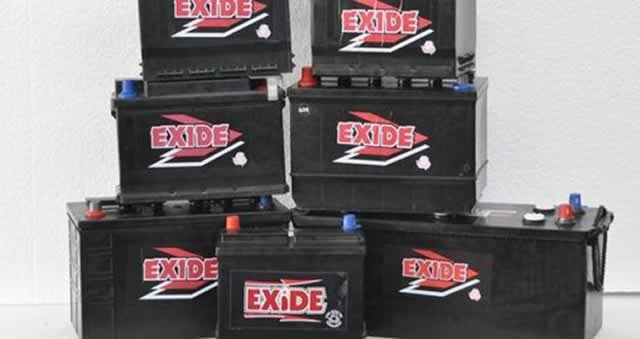
Happiness Zengeni Business Editor
ART Holdings has a new foreign majority shareholder who will inject US$15 million into the business enabling it to improve working capital over the next five years.
The South Korean shareholder bought into the counter after asset management firm Equivest and Interfin disposed of their shareholding in the counter. Well-placed sources say the South Korean shareholder, holding above 40 percent of the group, has business interests in the country and in the region as well as his home country.
Chief executive Mr Richard Zirobwa told analysts on Wednesday, Art was in need of recapitalisation for its main divisions over the next five years. The US$15 million facility is over a five-year revolving facility.
Mr Zirobwa said board approvals had been obtained while the term sheets had been submitted for the necessary statutory approvals.
In terms of the capital expenditure requirements, the group requires US$3,1 million for the batteries division between 2014-2017. Mr Zirobwa said the first phase involves dealing with inefficiencies at the batteries plant in order that they lower the productions costs. He said at the moment, Chloride Zim batteries were slightly expensive when compared to the region.
The next phase will involve the manufacture of maintenance-free batteries. The group is also looking at boosting its paper and tissue business, which has over the years lost its market share.
Mr Zirobwa said they faced three strategic challenges, namely poor quality product emanating from the poor waste paper they are getting locally; lack of economies of scale and the marginal nature of the business which caused it to suffer more from rand weaknesses.
He said they want to attack the challenges by putting money to improve the quality of the paper at a cost of US$500 000 and, secondly, to address operational scale issues by bringing in a 30 tonnes plant in the next 18 months.
“The 15-tonne plant we are using is too small and we require US$5,4 million to put up a 30- tonne mill, to bring the total to 45 tonnes,” he added.
Mr Zirobwa said problems in the printing industry impacted negatively on the quality of paper available locally forcing them to import from South Africa. They also want to automate the production of Eversharp pens which is currently manually and labour intensive. He said 70 people currently work on the assembly lines compared to just two when it’s automated.
He said: “If we reposition and automate the business we will be able to reduce unit cost from US6c to US4c per pen. At US4c given our brand we will be competitive.”
The company is also negotiating with the banks to restructure the tenure and rate of loan facilities.
He, however, added: “All these initiative will remain a pipedream unless we get funding.”
The group is targeting a turnover of US$37 million in the current financial year but Mr Zirobwa added that under the current environment the first half would be more difficult.
“At best we will break even, but we believe everything will be clearer after the Budget.”
He added that if all the initiatives will be followed Art will grow turnover to US$70 million in 2018.


 Bongani Ndlovu
 Online Reporter