admin
admin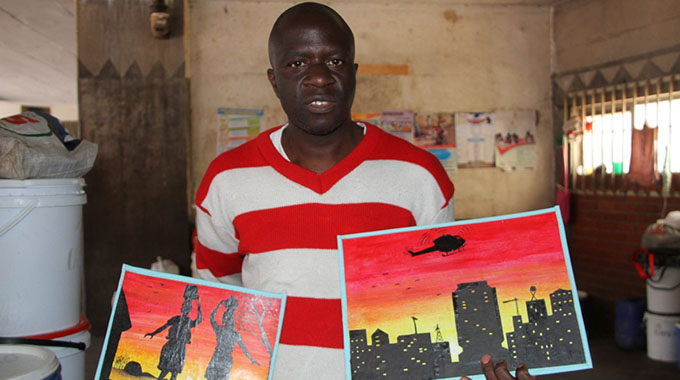
Rebecca Kabaya
BEING convicted of an offence and sent to jail marks the beginning of a new life, minus the liberty that one usually enjoys. It entails being confined to prison cells with a new set of living conditions coupled with stringent measures that require full obedience.
In the eyes of correctional officers, those conditions mark a new chapter in the life of a convicted person, which gives him or her the opportunity to repent and reform. But in the eyes of the prisoner, it tells a tale of anguish, penury and sorrow.
A visit to the country’s largest correctional institution — Chikurubi Maximum Prison — proved that there are many ways in which inmates try to drench their thoughts of being imprisoned while serving their jail terms. Various activities are carried out behind bars, which has also witnessed arts thriving over the decades.
Crafting, painting, music and dramas are being undertaken behind bars as inmates attempt to soak their sorrows and take themselves aback to the community they would have come from. Inmates at Chikurubi Maximum Prison were so much delighted to share and showcase their various talents.
Duncan Lipepe (43), convicted in 2012 and serving 15 years for fraud, said he discovered that he can paint and draw while in prison. He has done portraits of the late music legend, Oliver Mtukudzi, and of many others. Drawing and painting has helped him to keep occupying his mind and forget worrying about his freedom.
“I realised my hidden talent a year ago after I was sentenced to 15 years for fraud. It started as a way to help me reduce stress and ever-thinking about my family.
“This is why you see that some of my art is of my two wives back home. The other portrait I did is that of Mtukudzi soon after his death.
“When I heard about his death, I was saddened since he was my hero. I loved his music and to show my pain I drew a portrait of him, so that I will always remember him,” he said.
Charles Chikuni (40) also makes soccer boots out of sacks. He said he loves soccer and is the head coach for one of the prison teams.
Chikuni said there were times when they could not play because they had no boots, hence, the thought of using sacks to make shoes.
“Prisoners are the most less privileged because most of our relatives have turned their backs on us, hence, we struggle to get necessities like pants, shoes and soap.
“In prison we play soccer like five-a-side to entertain ourselves. That was when we discovered that most of us do not have boots to put on and I decided to make boots out of sacks.
“I have learnt life the hard way in this jail. I vowed to use my hands and work to stay away from crime because it does not pay.
“I have been in this cell for 18 years now. Although I am left with a few months on my term, it was not easy,” he said.
Arts behind bars encourages inmates to express themselves openly and create a safe space for all of those involved to work side by side no matter their different ethnic backgrounds.
The Chikurubi Maximum prison choir is made up of more than 20 male inmates. They came together and built a choir which somehow connects them to be a union. Clad in their khaki prison garb and red and white jerseys, they sang with unity and passion making it easy to see that they are in love with what they do as artistes.
Munyaradzi Mutede, one of the choir members, said they were looking forward to collaborate with big artistes out there.
“Many of us learn to expose our inner thoughts, fears, and regrets through music in a place that rewards machismo and eats alive those thought to be weak.
“Most of our songs mainly come from our thoughts and tribulations behind prison walls.
“We are humans. We regret all the crimes and violent acts we have committed, therefore, music helps us to express all the grief and sorrow.
“We have managed to record some of our songs and some are on discs. We appreciate the support we get from people and artistes who visit us.
“Some of us here used to sing before we became prisoners, but some discovered their talents after being convicted,” he said.
It was a moment to cherish after an inmate performed a rendition of Tocky Vibez song “Aenda Nenyika” after being handed the guitar by musician Progress Chipfumo, who was part of the prison tour.
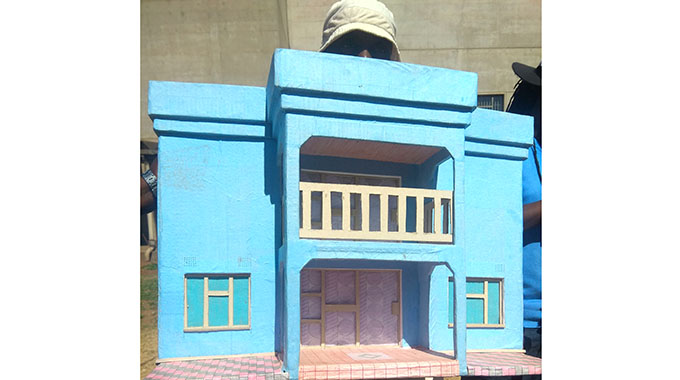
Other inmates used cardboard boxes and other recycled material, acrylic and gross paint to make makeshift solar -powered houses. The creativity is just exceptional.
Chikurubi Maximum Security Prison officer-in-charge Assistant Commissioner George Mutimbanyoka indicated that many inmates, particularly men, may adopt sociopathic tendencies to survive in prison.
“Unfortunately, inmates learn to adapt to their new sub-culture, and some may not be able to trust anyone, including therapists. That is why we encourage them to occupy themselves with artistic work.
“The art helps in decreasing the number of disciplinary reports written on inmates because most of the time they will be focused on their work; which is more like a goal to keep them going.
“The advantages of art are many. Art provides necessary diversion and emotional escape, permits the inmates to express themselves in a manner acceptable to both the prison and outside culture. Through art some establish a new identity far better than the one which led them to prison,” he said.
He also added that inmates, who create good art earn respect and friendship from others.



 Online Reporter