admin
admin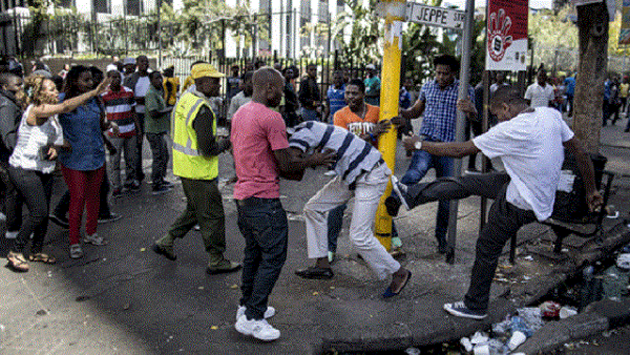

Peter Matika, Senior Life Reporter
RAPPER Maestro IV recently teamed up with five other local artistes to record a track against the xenophobic attacks on foreigners living and working in South Africa.
The track — Isizwe esimnyama (Black Africa) was recorded last week with the hope of reaching out to other Africans, regardless of creed, to unite against oppressing and fighting one another.
“As artistes we need to speak for the people. It is our responsibility to work towards unifying the world. It is only through music you can get the world to listen and act towards humanity.
The power of music will help dissolve barriers between Africans. The song has a powerful message. Music is a good way to reach millions of people.
“This will send out a strong message for peace. The song talks about love and respect. We hope the song will encourage this,” said Maestro IV.
He also said that when they were planning the song, the artistes were keen to look beyond xenophobia, and instead focus on a message that would unite Africans.
Maestro IV said the track was recorded just when the attacks began and it has since been released and sent to various radio stations.
He however, noted how as Bulawayo artistes, they were finding it hard to get airplay from Harare-based radio stations.
“We are still trying to penetrate Harare stations. It’s a bit difficult to do so because some of the DJs there don’t fancy our music. We will still push our music and with time we hope they will acknowledge us from other regions,” said Maestro IV.
He added that the track was recorded and produced at his studio in Bulawayo.
“The track was recorded and produced at my studio — CMG, Chilliaphonia Music Group. This year I want to work on several projects that involve other artistes. If we unite it is easier to work and push our products,” said Maestro IV.
Born Melusi Nyathi, Maestro dropped his red-hot album — Married to the Game — in August last year and it promises to be 2017’s biggest rap album.
Artistes that feature on the anti-xenophobia track are: TKP, Ricco Andrews, Themba Charles, Psyco and il Duce. The almost seven-minute single is meant to raise a united voice against xenophobia. Violence against immigrants in South Africa erupted early this year in most parts of South Africa, with police having to resort to use live ammunition to prevent attacks in some instances.
A resurgence of anti-immigrant violence sparked outrage in other African countries and spurred calls for more to be done to stamp out xenophobia.
Residents of Mamelodi and Atteridgeville took to the streets last week to protest against the presence of undocumented Nigerians, Pakistanis and Zimbabweans, who they accuse of perpetuating crime and taking jobs away from locals.
Africa’s history is one of tribal wars, and many of today’s xenophobic attacks are based on tribal hatreds that exist to this day following the Mfecane, the huge war that engulfed southern Africa in the 1820s.
The principal combatants in the Mfecane were the Ndebele, Zulu and Xhosa tribes, and they still experience violent tribal and xenophobic clashes to this day.
@peterkmatika


 Online Reporter