Chronicle Editor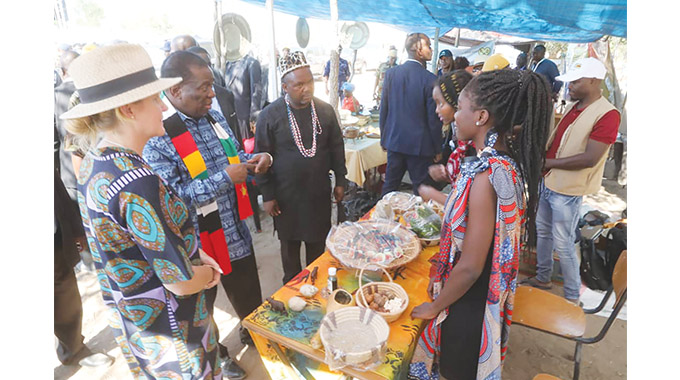
Nqobile Bhebhe in Binga
[email protected]
THE creative sector, with its diverse unique offerings has huge potential to contribute to the economic growth of the country feeding into the National Development Strategy 1 which seeks to increase the consumption of local cultural and creative industry products by 50 percent by 2030.
According to the country’s National Development Strategy 1, in order to increase promotion and safeguarding of arts, culture and heritage, the country needs effective strategies that provide the framework for how to understand, preserve, manage, integrate, interpret and promote heritage and strengthen family values both in the immediate and long-term future.
Some of the strategies include enhancing investment in local cultural resources including tangible and intangible heritage such as traditional knowledge and skills, as well as music, dance, theatre and festivals.
The development strategy also speaks to the development of sustainable creative economies, among other strategies.
Speaking at the official launch of Cultural Month at Kariyangwe Secondary School in Binga district on Saturday, Minister of Youth, Sports, Arts and Culture, Kirsty Coventry said the creative cultural sector aims to become an economic force to contribute to Vision 2030.
She noted that the approval by Cabinet to launch the Cultural Month in Binga represents the Government’s full commitment to the cultural and creative economy of Zimbabwe.
“These commemorations seek to foster social cohesion, and integration of our citizens, through the use of our arts and our culture. The month-long celebrations are aimed at showcasing our diverse cultural practices.
“Zimbabwe is endowed with different cultural backgrounds and identities. These come in various forms and languages and include our dance, food, and fashion in the Visual Arts, Visual Arts film, television and music. These celebrations now have a meaning, and increasing uptake to increase and ensure that our local culture and creative sectors create products that will drive our economy forward,” said Minister Coventry.
Minister Coventry said the organisation of the celebrations was not a preserve of her ministry and the National Arts Council of Zimbabwe, but it was also driven by communities and cultural safety players and practitioners.
“Cultural Month is a direct response to the vision of the National Development Strategy 1 which seeks to increase the consumption of local cultural and creative industry products by 50 percent by year 2030,” she said.
Some of the local groups that performed at the celebrations included Muchesu (Ngoma Buntibe), Ncalilayi (Chilimba), Tusole (Chilimba), Jeke Kujeke (Ngoma Buntibe) and Maaze (Ngoma Buntibe). Artistes who performed included Andrea The Vocalist, Sandra Ndebele and Obert Dube the poet.
President Mnangagwa headlined the historic event for Binga district held under the theme “Promoting Cultural Diversity, Unity and Peace”.
Zimbabwe has moved from hosting the celebrations in one day to Culture Week, which ran successfully for several years. Now, there is Culture Month which provides an opportunity to host events throughout the month of May.
Culture Month commemorations are an extension of the World Day of Cultural Diversity for Dialogue and Development which is celebrated on May 21 that was set aside by the United Nations Educational, Scientific and Cultural Organisation (Unesco) in the Universal Declaration on Cultural Diversity in 2001.



 Online Reporter