Online Reporter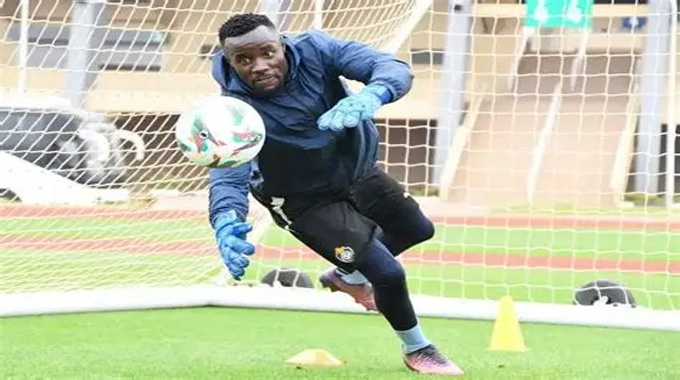
Fungai Muderere, Zimpapers Sports Hub
WASHINGTON Arubi has spent most of his football career guarding the posts in Zimbabwe and South Africa. From the hustle of the South African Premiership to the quieter grind of national duty, the veteran goalkeeper has seen it all. Now, at 38, he has become the unlikely figure holding together a Warriors side staring down the barrel of World Cup elimination.
Tomorrow in Abidjan, Zimbabwe face Benin in a 2026 Fifa World Cup qualifier that feels less like a routine fixture and more like a final stand. The Warriors sit bottom of Group C, winless after six matches and must beat Benin to keep their campaign alive. For that, all eyes turn to the one man whose presence has restored a measure of calm — Arubi.
“We’re feeling good, the guys are motivated and ready to go. The boys are ready to fight. Yes, it’s a big stage, but we need not be afraid. We need to stand for each other as a team so that we can get the result. We don’t want to drop points at this stage, and I’m positive we’re going to win this one,” he said — voice steady, eyes burning with the kind of resolve that only experience brings.
It is no coincidence that Arubi is back at the heart of it all. His recall was a deliberate move by Warriors coach Michael Nees, who inherited a squad broken by a long Fifa ban and plagued by inconsistency. Goalkeeping was the weakest link, and the German knew it.
“We had a massive goalkeeper crisis, and I tried to solve that by recalling Washington Arubi. Now, after one year, we have four or five keepers competing and number one is Arubi, with outstanding performances in the qualification campaign,” Nees admitted.
The coach doesn’t mince his words about the limits of relying on a veteran.
“It’s not a solution for five years, but for this qualification campaign, he has been the difference. He won’t get younger, but he has brought us stability and belief.”
For the Warriors, belief has often been in short supply. Group C has proven unforgiving — South Africa lead with 13 points, Rwanda and Benin follow with eight apiece, Nigeria sit on seven, Lesotho on six. Zimbabwe, bottom with four, know that anything short of victory against Benin will effectively seal their fate.
This is the context in which Arubi’s words matter. He speaks less like a player and more like a captain without the armband, rallying younger teammates who have never faced such pressure. One of them, Prosper Padera, couldn’t hide his excitement.
“I’m so excited to be part of the team. I can’t even express how I feel. It’s been amazing to be with big guys like Nakamba (Marvelous). The way we pass and move has been so good for me. People should continue supporting us — we’re going to do our best,” said the youngster.
After Benin, the Warriors head to Orlando Stadium in Johannesburg to host Rwanda on September 9. That game may or may not carry significance, depending on tomorrow night’s result. For now, the squad has been built to mix grit with fresh energy.
Notable absentees include Khama Billiat, who is nursing an injury and struggling for form at Scottland FC, where he has started the last six matches on the bench. Yet his absence only highlights the changing face of the team. The Mabvuku side still dominate the call-ups with four players — Godknows Murwira, Terence Dzvukamanja, Walter Musona and Knowledge Musona — underlining the club’s growing influence on the national picture.
Others such as Dynamos skipper Emmanuel Jalai, Tino Kadewere, Teenage Hadebe, Marshall Munetsi and captain Marvelous Nakamba bring a blend of local grit and international polish. But it is the newcomers who could tip the balance.
AmaZulu striker Thando Ngwenya, has already made headlines in South Africa, scoring on his debut against Sekhukhune United. With Zimbabwe managing just five goals in six qualifiers, his sharp form could be the injection of firepower Nees is desperate for.
Yet amid the hope pinned on rising stars, it is Arubi who embodies the Warriors’ precarious fight — a player in the twilight of his career, recalled when the national team needed stability most, and now tasked with carrying them through their most crucial 90 minutes.
Tomorrow, when the whistle blows in Abidjan, the task will not only be about making saves. It will be about inspiring a fractured team to believe once more. And in that battle, Washington Arubi has already taken his place as Zimbabwe’s last line of defence — and perhaps their last hope.



 Bongani Ndlovu