Online Reporter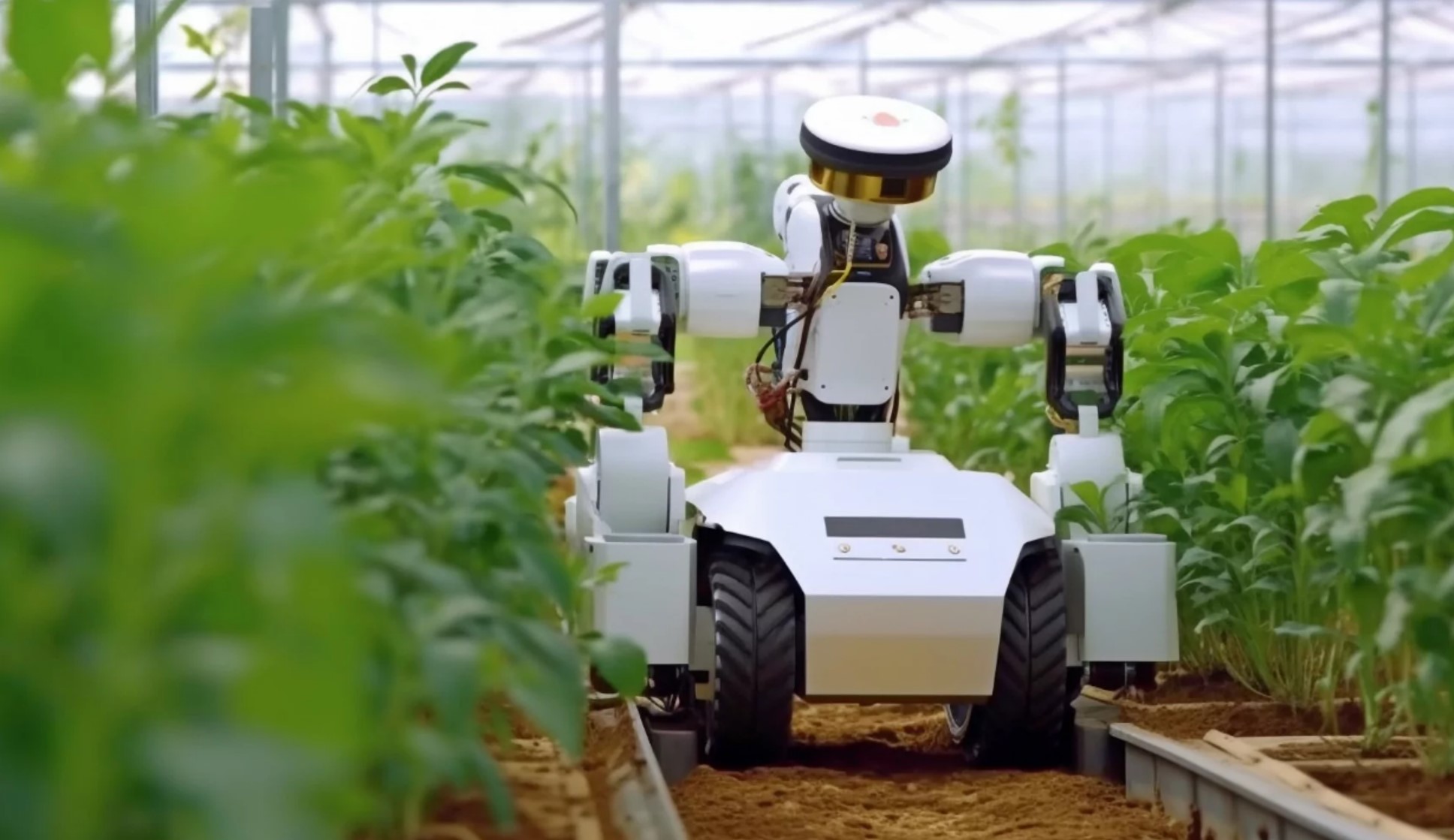
Engineer Tapuwa Justice Mashangwa
Africa’s agricultural transformation is entering a decisive phase, shaped by the rapid convergence of advanced robotics, artificial intelligence (AI) and the emerging frontier of artificial general intelligence (AGI). These technologies are redefining how food is produced, processed, distributed and marketed. For Africa—and Zimbabwe in particular—the critical question is no longer whether these systems will be adopted, but whether the agricultural workforce is adequately prepared to operate, manage and continuously optimise them across national, regional, and international value chains.
A future-ready agricultural workforce must evolve beyond traditional agronomic competencies into a multidisciplinary, technology-enabled human capital base. This workforce must combine agricultural science with data literacy, engineering awareness, systems thinking and entrepreneurial capability.
Historically, agriculture in Africa has been labour-intensive, with productivity constrained by limited mechanisation and low technology adoption. However, AI-integrated systems—such as precision agriculture platforms, autonomous tractors, drone-based crop monitoring and predictive analytics tools—are shifting labour demand away from manual tasks toward cognitive and technical roles.
The workforce of the future will need to: Interpret data generated from sensors, satellites and AI platforms; Manage autonomous machinery and robotic systems; Optimise production decisions using predictive modelling and Integrate farm-level operations into digital supply chains.
This transition implies a fundamental restructuring of agricultural education and training systems. Curricula must embed modules in data science, machine learning applications in agriculture, geographic information systems (GIS), and robotics maintenance. Importantly, these skills must not be confined to tertiary education but should be introduced progressively from vocational and secondary levels.
The agricultural workforce must increasingly operate at the intersection of biology, engineering, and information technology. For example, a modern farm manager must understand irrigation engineering, climate modelling, software platforms and financial analytics simultaneously.
Key hybrid competencies include: agri-data analytics: ability to interpret yield maps, soil health data and climate forecasts; automation systems management: oversight of robotic harvesters, automated irrigation and AI-driven input application; digital platform utilisation: engagement with blockchain-based traceability systems, e-commerce platforms, and global commodity exchanges and cyber-physical systems integration: understanding how digital commands translate into physical farm operations.
This convergence necessitates the development of interdisciplinary training institutions and certification programmes that produce “agri-tech professionals” rather than narrowly defined specialists.
Given the rapid pace of technological advancement, static knowledge will quickly become obsolete. The agricultural workforce must therefore be anchored in continuous professional development frameworks.
Governments and regional bodies should institutionalise: Modular, stackable training programmes that allow workers to up-skill regularly; Digital learning platforms accessible to rural populations and industry-led certification systems aligned with evolving technological standards.
Private sector actors—particularly agribusiness firms and technology providers—must play a central role in workforce development by offering on-the-job training, apprenticeships and innovation hubs.
An AI-enabled agricultural workforce is not only a domestic necessity but also a prerequisite for competing in regional and global markets. International buyers increasingly demand traceability, quality consistency and compliance with stringent standards—all of which are facilitated by digital systems.
A technologically proficient workforce enables: integration into high-value export markets through compliance with digital traceability systems; participation in regional value chains within frameworks such as the African Continental Free Trade Area (AfCFTA) and attraction of foreign direct investment into agri-tech and agro-processing sectors.
Moreover, Africa has the opportunity to leapfrog legacy systems by adopting cutting-edge technologies without being constrained by outdated infrastructure. However, this requires a workforce capable of deploying and managing these systems effectively.
While automation raises concerns about job displacement, it also creates new categories of employment. The challenge lies in managing this transition inclusively.
Policy frameworks must ensure: reskilling of existing workers to transition into higher-value roles; support for youth and women to access agri-tech training and entrepreneurship opportunities and development of rural innovation ecosystems that create employment in areas such as drone services, data analysis, equipment maintenance, and agri-digital services.
Rather than reducing employment, AI and robotics can expand economic opportunities if the workforce is adequately prepared.
A future-ready agricultural workforce cannot emerge in isolation; it requires coherent leadership and institutional coordination. Ministries of agriculture, education, labour, and technology must align policies to support human capital development in agri-tech.
Key priorities include: national strategies for digital agriculture and workforce development; investment in research institutions focused on AI and robotics in agriculture; public-private partnerships to accelerate technology adoption and skills transfer and incentives for innovation, including start-up ecosystems in agri-tech.
The agricultural workforce that will thrive in an era of AI, robotics, and AGI is one that is adaptable, interdisciplinary and continuously evolving. It is a workforce that transcends traditional boundaries, combining agricultural expertise with technological fluency and entrepreneurial agility.
For Africa, this transformation is not optional—it is central to achieving food security, economic growth, and global competitiveness. By investing decisively in human capital development, Africa can position itself not merely as a participant in the global agricultural system, but as a leader in the next generation of intelligent, sustainable and resilient food production systems.
The writer is Eng. Tapuwa Justice Mashangwa, GCEO Emerald Investments, CEO DataFarm, CEO Emerald Agribusiness and CEO TranslateZW. He can be contacted on +263771641714 and email: [email protected] or [email protected].