Online Reporter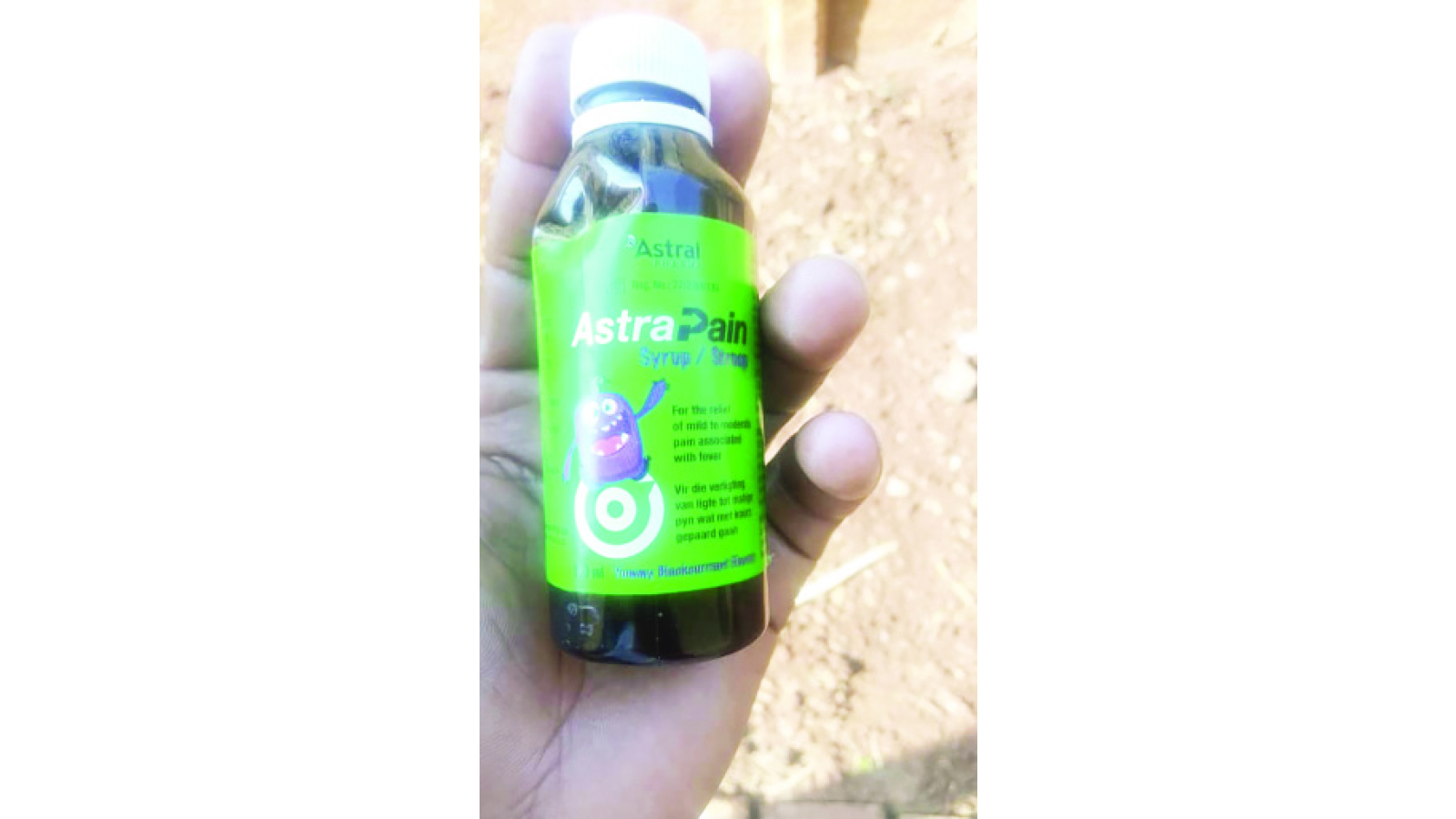
Ivan Zhakata-Check Point Desk
A NEW cough syrup called Astra Pain has quietly slipped onto the streets, sparking fears of a fresh drug crisis as it rapidly takes over from banned intoxicants such as Broncleer, Histalix and Benylin Codeine.
Packaged in a 100ml brown bottle with a green sticker displaying a cartoonishly intoxicated face, the syrup is being abused by young people under the street name “kusticker”, raising alarm among parents, health experts and authorities.
Sold for US$5 a bottle, Astra Pain is smuggled from South Africa and is now widely available in township tuckshops and the streets.
Marketed as a remedy for mild to moderate pain and fever, each 5ml of Astra Pain contains Paracetamol 120mg, Codeine Phosphate 5mg, Promethazine Hydrochloride 6.5mg, an alcohol content of 12.5 percent v/v, and high sugar content.
Investigations by this publication have revealed that people who consume this syrup exhibit manic behaviour, while others have a slowness of grasp, popularly known as ‘kusticker’ in street lingo.
Medical experts have said the mixture of an opioid, a sedating antihistamine, and alcohol makes the syrup dangerously addictive when consumed in excess.
“It is cheaper, easier to get and tastes nicer than what we used before,” said a 19-year-old user from Harare.
“You mix it with soda, and it keeps you buzzing. Everyone in the group is stickering again.”
But cases of overdose and hospitalisation are already being reported.
A 17-year-old girl from Highfield recalled collapsing at a party after drinking the syrup.
“My friends thought it was just cough medicine,” she said. “I woke up on a stretcher at the clinic. I do not remember anything.”
A senior clinician at a private hospital described the drug as a potential public health disaster.
“The presence of codeine, promethazine, and alcohol in one syrup is a dangerous combination. It depresses breathing, clouds judgment and in high doses, can lead to coma or death. What we are seeing is a repeat of the Bronco crisis, only with a new label.”
Authorities have said they are investigating the syrup’s circulation and legal status. Mr Davison Kaiyo, spokesperson for the Medicines Control Authority of Zimbabwe (MCAZ), said the pharmaceutical sector was highly regulated due to the public health risks associated with unsafe medicines.
Mr Kaiyo said MCAZ exists to safeguard public and animal health by ensuring that all medicines available on the market are safe, effective and of good quality.
“Astra Pain is not registered for sale or use in Zimbabwe, and its importation, distribution, or sale is unlawful,” he said.
“It is a criminal offence to sell unregistered medicines to the public, as such practices pose serious health risks.
“The Authority continues to collaborate with all our stakeholders, including the ZRP and ZIMRA, to curb the smuggling and sale of unregistered medicines.
“The Authority is also a member of the Technical Committee on Drugs and Substance Abuse (Supply Reduction Pillar), another platform the MCAZ uses to avert the situation. MCAZ cannot guarantee the safety, quality, or efficacy of medicines acquired from illicit markets.”
Mr Kaiyo said obtaining medicines from unlicenced premises or individuals exposes the public to the risk of substandard and falsified medicines.
“Anyone with information regarding the sale or distribution of such illicit products is encouraged to report to the MCAZ or the police.”
However, on the ground, the syrup is freely available.
Runners of drug cartels in Harare openly admitted that young people are their biggest customers.
One seller said: “I stock it for pain relief, but the youths come in the evenings and buy two or three bottles at a time. The bottles disappear fast.”
Families said they feel powerless as the drug infiltrates communities. Ms Miriam Mazanhi, whose 20-year-old son was admitted to hospital after collapsing from an overdose, said the family only discovered too late what the syrup contained.
“We thought it was harmless medicine. By the time we realised it was addictive, he was already hooked. He even started stealing from us to buy more.”
Addiction specialists said the country was unprepared to deal with another wave of cough syrup abuse.
Rehabilitation centres are few and expensive, while public facilities are already overwhelmed.
“This is not just a policing problem; it is a health crisis,” said an addiction expert at a private clinic.
“Unless the Government acts now with tighter regulation, education and support, Astra Pain will devastate another generation.”
Pharmacists said the syrup’s composition exploits legal loopholes.
Though each 5ml dose contains low levels of codeine, young people are consuming large quantities that deliver a powerful opioid hit.
“The law regulates per-dose content, not consumption patterns,” Mr Phillip Kunaka said. “That is why these syrups slip through.”
Community leaders have warned of rising school absenteeism, petty theft and increased cases of drowsy youths collapsing at social gatherings.
“This is destroying families and futures in real time,” said Agrippa Masango, a youth worker in Harare. “Parents do not realise until it is too late.”
With Astra Pain bottles flooding the illegal market at just US$5 each and social media posts glorifying “kusticker” culture, the crisis is deepening.
Authorities are facing growing pressure to crack down on smuggling routes from South Africa and tighten controls on codeine-containing syrups before another epidemic of addiction spirals out of control.