Chronicle Editor
Sikhumbuzo Moyo, Senior Sports Reporter
Zimbabwe pulled out of the Commonwealth on December 7, 2003 after the late former President Robert Mugabe was infuriated by the group’s decision not to lift the suspension it had imposed on the country in March 2002.
Zimbabwe was suspended on allegations of violation of human rights and a host of other charges which the bloc alleged were being committed by Harare.
Efforts by South Africa, Nigeria and Jamaica to persuade Mugabe to reconsider the decision to pull out were in vain.
“Anything that you agree on Zimbabwe which is short of this position (ending suspension), no matter how sweetly worded, means Zimbabwe is still a subject of the Commonwealth. This is unacceptable. This is it — it’s quits, and quits it will be,” he is said to have told the three countries’ leaders. He sarcastically called the grouping an Anglo-Saxon unholy alliance.
The March 2002 suspension of Zimbabwe was not justified at all. There was no reason to impose sanctions on Harare but the group agreed to suspend Zimbabwe despite Africa having the largest number of members in the then 55 member States, 20. Caribbean and Americas has 13, Asia eight, Pacific 11 and Europe only three.
All members have an equal say regardless of size or wealth. This makes sure even the smallest countries have a voice in shaping the Commonwealth.
Commonwealth countries meet every four years to compete in what is known as Commonwealth Games and have been doing that since 1930.
So when the country pulled out, it meant the 2002 Games, held in Manchester, Britain were to be the last that our athletes would compete in the Games, not because of their own liking but due to the Western illegal sanctions.
Our 2002 swimming gold medallist, Kirsty Coventry could have gone on to defend her crown at the 2006 Games in Melbourne, Australia but sadly her and that of other Zimbabwean athletes’ dreams were and remain shattered.
The country had consistently participated in these Games since the second version in 1934 (as Southern Rhodesia), only briefly pulling out in 1986 along 31 other nations in protest over Britain’s reluctance to sanction apartheid South Africa.
Earlier, the country had been suspended from 1966 to 1978 under the white dominated UDI government but upon attainment of Independence, our athletes were back in the Games in 1982 where bowlers Anna Bates, Flo Kennedy and Margaret Mills brought home three gold medals. The fourth and fifth gold medals came in 1998 from bowler Roy Garden and diver Evan Stewart at the Kuala Lumpur Games with Coventry adding the sixth and so far final one in 2002.
Silver medallists has long distance runner Tendai Chimusasa (1994), diver Tracy Cos-Smith (1990), boxer Nokuthula Tshabangu (1990), track runner Phillimon Hanneck (1994).
For bronze medals there is boxer Duke Chinyadzo(1990), Ken Harnden, 400m hurdles (1998), long distance runner Samukeliso Moyo (1998), Julia Sakala, middle distance runner (1998) and Savieri Ngidhi, middle distance runner (1994).
Commonwealth Games are by no means a minor competition and getting a medal from these Games is a huge stride for both athletes and the country but due to sanctions, our athletes and indeed the country have been disenfranchised since 2002.
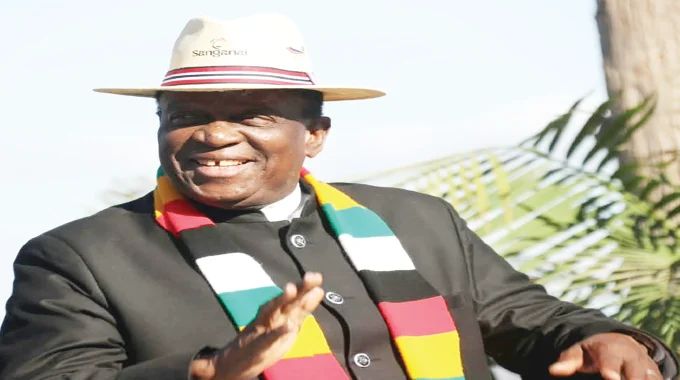
In 2018, President Mnangagwa officially applied to for the country rejoin the Commonwealth with the grouping’s secretary-general Baroness Patricia Scotland being quoted saying the country’s eventual return to the Commonwealth “would be a momentous occasion given our shared rich history.”
In April this year ministry of Foreign Affairs and International Trade spokesperson Constance Chemwayi told our Harare Bureau that the country was in the second stage of a four step process to rejoin the grouping.
There is clearly as it was from the start, no basis for the country to continue being sidelined by the international community. In any event the so called targeted individuals are not even athletes themselves and at the end of the day its those ordinary but talented Zimbabwean athletes who bear the brunt of these illegal sanctions.


 Online Reporter