Online Reporter
AS Zimbabwe advances its National Development Strategy 2 (NDS2) towards the attainment of
Vision 2030, social protection remains an important component of the country’s development agenda. NDS2’s focus on Social Development, Gender and Social Protection, alongside priority areas on Inclusive Economic Growth and Structural Transformation, Infrastructure Development and Housing underscores the importance of building an economy that protects livelihoods while creating opportunities for citizens to participate meaningfully in national development.
For the National Social Security Authority (NSSA), this policy direction anchored on the leadership of His Excellency President E.D. Mnangagwa resonates directly with its core mandate of providing social protection to workers and their families. At the foundation of this mandate are contributions from employers and employees, which provide the long-term capital from which NSSA pays benefits, fulfils its social security obligations and invests to strengthen the sustainability of the Fund.
From Contributions to Benefits
The Authority is administering two schemes namely the Pensions and Other Benefits Scheme (POBS) as well as the Accident Prevention and Workers Compensation Scheme. Contributions to the (POBS) are currently pegged at 9% of basic salary, equally shared between the employer and employee, with a ceiling of US$700.
These contributions form the foundation of the social security system, creating a pool of long-term funds that NSSA is entrusted to safeguard and grow for the benefit of current and future beneficiaries.
The ultimate purpose of this capital is to ensure that workers who contribute during their working lives have access to sustainable protection when they qualify for benefits. Under the Pensions and Other Benefits Scheme, NSSA is already paying qualifying pensioners between US$70 and US$350 per month, up from about US$20 in 2022. This is above the International Labour Organisation (ILO) poverty level of US$60 per month.
Under the Accident Prevention and Workers Compensation Scheme, the lowest-paid pensioner is currently receiving US$150 per month, while the highest-paid pensioner receives up to US$2,700 per month. Meanwhile, the NSSA Board is currently reviewing the pensions quantum following a very positive independent actuarial assessment and evaluation of the schemes.
These improvements demonstrate the connection between the contributions made during a worker’s productive years and the protection provided when that worker qualifies for their social security benefits.
Protecting the Worker Through Occupational Safety and Health
NSSA’s responsibility extends beyond providing income support to beneficiaries with the Authority carrying a regulatory responsibility to protect Zimbabwe’s workforce through occupational safety and health.
Various workplace safety inspections, promotional activities, work-related disease prevention and treatment programmes have contributed to a significant reduction in the Lost Time Injury
Frequency Rate (LTIFR), from an unacceptably high 6.8 four years ago to the current 2.2. NSSA is targeting an acceptable level of less than 1 by 2030.
The incoming OSH Act will further transform the workplace health and safety landscape by giving NSSA powers to do all that is necessary to protect the country’s most precious resource; the worker and to ensure their safety and healthy, free from work-related diseases and protected from injury across all workplaces without exception.
In this way, NSSA’s social protection mandate spans both the working life of the contributor and the period when a beneficiary requires support.
Growing the Fund for Current and Future Beneficiaries
To meet these responsibilities sustainably, NSSA must ensure that the funds entrusted to it are prudently managed and invested. The cumulative impact of this approach has been significant, with the NSSA balance sheet growing from about US$350 million in 2022 to the current level of upwards of US$1.2 billion, representing growth of 350% in four years.
Total investment income has also improved from about US$4 million annually in 2022 to the current US$40 million, representing growth of almost 1,000%. The growth in the balance sheet and investment income strengthens NSSA’s capacity to meet its obligations to beneficiaries while building the financial base required to sustain the Fund for future generations.
At the same time, the long-term nature of pension capital allows NSSA to participate in productive sectors of the economy. This creates an opportunity to generate sustainable returns for contributors while supporting areas that are important to the country’s economic and social development.
Investing in Housing and Communities
Housing remains a critical component of inclusive development, and NSSA, through its wholly owned banking subsidiary, National Building Society (NBS), continues to support initiatives that expand opportunities for home ownership.
In Plumtree, NSSA has delivered 152 residential stands, bringing serviced land and housing opportunities to a key border town with significant growth potential.In Bulawayo, the Rangemore
Housing Development Project has delivered 536 housing units specifically reserved for civil servants. The development provides quality and affordable accommodation while contributing to the revitalisation of the country’s industrial hub and infrastructural development. In Chinhoyi, the Batanai Housing Development has delivered 723 residential stands, supporting orderly urban expansion and creating opportunities for home ownership.
The Glaudina Housing Development in Harare has delivered 753 residential stands and 64 housing units, while the Runyararo Housing Development in Masvingo is delivering 616 residential stands.In Mutare, the New Mara Housing Project is delivering 153 housing units, extending access to quality housing in the eastern part of the country. The Authority has also delivered 90 low-density residential stands at 49A Borrowdale Road, Harare.
Beyond the numbers, these developments represent opportunities for families to own homes, employment for workers, business for contractors and suppliers and economic activity within communities. Collectively, the projects demonstrate how long-term institutional capital can contribute to addressing the country’s housing deficit while supporting financial inclusion, sustainable community development and national development.
Revitalising Urban Economies
NSSA’s contribution extends beyond housing to the renewal and modernisation of urban spaces.
The Sakubva Urban Renewal Project in Mutare is transforming one of the city’s busiest commercial and trading communities through improved commercial infrastructure and modern trading facilities.
The project seeks to provide traders and small businesses with a safer, more organised and dignified operating environment while strengthening local economic activities. By improving the environment in which SMEs and informal traders operate, the project contributes to employment creation, income generation, sustainable urban development and economic formalisation. This approach is consistent with the broader NDS2 aspiration of an economy that creates opportunities for productive participation and improves livelihoods.
The project also speaks directly to NSSA’s current initiative to establish the Informal Sector Social Security Scheme, where more than three million Zimbabwean workers are currently operating.
When operational, this will be Zimbabwe’s largest social security scheme and will support the formalisation of informal traders into the mainstream economy, extending access to social security services ranging from healthcare and occupational safety and health to pensions.
Powering Sustainable Development
Energy security is another area where NSSA’s investment capital is contributing to national development objectives. The Authority has invested US$8 million in the Nyabira Solar Power Project in partnership with Centragrid and Old Mutual. The investment contributed to the development of a 25MW solar power plant, one of Zimbabwe’s pioneering utility-scale renewable energy projects.
The project supplies clean energy to the national grid, supporting industrial production and economic activity while contributing to environmental sustainability. For NSSA, the project demonstrates the potential of pension fund investments to generate sustainable value for contributors while supporting the transition towards a more resilient and sustainable energy economy.
Building on this investment, NSSA is advancing plans to expand its renewable energy portfolio, with a long-term ambition of contributing up to 100MW of clean energy generation capacity in the country by 2030.
Supporting Infrastructure and Connectivity
Infrastructure development is an important enabler of economic growth, and NSSA has also deployed capital towards strategic infrastructure projects. Approximately US$7 million has been invested towards road infrastructure projects, including the New Parliament Boulevard Road network in Mount Hampden and the Harare-Kanyemba Road Development Project, which is underway.
Improved connectivity facilitates trade and commerce, supports regional integration and opens new economic opportunities. The Harare-Kanyemba corridor has the potential to unlock economic activity, tourism and cross-border trade, while infrastructure around Mount Hampden is supporting the development of an emerging administrative and economic centre.
Such investments illustrate how institutional capital can support infrastructure that enhances national productivity while remaining aligned with NSSA’s responsibility to create long-term value for contributors.
Investing in Agriculture and Food Security
Agriculture remains central to Zimbabwe’s economic development and food security and over the past three years, NSSA has invested approximately US$27 million towards financing winter wheat production and summer cropping programmes.
This has been done through subscriptions to Agro Bonds and AMA Bonds, as well as identified direct farming operations. The funding has supported farmers with critical capital to increase agricultural productivity and output.
These investments contribute to food security while strengthening agricultural value chains, supporting employment and improving livelihoods in rural communities. The Authority is further exploring opportunities to deepen its participation across key agricultural value chains, including sugarcane production and agro processing. This provides scope for investment to contribute not only to the aspirations of NDS2 towards food security and import substitution, but also to increased value addition and export growth.
Transforming Urban Economies Through REITs
NSSA has also embraced innovative investment vehicles in the property sector through Real Estate
Investment Trusts (REITs). The Authority has committed approximately US$35 million to REIT developments that are transforming urban spaces, supporting businesses and creating employment opportunities.
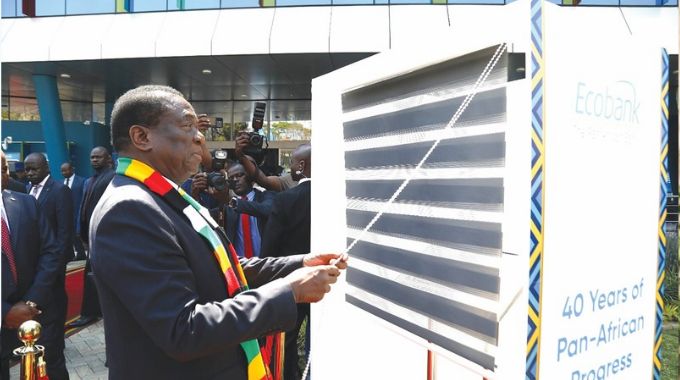
Among these investments is the Greenfields Retail Centre, recently commissioned by His Excellency, President Dr ED Mnangagwa, which has expanded access to modern retail infrastructure while creating opportunities for businesses, entrepreneurs and consumers in Harare.
The Design Quarter Development in Highlands represents a new generation of commercial property development, incorporating environmentally responsible features such as renewable energy solutions and water conservation systems. Through Pfuma REIT, NSSA is supporting strategic commercial developments, including Cork Road and Hogerty Hill in Harare and the Chegutu retail centre.
Its investment in Eagle REIT has supported developments in Mazowe, the new Mazowe Shopping Centre and the Victoria Falls development, which is under way. The latter will witness the development of a branded top hotel, a medical centre and residential accommodation, contributing to increased commercial activity and local economic development in the resort area.
In Bulawayo, NSSA’s participation in the ZITF Fairgrounds Retail Centre is supporting the transformation of the Zimbabwe International Trade Fair precinct into a modern commercial, exhibition and business hub.
Collectively, these investments are helping to modernise urban centres, support enterprise development and generate sustainable returns for pension contributors.
Looking Ahead
As Zimbabwe moves forward under NDS2 towards Vision 2030, The Authority remains committed to providing sustainable social security benefits to the people of Zimbabwe while ensuring that Zimbabwe has a workforce that is fit, healthy and free from work-related illnesses and injuries.
Going forward, the Authority is focused on identifying investment opportunities that balance financial sustainability with meaningful economic impact. This will be achieved through pursuing an ambitious action programme that includes additional commercial centres, retail and mixed-use developments and new housing projects across the country, which will grow the NSSA Fund for posterity.
Through prudent investment, stronger social protection and strategic participation in national development, NSSA continues to transform pension capital into enduring value for contributors, beneficiaries, communities and the future of Zimbabwe.