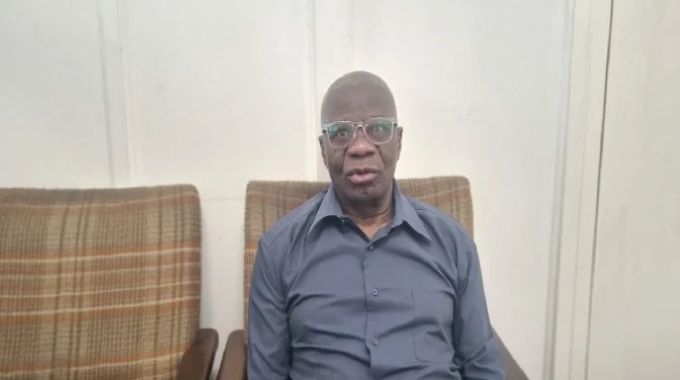
IN this week’s Lest We Forget, our Day Editor, Vincent Gono, speaks to Cde Reuben Alvan Ngwenya who liberation war name was Cde Lot Siwela. Cde Siwela was part of the group that experienced the attack on Freedom Camp in Zambia by the Rhodesians on the 19th of October 1978.
The bombing occurred on the same day that Mkushi was attacked although more casualties were recorded at Mkushi than at Freedom Camp which was basically not a training camp but a transit camp.
VG: Cde Siwela can you start by telling us your brief background.
Cde Siwela: I was born Reuben Alvan Ngwenya on 15 April 1954 in the Gomoza area of Lupane District in Matabeleland North Province. I went to Gomoza Primary School, Matshakayile and Luphaka Primary Schools in Lupane before proceeding to Fatima for my secondary education.
VG: At what age did you join politics and what inspired you to go for military training?
Cde Siwela: I grew up with my maternal relatives. They had been moved from Kezi to Gomoza by the colonial regime and they used to say the land in Lupane was not as productive as the one they had been moved from in Kezi. Lupane formed part of the Gwayi-Shangani Reserves that was not very fit for human habitation. The soils were not good for crop agriculture and rainfall rarely visited the area.
It was also tsetse fly infested. So I grew up knowing that history and it made me hate the colonial government.
We were also close to Pupu Memorial Shrine and the story of that Pupu battle inspired us too. We had elders from the community who would tell us about that battle and how brave the warriors who fought that battle were.
So in 1976 when I was 22 years we set out for Zambia through Botswana.
VG: How many were you and what happened when you got to Zambia?
Cde Siwela: We were three when we left Lupane for Botswana en route to Zambia. And when we got to Zambia we were taken to CGT (Camp for Guerrilla Training) which served as a major military training facility for Zipra forces. One of the commanders that we trained under was Cde Ananias (Rtd General Philip Valerio Sibanda) and that was now in 1977.
I was one of the ten recruits who were selected to do political mass mobilisation in Moscow, Russia where met other colleagues from Swapo, Umkhonto weSizwe, Palestine Liberation Organisation and other liberation movements.
We were there from around September 1977 to March 1978.
VG: When you came back from Russia, what did you do?
Cde Siwela: We went to Emagojini where we joined the command element and then moved to
Nampundu where we were now in charge of politically educating those who were coming for training up to around September 1978. We were part of the political commissariat department in charge of mobilisation.
VG: You said you were part of the people who witnessed the attack on Freedom Camp on 19 October 1978. Can you tell us more about that incident?
Cde Siwela: We were moving from Nampundu and we got to Freedom Camp which was not a training camp per se. It was a transit camp that was previously a farm compound. So it happened that on the morning of 19 October around 8 AM when we were about to go out for breakfast, the camp was visited by helicopters that dropped bombs. They targeted the armoury, the kitchen and other areas where people stayed.
There was confusion and pandemonium and it was during that attack that I was hit and I got seriously injured in the pelvic area. I was hit by a bomb and it left my pelvic bones exposed while a splinter got into my body through the right armpit.
I bled profusely from the injuries, even from my mouth. Fortunately, after the air attack there was no ground attack. Had they decided to have it, we could have been killed because a number of people were injured while around 200 died. It was unlike Mkushi where there was an air raid that was followed by a ground attack.
VG: You hinted that the attack was a result of infiltration and that some among your colleagues could have been supplying information to the Rhodesians. How sure are you with the allegations?
Cde Siwela: I am very sure. It was funny that the attack occurred after days of no food supplies. We were attacked in the morning when food had been brought in the previous night and the attack was strategic in that it was carried out when people were all gathered in the dining room while others were in the kitchen.
I will tell you that after the attack on Freedom Camp, I saw someone being lowered by the helicopter and it went. I am sure as they were bombing that person was the one who was directing them on where to attack. I even told the commanders that I had seen someone being dropped by a helicopter.
VG: So after the attack what happened?
Cde Siwela: We were taken to United Teaching Hospital for medication. We however requested to be transferred after we gathered that the Rhodesians were paying doctors to amputate a number of our colleagues…
To be continued…