admin
admin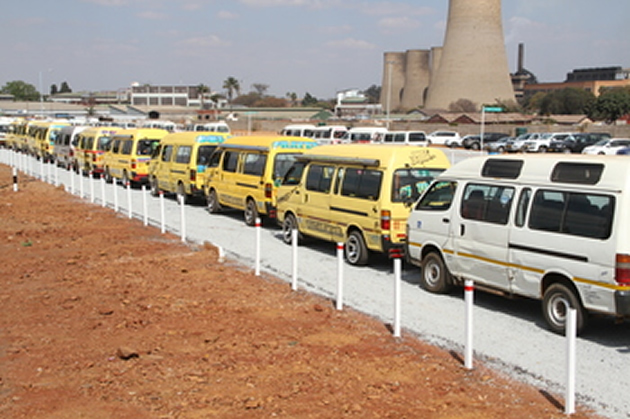
NAIROBI. – Yesterday’s shutdown of Nairobi, East Africa’s biggest metropolis, was yet another ill-thought out proposal to decongest the city.
Former Nairobi Governor Evans Kidero tried the same trick, but failed. His ingenuity, which he christened signalised intersections – of barricading five roundabouts on Uhuru Highway and other major road intersections using old drums – caused a gridlock as that witnessed yesterday. The plan had to be called off.
The thinking then was that traffic jams were exacerbated by the roundabouts. Blocking them to create a continuous flow, the honchos at City Hall thought, was a smart idea. Alas, they were wrong.
Now it seems his successor Mike Sonko Mbuvi learnt nothing from that fiasco. He and his team at City Hall think public service vehicles – the matatus – cause the incessant traffic jams. To address the congestion, all traffic into the city will be terminated on the outskirts. And therein lies the problem.
The logic around the new directive is defective, as it encourages the use of private cars that carry fewer people while barring public service vehicles with more capacity.
Additionally, it was irresponsible for City Hall to roll out the initiative without creating an alternative means of transport or making a provision for cross-city transport or safe places where commuters could wait for means to get home or to work.
Nairobi’s biggest challenge remains public transport. It ranks higher than housing or even clean water and good sanitation. Gridlocks on city roads is estimated to cost Sh50 million each day in lost man hours, fuel and pollution. That translates to nearly Sh15 billion a year- money enough to run a county for a year.
It is inconceivable that a city of nearly 5 million lacks an efficient, cheap and reliable means to get people around to work, shopping or out to sight-see. And not for the lack of it. Previous attempts to make the city navigable by public and private transport have been shot down due to vested interests. The exit of the Stagecoach Express in early 2000s left commuters at the mercy of matatu cartels whose sole endeavour was to make a quick shilling yet it is a fact that public is not a profitable business venture.
And that is not the only problem; city planners failed Nairobians in a big way.
The gridlock is more because of the poor road designs than because of the many vehicles on the road. Most roads enter and exit through the same points. The lack of cycling lanes also means that those who would ordinarily jump onto their bikes do not, while there are no footpaths in most of the congested roads.
So what to do? Nairobi is too important to not have a cheap, reliable and safe public transport system. As we wait for the roll-out of the Sh9.6 billion Nairobi Bus Rapid Transit, some things must be done, first acknowledging that even this plan that is co-funded by the EU will take some time.
The only deterrence that has convinced motorists to abandon their addiction to cars is the introduction of a small fee for driving on city roads. It has been tried in cities like London, Tokyo and New York, and it has worked. A small fee will make one think before getting onto the steering wheel during peak hours, especially when workers and students ought to be given more preference. That means non-essential travel will be curtailed. Indeed, that will be akin to killing two (nay, three birds) using one stone: authorities will decongest city roads, raise funds for road maintenance and repairs and help keep the environment clean.
The decision by Nairobi Governor Mike Mbuvi Sonko to temporarily lift the ban on matatus (kombis/commuter omnibuses) from accessing the Nairobi central business district is not new.
Earlier attempts by his predecessors and ministers for transport in the previous regimes to implement the ban have never been successful.
Here is a timeline of failures by both the national and the city county governments:
- April 2018: Governor Sonko announces plan to ban matatus from the CBD.
– Matatu operators threaten to ground operations if the county government bans them from accessing the CBD, citing lack of enough space to accommodate the high number of public service vehicles plying the various city routes.
- September 19, 2017: Governor Sonko is forced to rescind the planned ban after his attempts to enforce it are met with immense opposition from the Matatu Owners Association led by their chairman Simon Kimutai.
– Under pressure, Mr Sonko gives the matatu owners a one-month grace period to regulate the flow of their vehicles in the CBD and vows to enforce the ban if the PSV operators fail to put in place a strategy to manage their vehicles.
-The then acting county secretary Leboo ole Morintat hints that the matatus could be allowed to stay in the CBD for good as long as they observe the strict traffic rules.
– Mr Morintat also directs matatus to abide by other rules, such as not double parking, not obstructing traffic or playing loud music within the CBD and its environs.
Before Sonko, there was Evans Kidero, who also tried to ban the matatus from accessing the CBD without much success.
- March 2016: Dr Kidero announces that his government was banning matatus from the CBD in a bid to de-congest the city.
– Kidero directs passengers should be picked up or dropped off at designated areas.
- March 15, 2015: The governor bans all commuter matatus from the Nairobi CBD.
– His decision is publicly opposed by Sonko, then Nairobi senator and critic-in-chief of City Hall decisions.
– Mohammed Abdullahi, then Transport minister in Kidero’s administration, insists that the ban is lawful and there is no backtracking on it.
– “We know that this is a tough process, but we will have to push it through in order to create sanity in the CBD. We urge business people to be patient as we put in place measures to decongest the CBD,” he says.
– The ban does not take effect after Kidero cedes ground and agrees to dialogue with the matatu association’s leaders.
– The situation remains unchanged until he exits office in 2017 after losing to Sonko in the August general election.
SOURCES: Standard Media/Daily Nation


 Online Reporter