Chronicle Editor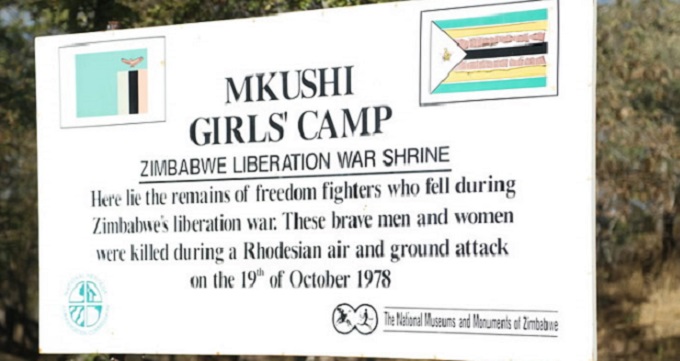
Pathisa Nyathi
THE liberation struggle had more burdens beyond just the military. Quite often what comes to mind are combat personnel with their specific military needs, some of which they shared in common with the civilian population. Military camps required basic accommodation including tents or makeshift structures comprising wood and grass which constituted basic shelter. Food supplies had to be provided alongside medical supplies and combat gear. Transport was a requirement for logistics. For example, food requirements at Mkushi Camp, the girls’ cantonment was taken there in lorries, the Zill and Kraz, all the way from Lusaka.
The thrust of this article is on the non-military aspects during the liberation struggle. There were thousands of people, ranging from women, men, boys, girls, children and babies that became refugees as part of the Rhodesian political conflict. The bulk of these were refugees who left Rhodesia where there was intimidation, harassment and persecution in the hands of the Rhodesian police, army and security agents. Botswana hosted several refugees en route to Zambia. Those being recruited for combat duties also travelled, in the main, via Botswana.
The refugees were housed at Selebi Phikwe and Francistown within the prison complexes for the security and safety of refugees. Botswana was teeming with Rhodesian undercover security agents including, in the latter part of the struggle, the Selous Scouts under Colonel Reid Daly. The presence of the Rhodesian Special Branch (SB) and Central Intelligence Organisation (CIO), secret agents were operating in Botswana in very early stages of the armed struggle. As far back as 1965 when Moffat Hadebe, Clark Mpofu, Elliot Ngwabi and Keyi Nkala escaped from Bulawayo Prison they were nabbed before getting to Francistown. Only Moffat Hadebe did manage to escape and melt into the Tswana community where the language, Sebirwa, he spoke at his Mawaza home, was akin to the Setswana spoken in Botswana. The man behind their capture was Koroneri Nyathi who passed on recently.
The Rhodesian agents visited social jaunts where they were on the lookout for Zapu cadres, officials and intelligence personnel. Indeed, in the later years they were responsible for several abductions and foiled ones. Some of those that they captured were killed. A case in point was Ethan Dube who was in charge of Zapu’s intelligence in Zambia. Be that as it may, thousands of refugees managed to sneak through the security net both in Rhodesia and Botswana and made their way to refugee settlements prior to being airlifted to Botswana.
These, together with those headed for combat duties after undergoing military training, had to be fed. Blankets were also needed. There were organisations, in particular the United Nations agencies that came to their rescue both in Botswana and Zambia. There was the United Nations Development Program (UNDP), the United Nations High Commission for Refugees (UNHCR) and the United Nations Children’s Fund (Unicef). While the trips from Rhodesia to Botswana were undertaken on foot, the final lap to Zambia was completed by hired planes which took the refugees to Nampundwe Transit Camp.
Different people joined the struggle at different times. Political consciousness played a role. There were families that became politicised well ahead of others. Those that left Rhodesia to enlist for the struggle exposed their brothers and sisters who became targets of the Rhodesian security agents. Under molestation, their families also left to avoid the wrath of the Rhodesians. There were instances when some parents were harassed or even killed. A case in point was Rodgers Alfred Nikita Mangena who had left for Zambia where he lived in Chingola among other Rhodesians who were members of Zapu. Zambia was a political province within Zapu’s political structures. From Chingola Mangena proceeded to Cherchell in Algeria where he undertook military training. From there he proceeded to Morogoro as an instructor.
Rhodesians knew about all this and descended on his father Bakayi who lived in Mwenezi, after being evicted from Montrose in the eMakhandeni area. Initially, it was the police who went to confront Bakayi seeking to know where his son was and if he did communicate from time to time. Later the army visited him. Bakayi was thoroughly beaten and sustained injuries that eventually led to his death after independence (see Nyathi, P 2020 In Search of Freedom: Rodgers Alfred Nikita Mangena). This was not an isolated case. Many faced a similar fate and as a result some of the relatives fled Rhodesia. It is well-known too that the parents of both Dumiso Dabengwa and Ethan Dube were terrorised by the Rhodesian security agents on account of the fact that their sons were in the struggle for independence.
Let us cite one more case in this regard. In 1975 Gregory Ngenangaphi Nyathi and his younger brother Elijah (sons of Mabela Pulazi) were detained at Gwanda Police Station where, with the assistance of a police officer (one Sebata) managed to escape and drove a police Land Rover towards Botswana. They abandoned the Land Rover at the Shashe River and proceeded on foot to Botswana en route to Tanzania via Zambia. Abel Mazinyane took them to Mbagala and finally to Morogoro. Back home, their younger sister Regina Sizale faced a torrid time in the hands of the Rhodesian security agents. In order to escape from the ferocious forces, she too escaped to Zambia and finally got to Victory Camp where she was engaged in tailoring clothes for the thousands of refugees the younger of whom attended the Zimbabwe School. She passed on last week. May her dear soul rest in peace.
There are many similar cases which, as a result, created families whose several members joined the armed struggle or became refugees outside Rhodesia. At Mhlonhlweni in the Dzembe Ward (Ward Number 2 in Matobo District) there was Tommy Ndebele, son of Mabhedla, who at one time worked at Mpilo Hospital in Bulawayo. He left for Zambia to participate in the armed struggle. He became a victim of the aborted Zimbabwe People’s Army (Zipa) in Mozambique. His younger brother Jabulani followed in his footsteps and also left Rhodesia to join the armed struggle. The family, father included, were active in Zapu and played crucial roles in support of the ZPRA guerrillas who infiltrated the area from Botswana following the establishment of the Southern Front (SF)in 1974.
Before we identify some funders that came to the rescue of Zapu by attending to humanitarian needs, it is pertinent to list some of the needs of refugees in Zambia. Shelter in various forms was a crucial need that had to be met. Refugee populations in the various camps ran into thousands. Victory Camp, for example, housed no less than 6 000 refugees 5 000 of whom were girls. Records indicate that there were about 3 000 pregnant or lactating mothers. At J Z Moyo there were about 11 580 boys. All these required some shelter in one form or another. Various funders stepped forward to render assistance.
For example, Zapu leader Joshua Nkomo wrote a letter of appeal for assistance to the Chairman of the Palestine Liberation Organisation (PLO) Yasser Arafat. The letter introduced Edward Ndlovu who was Zapu’s Secretary for Projects. “The purpose of writing this letter to you at this time is to introduce to you one of my senior colleagues Comrade Edward Ndlovu, a member of my central committee and secretary for projects who is bringing this message to you.”
The several refugees of school-going age were provided with education. There was thus a need for classroom blocks together with the requisite equipment such as desks, tables and text books. Ruth Nyamurowa was in charge of the children. Comrade M Mthuthuki was the director of Education. Among the refugees of school going age were those who had come from both Manama and Thekwane secondary schools. Those that were old enough were sent for military training. Many went to CGT 2 for military training where Annanias Gwenzi (Philip Valerio Sibanda) was Camp Commander. The incumbent Minister of Foreign Affairs, Dr Sibusiso Moyo was among those who came from Manama Mission towards the end of January 1977.
To be continued tomorrow


 Online Reporter