

 Online Reporter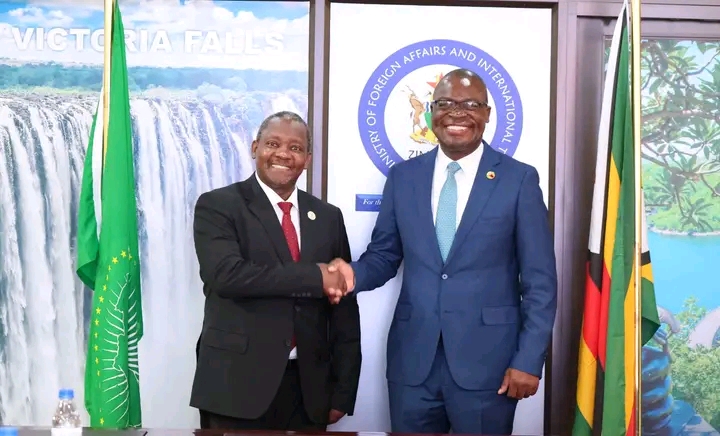
Sikhumbuzo Moyo
AFRICAN Union Commissioner for Education, Science, Technology and Innovation, Professor Gaspard Banyankimbona, is in Zimbabwe on a benchlearning mission to assess the impact and scalability of the country’s Heritage-Based Education 5.0 model.
The model, a brain child of the Second Republic under the leadership of President Mnangagwa, has attracted growing continental attention as a transformative approach to education and innovation.
The commissioner paid a courtesy call on Zimbabwe’s Minister of Foreign Affairs and International Trade, Professor Amon Murwira, on Wednesday morning as part of his official visit.
Speaking after the meeting, Prof Banyankimbona commended Zimbabwe’s pioneering role in developing the Heritage-Based Education 5.0 framework, saying the model aligns with Africa’s development aspirations and has the potential to be adapted and implemented across the continent.
He said the philosophy offers a practical pathway for African countries seeking to strengthen the link between education, innovation and economic transformation.
During his visit, Prof Banyankimbona will engage institutions responsible for education, skills development, research, innovation and higher learning to gain first-hand insight into the implementation of Education 5.0 and identify best practices that can be scaled across Africa.
The visit underscores growing recognition of Zimbabwe’s contribution to advancing education as a driver of innovation, industrialisation and sustainable development.
President Mnangagwa’s Heritage-Based Education 5.0 vision seeks to transform the country’s education system by integrating cultural heritage, values and indigenous knowledge with modern science, innovation and technology.
The philosophy aims to produce graduates capable of solving real-world challenges, creating employment opportunities and contributing to national economic growth. It emphasises science, technology, engineering, innovation and entrepreneurship while encouraging institutions of higher learning to develop practical solutions, products and businesses that benefit society.
The model also seeks to preserve Zimbabwean identity and culture while embracing digital transformation and emerging technologies such as artificial intelligence and robotics to drive industrialisation, sustainable development and national prosperity.


