admin
admin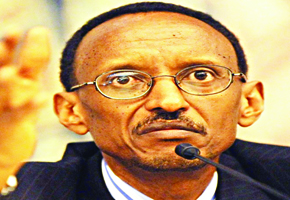
That is the case in Mali, Nigeria and Somalia where lives and property are being destroyed in the name of Islam. In the Great Lakes Region tribal wars have been going on, the Tutsis of Rwanda showing an aggressively heightened level of self-preservation following the 1994 genocide by their fellow countrymen, the Hutus.
The Tutsi-dominated Government of Rwanda is presently accused by that of the Democratic Republic of the Congo (DRC) of arming and actively supporting a Congolese rebel group called M23 whose command hierarchy and top leadership is made up of Tutsi resident in the DRC.
The United Nations supports the DRC in this matter and is currently blocking some of its aid channels to Rwanda as pressure for her (Rwanda) to stop supplying the M23 with war material.
The war in the DRC’s eastern region is meanwhile, continuing, and the M23 has recently been reported to have over-run and wiped out several villages in an attempt to carve out a Tutsi-led state in that fabulously mineral-rich DRC region.
Rwanda, meanwhile is counter-accusing the DRC Government of supporting Hutu rebels based there.
Regional heads of state comprising Uganda, Burundi, South Sudan, Central Africa Republic (CAR), Rwanda itself, Tanzania and the DRC have been holding summits most of them in Kampala, Uganda to resolve the dispute but to no avail.
The conflict is likely to lead to either the founding of a new state in the DRC’s eastern region, or the invasion of Rwanda by the DRC or the creation by international forces of a demilitarised zone between the DRC and its much smaller eastern neighbour, Rwanda.
A brief look into the history of the region will help us to understand the cause of the current inter-state problems.
We start with Rwanda (formerly spelt Ruanda), a country of some eight million plus people living in an area of 15 360 square kilometres. Rwanda is a part of the east and central African cradle of the black people generally referred to by anthropologists and social historians as the “Bantu.” The reader will notice that there is some phonetic similarity between the words “Ruanda,” the country’s former name, and “Luanda,” the name of the capital city of Angola.
Rwanda’s population is composed of three social ethnic groups: the Hutu, a Bantu group who comprise the majority; the Tutsi, a Hamitic Nilotic people who arrived in the region, tending herds of cattle in the 15th and 16th centuries and seized control of the land.
The Tutsis were led by kings known as the bami, the singular form of which is mwami. The third ethnic group is the Pygmies referred to as the Aba Twa.
In the 1890s, Rwanda, together with neighbouring Burundi, was colonised by Germany which in 1899 merged Rwanda with Burundi to become part of Germany East Africa, the other component part being Tanganyika, now the mainland of Tanzania.
Now a look at Burundi’s history in brief. Just like Rwanda, Burundi was also ruled by Tutsi kings (the bami) at the time of its colonisation by the Germans in the 1890s. Its population is some seven million-odd comprising exactly the same ethnic groups as those of Rwanda — the Hutus (who are the majority) the Tutsis and the BaTwa.
During the First World War, German East Africa was seized by the allies one of which was Belgium. The Peace Treaty, through the League of Nations, in 1923 gave Belgium the mandate to administer what were then twin countries — Ruanda/Urundi.
On 21 August 1925 both countries were legally administratively united with the then Belgian Congo, now the Democratic Republic of Congo (the DRC). That measure by Belgium enabled millions of people to migrate from Ruanda/Urundi to the DRC. Large numbers of them were Tutsis.
Descendants of some of those people are undoubtedly in the M23 rebel group, a Tutsi armed movement whose basic objective is to turn the DRC’s eastern region into a Tutsi-dominated territory.
Rwanda, would not hesitate to support such a scheme for two obvious reasons: one if successful, it would increase what is socially referred to as lebensraum, for Rwandans, who are presently congested to the extent that an average of 1 240 people live in about one square kilometre, and, two, the vast mineral wealth of the DRC’s eastern sector, plus the immense forests and their flora and fauna would be open for exploitation by Rwanda under its Tutsi administration.
So, the actual aim of the Tutsi-led M23 rebel group is to seize the DRC’s highly rich eastern territory not for the benefit of merely the rebels, but also for that of neighbouring kinsmen such as those of Rwanda.
However, the greatest danger now is that with the DRC allegedly supporting Hutu rebels on its soil , the age-old Hutu/Tutsi hostility will explode most violently in the DRC, Rwanda and Burundi sooner than later.
We should bear in mind that Rwanda’s government is Tutsi-led and that of Burundi is Hutu-dominated.
Meanwhile, Rwanda’s population is 80 percent Hutu, 19 percent Tutsi and one percent Twa. That of Burundi is 85 percent Hutu, 14 percent Tutsi and one percent Twa.
The tension existing between the two main ethnic communities in those two neighbouring states, particularly Rwanda must be understood in the context of the stated population statistics.
The unfortunate situation has now struck most destabilising roots in the DRC where about two million Tutsis and Hutus sought refuge during the massive massacre of Tutsis by Hutus in 1994 following the tragic death of President (General) Juvenal Habyarimana and the Burundian President Cyprien Ntaryamira in a most suspicious plane crash on 6 April 1994.
Both men were Hutus and were returning from a regional heads of state summit held in Tanzania. It was an elementary security error that the two leaders boarded one plane on that occasion. President Ntaryamira had just been voted into office in January that very year, a mere two months before the tragedy.
The horrific massacre of the Tutsis by the Hutus in Rwanda after that air crash was too ghastly to be forgotten. Even some Roman Catholic Hutu nuns were allegedly actively involved.
Involvement by the United Nations brought in some shade of stability that led to the laying down of arms by the Tutsi-led Rwandan Patriotic Front (RPF), and the installation of what was described as a moderate Hutu President.
On 22 April 2000, RPF leader Major General Paul Kagame was sworn in as that country’s first Tutsi president. He is the person being accused by both the DRC and the UN of supporting the rebel M23.
The African Union has neither said nor done much since the issue became a major international concern. It would serve Africa well, by saving it not only time, material and human resources but its very prestige to act promptly whenever such crises occur.
The Somali civil war is virtually under control now, thanks to the AU but particularly to Kenya, Burundi and Uganda whose armed forces intervened and neutralised the religio-political terrorists.
Would it not serve a useful purpose for appropriate regional leaders to take similar steps against the M23 before the situation gets out of control, especially the AU’s control?



 Online Reporter