admin
admin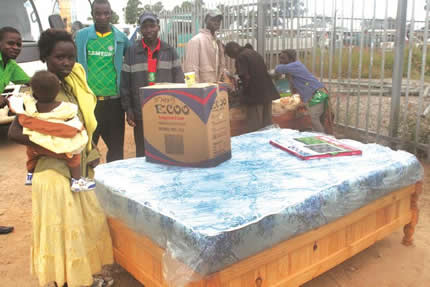
spend it.
A stroll at the tobacco auction floors is enough to see why money makes the world go round. For most workers they only get their 13th cheque once a year in November, but for tobacco farmers it can actually be pay day everyday depending on how many times they deliver their crop to the auction floors, and how they spread their earnings to cover the year.
You don’t need to be told who’s been paid or not by just observing the lifestyles of some farmers, you get the impression that if money is a visitor as the old adage goes, then they must as well make the best while it is still there.
Once they get their cash, what comes in the mind of many farmers is to pamper themselves at the expense of long held priorities.
Almost always, they develop an insatiable thirst for trinkets, or expensive this or that. This is despite the fact that tobacco is one of the most labour-intensive businesses you can ever imagine.
However, this is not the case with seasoned tobacco farmers because they don’t mill around the floors. Once they pick up their cheques they dash off to the bank and think about their next investment.
That is where the difference is with the Johnnies come lately, who simply forget all the pain and suffering they endured to produce a good crop.
They immediately start buying items ranging from toothpicks right up to big vehicles, without having to worry about what the next morning would bring.
Sadder still some unsuspecting farmers fall prey to vultures in the form of conmen, women of easy virtue and speculators.
The Saturday Lifestyle recently took time out to see just how some tobacco farmers were living their lives before and after getting their money.
Those who are into fashion will find the lure of designer clothes too hard to resist and impulse buying becomes the order of the day.
But somewhere outside the auction floors resembles a car sale, where salesmen genuine or otherwise frequent the floors for quick sales.
This is not without a reason; as some farmers would be coerced into buying small trucks, scotch carts and luxury cars. Others dream big and instead of buying a small car they would opt for a combine harvester or a tractor.
“This year I want a combine harvester and scotch cart, I hope my bales will fetch good money,” one farmer whispered.
In recent times, tobacco auction floors have become a symbol of hope for both the farmers and the surrounding areas.
Those who spoke to Saturday Lifestyle admitted that their waning fortunes have since changed after they began to utilise the land they got under the Government’s-initiated land reform programme.
“I had never owned a bed, I have three children sleeping on the floor but because of tobacco farming my life has changed. I have just bought a bed to sleep on,” said Gladmore Vareta, a Guruve-based farmer.
What is also striking are the messages that farmers choose to write on their newly acquired scotch carts. While others choose to be subtle others opted to tell their story of their lives in a few words.
“Kupfuma ishungu, Zvakabva mumaoko, Zvaitwa Mhofu, Harisi divisi kushanda nesimba,” read some of the message inscribed on the scotch carts.
For Vincent Dzomba (29), another Guruve-based farmer, tobacco has improved his livelihood.
“I brought six bales here and for the past three seasons I have managed to buy cattle and this year I have bought sofas and I am really happy,” he said.
Vending also thrives at this time of the year.
From those serving breakfast, lunch and dinner to those selling second-hand clothes, condoms, cigarettes and mbanje “jazzman” all throng the auction floors.
By the way, you get to meet people from all walks of life including beggars and pick pockets because the floors have proved to be an attraction for many people who see business opportunities from farmers.
Runyararo Mahachi, a sweets vendor said business is brisk during the tobacco selling season.
“I used to sell my stuff (mineral water, freezits and sweets) at a nearby school but since farmers have more money and are not afraid to spend, business is brisk here,” she said.
Since most of them will be waiting for the money, they seek cheap accommodation in the areas like Hopley, Southlea Park and Stoneridge that surround the auction floors.
Tawanda Mazara, a farmer from Gokwe currently staying in Hopley said they have to buy everything from food to toiletries.
“People from Hopley charge US$3 for a 20-litre water container. They also charge us for a place to bath,” he said.
Those who live near the auction floors enjoy brisk business by renting out their houses to desperate farmers.
Some of the house owners are turning their houses into make shift lodges where farmers have two options either to book for US$20 per night or hire a sex worker who will cook as well as provide other services like laundry and quality time. For some they will visit their relatives in the town where after getting paid they vanish into thin air.
Interestingly, flea markets owners have also abandoned their Mupedzanhamo base and erected temporary stalls just outside the premises. They argued that it was cheaper at the floors since they did not pay rentals.
Florists who operate near Granville Cemetery have also abandoned their trade in search of money that comes with the golden leaf.
Popular open air joint commonly known as KwaFatso in Glen Norah or Mai Jojo’s Colour Purple along Willowvale Road is where most farmers go for one or two drinks as well as braai.
According to a security officer manning the auction floor, a lot of activities take place there with nasty fights over money being the order of the day.
“There is a lot of drama. Some couples fight over how to share the money while others will be blighted in debt before they get to spend the money. At times there are endless fistfights to the extent that we call the police.”



 Online Reporter