tawandamusarurwa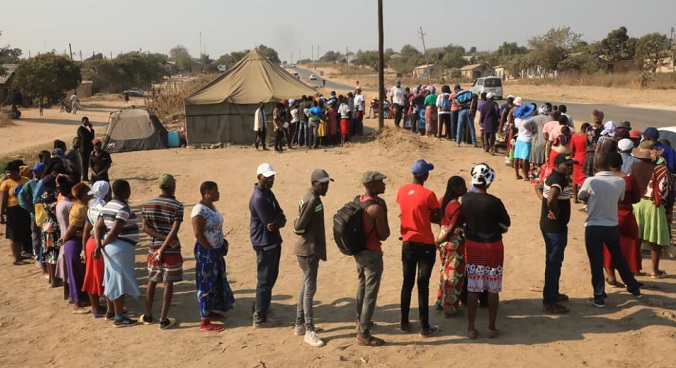
50 years later, the lecture still makes sense
The war can’t start from the urban areas
Retired Major Action Mandingo
ONE cold morning in 1973 at the Mgagao Training Camp in Tanzania, while at parade, our commander asked the recruits why it was not possible to launch our guerrilla war against Rhodesian forces in towns and cities.
Most of the recruits thought this was an easy question and so, very enthusiastically, they raised their hands and gave different answers.
Some said we could not launch the war from towns and cities because of the terrain, while others said a guerrilla war was not possible in these areas because there were no thick forests and mountains to hide from Rhodesian forces as freedom fighters relied mostly on hit-and-run tactics.
A good number of the recruits said launching the war from towns and cities was not possible because Rhodesian forces would have an advantage as they could easily track guerrillas using vehicles and helicopters.
After listening to the responses from the recruits, the commander was visibly furious. He went on a tirade, telling us, the recruits, that “if you don’t know why you are here and if political orientation has failed to open your brains, then you are of no use to us”.
He said, while the responses from the recruits were correct, they were too obvious and did not show any critical thinking. As recruits, we were taken aback by what this commander was saying. We thought we had given the best responses to the question.
“Think, think, think! Use your medulla oblongata.”
I still hear the booming voice of that commander up to this day.
Before telling us the response that he expected, the commander ordered us to sing two revolutionary songs: “Nyika Yedu yeZimbabwe” and “Kune Nzira Dzemasoja”.
The messages embedded in these two songs used to pump our adrenaline to the maximum, and most of the times, after singing the songs, we felt like grabbing the gun and marching to Rhodesia to finish off the blood-sucking Ian Smith regime. After singing the songs, the commander gave us a long lecture.
He told us that we could not launch the war in towns and cities because “revolutions are never fought by people who have danced and wined with colonialists for many years. Revolutions are fought by rural peasants, who understand the value of land.
“People in cities and towns have seen the Rhodesian forces at close range and so they think we can never win a war against the heavily armed Rhodesian forces. Some black people in cities and towns fear white people so much that they will sell out our revolution.
“Other black people in cities and towns have been eating crumbs and leftovers falling from the tables of white people for many years and they now think the crumbs and leftovers are the best they can get. Kunakirwa nemafufu (enjoying the crumbs) when the whole cake is yours.
“Some blacks in cities and towns have been working with whites for many years and they now think these whites are their friends, while others think they have become superior blacks because they have been working for white people for years.
“We can’t trust these people with our revolution and so we can’t launch our war in the cities and towns. They will sell us out and before we even go far, we will be wiped out.
“We will launch the war in the rural areas, because the people in the rural areas will find it easy to believe us and work with us. Political orientation is easy in the rural areas than in the cities and towns. Of course, after some time fighting the war in the rural areas and winning against the Rhodesian forces, the people in the cities and towns will start to believe us and that is when we will take the war into the cities and towns.
“The supposedly uneducated people in the rural areas will educate the supposedly educated people in the urban areas to understand and believe in our war. Tanzwanana here macomrades? (Do you hear me, comrades?)”
We were given that lecture about 50 years ago, but, as the results of the just-ended harmonised elections were being announced, the booming voice of that commander rang in my mind. The views of this commander were so, so true in the early 1970s, just as they are true in 2023.
Many people in cities and towns in Zimbabwe have never changed. They still do not understand that, after the historic land reform programme, the country is back at war with the imperialists. They still do not believe that sanctions are a form of warfare.
The imperialists no longer need to bring their war tanks, helicopters and guns to reverse the revolution. What is even more worrying is the fact that, just like the people in cities and towns in the early 1970s who thought the Smith regime could not be defeated, many people in cities and towns in the country today do not believe Zimbabwe can grow and prosper with the sanctions in place.
And yes, just like the wise commander in 1973 said, it looks like, even in 2023, “the supposedly uneducated people in the rural areas will have to educate the supposedly educated people in cities and towns”, because the voting patterns in the August 23 elections show that many people in cities and towns are selling out the revolution.
The Second Republic has gone all out to transform and develop the country using local resources and there is clear evidence on the ground that Zimbabwe is on an unstoppable growth trajectory.
President Mnangagwa has shown that he is sincere in his efforts to fight and win the war against sanctions. As the President is always saying, “Zimbabwe is being built brick by brick”. Development on the ground proves this beyond any reasonable doubt.
Just like we won the war against the Smith regime, Zimbabwe is winning the war against the illegal and evil sanctions.
Now, with victory against sanctions imminent, how does one justify voting for opposition legislators and councillors who have run down the country’s cities and towns since the early 2000s?
How does one justify voting for CCC’s Nelson Chamisa — who had no plan, no vision, no strategy, no structure and no ideology? It is clear, just like in the early 1970s, many people in cities and towns are not worried about the bigger picture: to defend the country against imperialists who are using sanctions as the new weapon to divide us and eventually destroy us.
Many people in urban areas are worried about today’s luxury and not the country’s destiny. Their stomachs matter more than the future of their children. It was shocking to hear some people saying Chamisa and his party performed well in cities and towns during the elections.
No, no, no! It is not Chamisa and CCC that performed well. Sanctions are the ones that did well to force people in cities and towns to vote for the opposition in large numbers.
We all know the out-of-sorts Chamisa does not have the capacity and ability to attract the votes he got.
Fortunately, just as it was in the early 1970s, the rural populace is there once again to defend the revolution. And yes, just as it was from the early 1970s up to 1980, the war against sanctions will be won eventually.
Going forward, ZANU PF and the Second Republic have to make sure the rural populace is well-equipped with resources to defend the revolution. Let us reward people in the rural areas with unprecedented development and make them happy so that they educate the supposedly educated urban populace about defending the revolution.
After lecturing to us for about an hour, the commander at Mgagao concluded by chanting: “Viva Zimbabwe! Victory is certain macomrades!”
Indeed, even in 2023, as was shown on August 23, victory against sanctions and imperialists is certain!



 Online Reporter