Online Reporter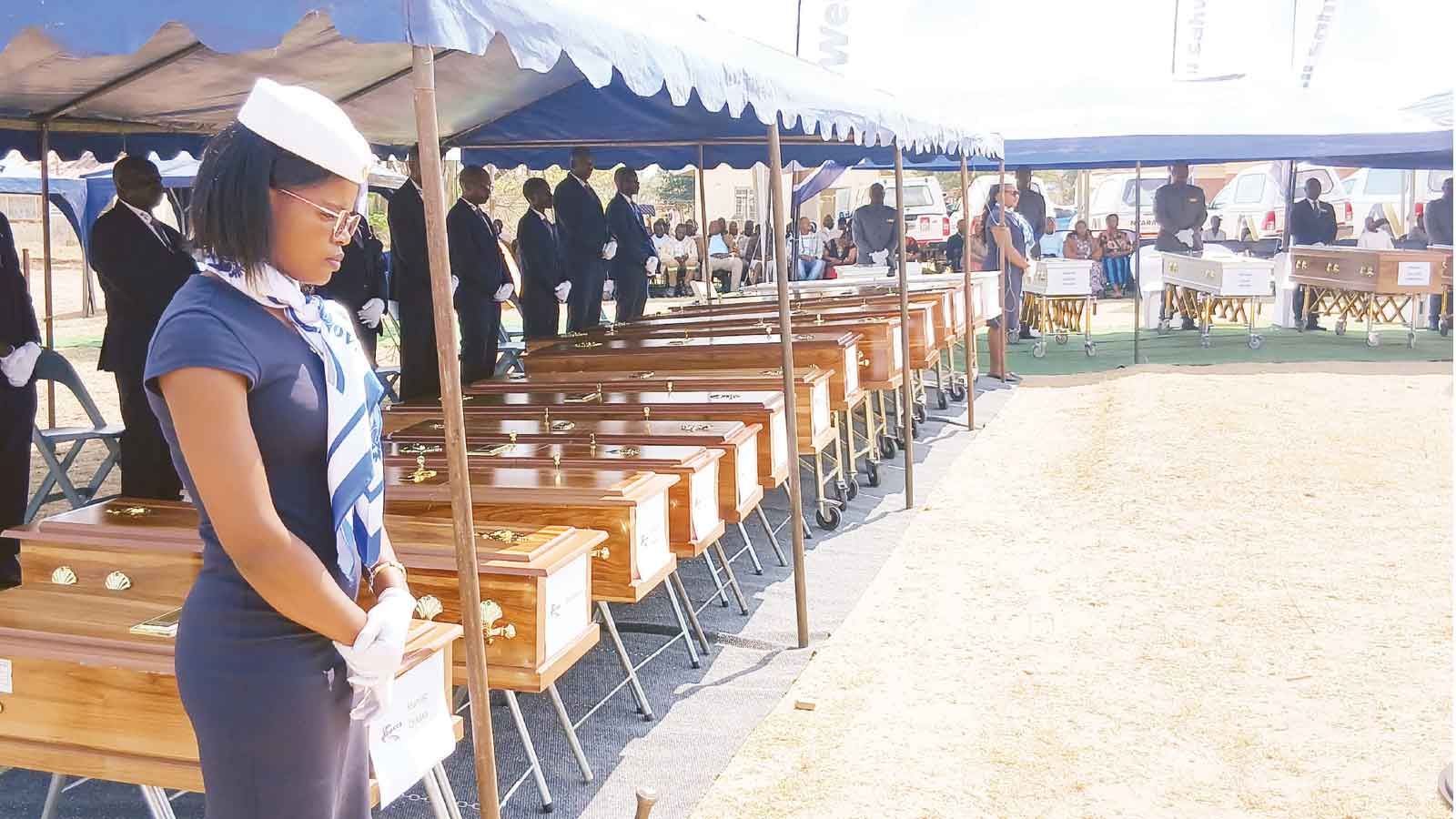
Gibson Mhaka
Zimpapers Politics Hub
AUGUST ended on Monday, but for hundreds of Zimbabwean families, the month will not simply be remembered as the month of Heroes and Defence Forces commemorations, winter sunshine and the return of schools. It will be remembered through deaths.
August 2026 will go down as one of the darkest months in recent memory for road and water transport disasters, a month in which tragedy appeared to follow tragedy with barely enough time for the nation to mourn one loss before another arrived.
From the waters of Lake Kariba to the Harare-Masvingo Highway near Chivhu, and from the country’s major highways to smaller roads, the month exposed, once again, the frightening vulnerability of ordinary Zimbabweans when transport safety fails.
The first great wound came from Lake Kariba. On August 11, the Rural Infrastructure Development Agency’s Mbuya Nehanda ferry capsized while travelling from Kariba towards Chalala Fishing Camp. What initially appeared to be a serious maritime accident rapidly became a national catastrophe.
At least 77 people were rescued, but the death toll kept rising as divers and rescuers searched the vast waters.
The toll had reached 97, with the disaster becoming the deadliest transport tragedy in Zimbabwe’s history, surpassing the 1991 Nyanga bus disaster that claimed 89 lives, mostly schoolchildren.
President Mnangagwa declared the Kariba tragedy a State of Disaster, allowing the Government to mobilise additional resources for the search, rescue and assistance of victims and their families.
Yet even as Zimbabwe struggled to absorb the enormity of Kariba, the country’s roads continued to claim lives.
During the Heroes and Defence Forces holidays alone, police recorded 145 road traffic accidents, 13 of them fatal, with 18 people killed and 51 injured.
Although this represented an improvement from the corresponding period last year, when 196 accidents claimed 24 lives and injured 96 people, the figures remained a painful reminder that even a reduction in carnage does not mean an end to the carnage.
Then came another succession of crashes.
On August 19, three people died after a Toyota Wish collided head-on with a Nissan NV350 along the Mutare-Burma Valley Road.
On August 20, four passengers died in a collision between a Toyota Probox and a Hino rigid truck along the Ngundu-Tanganda Road.
A day later, two passengers died after a bus carrying 61 people overturned along the Gweru-Zvishavane Road.
On August 22, three passengers died after a Nissan March carrying eight people lost control along the Mutare-Masvingo Road.
In total, at least 12 people were killed in separate road accidents recorded within a few days.
Then there was the tragedy that would close the month with another national outpouring of grief.
On Friday night, August 28, a commuter omnibus carrying members of the African Apostolic Church, commonly known as the Mwazha Church, was travelling from Dema towards Ndarikure in Mvuma for a church conference. They were travelling together in faith.
They were travelling towards a gathering of fellow believers.
Instead, near Honeyspruit Bridge along the Harare-Masvingo Highway in Chikomba District, their journey ended in fire.
The commuter omnibus collided head-on with a heavy haulage truck carrying mining equipment from South Africa to Goromonzi.
The impact triggered a devastating inferno.
Twenty-four people died at the scene while three others later succumbed to their injuries at Chivhu General Hospital, bringing the death toll to 27. Seven survivors were critically injured and transferred to Chitungwiza Central Hospital.
President Mnangagwa again declared a State of Disaster. It was a sobering bookend to a month already written in grief. The circumstances surrounding the Chivhu tragedy make the pain even harder to comprehend.
Among those killed were five members of one family. Albert Magiya lost his wife and five children after choosing private transport because he had noticed that the kombi was full.
He survived the journey because he was not inside the vehicle that carried his family to their deaths. There is perhaps no more painful illustration of the human cost of road carnage.
A vehicle can be overloaded by passengers, but the tragedy of an accident is never measured by the number of people inside it alone.
It is measured by the number of lives connected to those passengers.
Every person who dies leaves behind parents, children, spouses, siblings, friends, colleagues and communities forced to learn how to live with an absence that cannot be repaired.
This is why August should not simply be allowed to disappear into the calendar.
It should force the country to ask uncomfortable questions.
Why do fatal accidents continue to occur with such regularity? Why do motorists continue to speed, overtake dangerously and drive recklessly?
Why are overloaded vehicles still a feature of Zimbabwe’s transport system? Why are passengers prepared to board vehicles that are visibly carrying more people than they were designed to accommodate?
And, perhaps most importantly, why does the country repeatedly become serious about road safety only after bodies have been recovered?
The Kariba disaster raises similar questions about maritime safety. Preliminary investigations into the ferry tragedy pointed to a deadly combination of navigational error, possible overloading and failure to heed adverse weather warnings.
These are not merely technical failures. They represent decisions. Somebody decides whether a vessel sails. Somebody decides how many passengers it carries.
Somebody decides whether weather conditions are safe. Somebody decides whether warnings should be taken seriously.
Likewise, on the roads, somebody decides whether to overtake, whether to speed, whether to overload a vehicle or whether to drive when tired. The common denominator in many accidents is, therefore, not fate alone.
It is human responsibility. This is why the country’s response must go beyond mourning.
Declaring a State of Disaster is necessary when tragedy reaches such proportions because it allows the Government to mobilise resources, coordinate emergency responses and assist affected families.
But disaster declarations should not become the final chapter.
They should become the beginning of prevention. The lesson of August is that Zimbabwe cannot continue treating transport safety as an issue that matters only when an accident becomes sufficiently horrific to dominate national headlines.
Road safety must become a permanent national priority. The same applies to maritime transport. There must be stronger enforcement of passenger limits, regular inspection of public transport vehicles and vessels, greater accountability for dangerous driving and more effective emergency response systems.
The travelling public also has a role. A passenger who refuses to board an overloaded vehicle may save a life.
A motorist who chooses not to overtake dangerously may prevent a collision. A driver who slows down in bad weather may arrive late but alive. A vessel operator who respects weather warnings may disappoint passengers for an hour but save dozens of lives.
These are simple decisions, but in transport they can become the difference between a journey and a funeral. August is over.
But the grief that it left behind will not end with the turning of the calendar.
For the families who lost loved ones, every month from now on will contain an August.
The responsibility of the nation is therefore clear: the deaths must not become another set of statistics buried in official reports.
The lessons must live. The warnings must be heeded. The roads must become safer. The waters must become safer.
And above all, Zimbabwe must stop accepting preventable death as an inevitable price of movement. Because every journey should have a destination. It should not have a coffin.