

 Online Reporter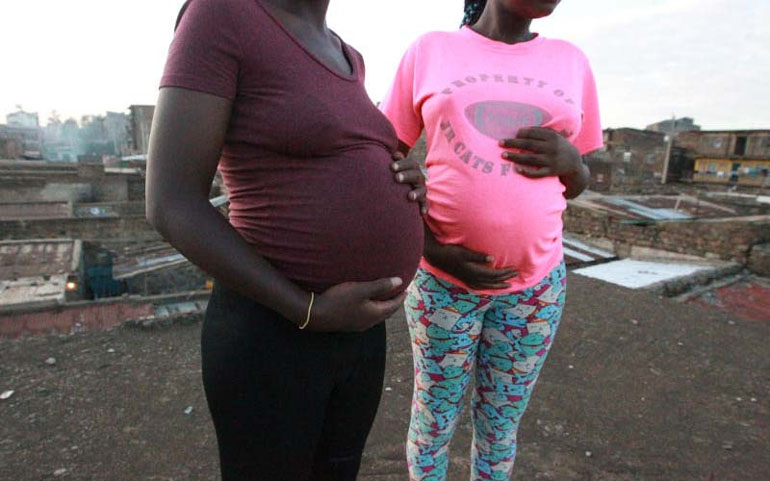
Getrude Chigerwe
Features Correspondent
MEMORY MACHAYA from the apostolic sect community in Marange, Manicaland Province, was only 14 years old when she died while giving birth at a shrine in August 2021.
Forced into marriage, she was denied access to formal medical care and made to deliver under the supervision of untrained church members. When she experienced obstructed labour, a common and life‑threatening complication for girls whose bodies are not fully developed, no effort was made to take her to a clinic or hospital.
Her death sparked national outrage, international condemnation, and renewed calls to strengthen child protection laws. Memory’s story became a symbol of how harmful religious practices, gender inequality, and limited access to health services continue to endanger girls’ lives.
Yet Memory’s ordeal is not an isolated case of the dangers of forced child marriages and how the information gap heightens girls’ predicament.
In 2023, another 15‑year‑old girl from Mbire District in Mashonaland Central died while giving birth at home after being married off.
Living far from the nearest health facility and without access to transport, she went into labour with only an untrained relative to assist her. She also suffered obstructed labour, and by the time neighbours attempted to take her to a clinic, she had already died.
Her death, like Memory’s, highlights how poverty, distance, harmful social norms and limited knowledge of legal protections and referral pathways continue to put girls at extreme risk.
Despite Zimbabwe’s progressive laws prohibiting child marriage, many girls remain vulnerable because the communities meant to protect them often do not know where the law begins or how it can be enforced. This persistent information gap continues to undermine national efforts to eradicate a practice that still affects thousands of girls across the country.
For many years, child marriage has remained one of Zimbabwe’s most pressing social challenges.
According to UNICEF (2024), 34 percent of girls are married before the age of 18, and five percent before 15, with the highest prevalence recorded in the Mashonaland provinces, where rates range between 42 percent and 52 percent.
These marriages are driven by a combination of religious beliefs, cultural expectations, poverty and harmful practices. The consequences are severe, including school dropouts, gender‑based violence, teenage pregnancies, HIV infections and heightened maternal health risks.
Zimbabwe’s adolescent fertility rate stands at 98 births per 1 000 girls aged 15–19 (World Bank, 2023), while the maternal mortality ratio remains high at 358 deaths per 100 000 live births (ZIMSTAT/UNFPA, 2023).
Early pregnancy is a major contributor to these deaths, and tragically, some girls lose their lives while giving birth, an outcome that starkly illustrates the human cost of child marriage.
Recognising the scale of the challenge, the Government, working with development partners and civil society, has prioritised legal reform and policy alignment to strengthen child protection.
This collaboration led to the development of the National Action Plan on Ending Child Marriage, a framework co‑created by Government ministries, civil society organisations, traditional and religious leaders, and United Nations agencies.
The plan positions child marriage as a multidimensional development issue rooted in social, cultural and economic drivers, and calls for coordinated, multi‑sectoral action to prevent and respond to the practice.
Zimbabwe has since strengthened its legal framework. The Marriage Act (2022) formally prohibits all child marriages and sets 18 as the minimum age for any union. The Kawenda Constitutional Court ruling of 2022 affirmed that anyone under 18 is a child and cannot legally consent to marriage or sexual activity. To close remaining gaps, the Government introduced Statutory Instrument 2 of 2024, raising the age of sexual consent to 18 and strengthening protection for 16–17‑year‑olds. The Children’s Amendment Act (2023) further enhanced reporting mechanisms, penalties and child‑safeguarding systems. Collectively, these reforms position Zimbabwe among the regional leaders in establishing a comprehensive legal framework to prevent child marriage and sexual exploitation.
The urgency of translating these reforms into lived protection realities was recently highlighted by the short film “Trapped”, produced by Take A Look Productions.
The film tells the story of Melissa, a young village girl forced into marriage under the guise of faith. Confined by her family and handed over to a self-proclaimed prophet, Melissa endures abuse, exploitation and isolation before ultimately dying while giving birth alone. Her story mirrors the lived realities of many girls who remain unprotected despite the existence of strong laws.
Reflecting on the power of storytelling in shifting social norms and promoting public dialogue on child marriages, the producer Blessing Ncozana said, “‘Trapped’ tells a story about the struggles of girls who are married at a young age and the life‑threatening challenges they go through.”
Actor Blessing Chimowa added, “The stories that matter are often the quietest. ‘Trapped’ gives these unheard voices space and dignity.”
One of the strongest messages emerging from “Trapped” is the urgent need for awareness and education. During discussions following the film’s premiere at the Alliance Française de Harare, it became clear that many people are still unaware of the provisions of the Marriage Act, the penalties for facilitating child marriages, and the mechanisms available for reporting such cases.
This mirrors national trends. Although Zimbabwe has more than 1 200 community‑based child protection structures, awareness remains uneven. A 2023 assessment found that less than 40 percent of rural households could identify a Child Protection Committee member or explain their role.
While reporting mechanisms technically exist through schools, clinics, police (Victim Friendly Unit) and district social workers, access is inconsistent, particularly in rural areas where distance, cost and social pressure limit reporting.
Closing this information gap requires coordinated, multi‑sectoral action. The Ministry of Women Affairs, Community, Small and Medium Enterprises Development can strengthen community‑level awareness and lead national dissemination of child protection laws. The Ministry of Primary and Secondary Education can integrate child rights and legal literacy into school curricula so that learners understand their protections from an early age.
The Ministry of Information, Publicity and Broadcasting Services, working with public and private media, can drive consistent messaging across radio, television, print and digital platforms, helping simplify legal information and highlight reporting pathways.
Civil society organisations and non-governmental organisations can complement Government efforts through outreach, legal aid and community dialogues, while faith‑based and traditional leaders remain essential partners in shifting social norms and promoting child welfare.
The fight against child marriage cannot end with legal reform alone. The next phase must focus on ensuring that every citizen understands the law, knows where to report violations, and actively participates in protecting children from exploitation and abuse.
Zimbabwe has laid a solid legal foundation for ending child marriage. The challenge now is ensuring that every parent, teacher, religious leader, traditional leader and child understands those protections. Laws can prohibit child marriage, but only informed communities can prevent it.




These little girls are not impregnated by wild animals. Real human beings, fully grown up men are responsible and must be arrested and charged. Let’s not pussy-foot around lack of understanding of laws, community ignorance and other far fetched rhetoric. The problem is these lustful men. Arrest the idiots, period!