Online Reporter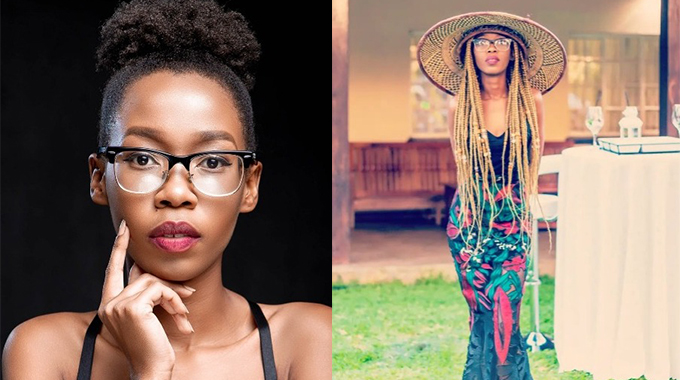
Gift Moyo, [email protected]
YOLANDA Ngwenya (pictured), a leading local designer and founder of the fashion brand Bakhar, has secured her first nomination at the National Arts Merit Awards. With a career spanning over a decade, her designs have featured on major international platforms, including the Durban Fashion Fair and Berlin Fashion Week. She has also dressed high profile figures such as musicians Berita Khumalo and Vuyo Brown, as well as former model, Samantha Tshuma.
An alumna of the African Women’s Entrepreneurship Programme, Ngwenya is the youngest board member of the Fashion Council of Zimbabwe (FCOZ).
Her career trajectory has been shaped by prominent mentors, among them Omoyemi Akerele, founder of Lagos Fashion Week and Joyce Chimanye, creative director of Zuvva and FCOZ chairperson. Ngwenya’s early potential became evident when one of her gowns was selected for a New York showcase, signalling her readiness for the global stage.
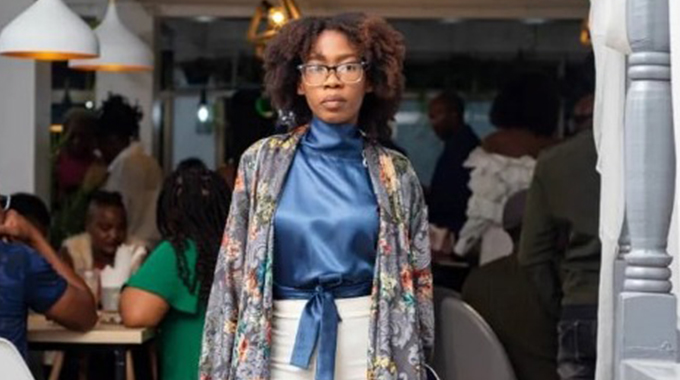
Zimpapers Arts and Entertainment Hub caught up with her to discuss her journey.
Q: What started your journey as a creative in the fashion industry?
A: I didn’t start with fashion; I started with art. As a child, while living at St James Secondary School, where my mother taught, I found a box of animal sketches left behind by a former tenant. I was fascinated and began tracing them to learn. Back in Bulawayo, I kept practising after seeing my cousin’s sketches, experimenting with pencils and paint, and soon became known as the “creative one” at school, designing classroom posters. Around the same time, my mother taught me to sew by hand and later to use an old sewing machine, a skill she had learnt from my grandmother. I realised I could merge drawing and sewing: sketching designs and bringing them to life as garments.
As kids in the neighbourhood, we even staged mini fashion shows using altered old clothes — it was playful, but it sparked my passion. Though I grew up in a musical and theatrical family and once considered music, I gravitated towards fashion, focusing on illustration in high school. Despite some teachers discouraging the path, I was certain of my calling, with strong support from my parents. I later studied fashion in South Africa before returning home to launch my brand.
Q: What was your vision for Bakhar when you founded it?
A: When I was younger, my vision was simply to be the biggest and best. As I’ve grown, that vision has matured. I want Bakhar, and African fashion at large, to be recognised, respected and positioned on par with, or even above, global fashion industries. We have the creativity and resourcefulness; what’s often lacking is visibility and market positioning. My goal is for Bakhar and other African brands to compete at a higher level and inspire pride in wearing local designs. When I mentor young interns, I ask them to name their favourite Zimbabwean designers. If they can’t mention at least three, it concerns me. We must value and celebrate our own talent instead of constantly looking abroad.
Q: What sort of designs are you into?
A: I’m eclectic and draw inspiration from many sources, but I lean towards designs with a perfect fit. I love bespoke tailoring and couture because they emphasise detail, finishing and precision.
Q: Where do you source your material?
A: When sourcing materials, I explore a wide range of places — fabric stores, hardware shops, upholstery suppliers, and sometimes I experiment with unconventional materials — ropes, glass, wires, plastic, curtains, paper, and upholstery, to name a few, depending on the project.
Q: How important is it for a designer to know their African roots in terms of being creative?
A: The depth of self-knowledge determines how far you can go as a designer. Without understanding your roots and story, there’s little room for true innovation or lasting impact. But when you know who you are and where you come from, your work becomes authentic, not something you put on, but something you embody. As a creative, that authenticity strengthens your voice. And as a consumer, people connect more deeply with genuine work. That connection is what ultimately turns fashion into legacy.
Q: How does it feel being nominated for the Namas?
A: This is my first nomination, and it came as a surprise. I honestly felt there was still more work to do before earning a place on such a prestigious platform. But someone believed my work deserved that recognition and submitted my name. I’m deeply grateful to God. The day before I heard the news, I had been praying and seeking clarity about my journey. The nomination felt like an affirmation that I’m on the right path. After 10 years in the industry, it’s both humbling and encouraging.
Q: Over those 10 years in the industry, has there been a moment where you felt like this was bigger than you ever thought it would be?
A: There have been several moments, and each felt like an affirmation from God. One that stands out was in my first few months of pursuing fashion professionally, when one of my gowns was selected for a fashion show in New York. At the time, I was simply sewing at home and had never seen anyone else wear my designs. I didn’t even know if the dress would fit the model, so seeing it showcased internationally was surreal. In the space of a year, I went from sewing at home to travelling to New York because of my passion for fashion. That’s when I realised this journey was bigger than I had imagined.
Q: How was your gown selected for the fashion show in New York?
A: My gown was selected after I participated in a project and workshop led by John Ablaza in collaboration with Paperbag Africa and the United States Embassy in Zimbabwe. The initiative brought together a select group of designers from Bulawayo and Harare and concluded with a showcase in Harare, where we presented pieces created during the programme. Following that show, a few designs, about four out of roughly 20, were chosen to feature at Ablaza’s fashion show in New York. Although I did not travel for the event, having my gown showcased there was a significant milestone.
Q: Which other countries and events has fashion taken you to?
A: Fashion has opened remarkable doors. I’ve collaborated on projects with various embassies and the British Council. Internationally, I’ve worked with GQ, the African Women’s Entrepreneurship Programme and Lagos Fashion Week. A major highlight was participating in a mentorship programme with Motor Republic and the Japanese Embassy under Unesco. Being mentored by Omoyemi Akerele (founder and CEO of Lagos Fashion Week) was extraordinary — she is one of the busiest figures in African fashion. Her invitation to Lagos Fashion Week and Bergen Fashion Week was a defining moment in my journey.
Q: Which local personalities have you worked with?
A: I’ve styled local artistes such as Vuyo Brown, Berita Khumalo, Msiz’kay, Shingai Shoniwa, radio personality TKP, and former model Samantha Tshuma. I have also conducted and facilitated training workshops, some with the Fashion Council, a couple for the Matobo Goes Fashion Project, and one with Danish Fashion Designer for the royals, Jasper Hovring.
Q: What advice do you have for young directors trying to break into the fashion industry and build a name for themselves?
A: First, be certain this is truly what you want to pursue. Then equip yourself with foundational skills — understand how to sew and how garments are constructed. That technical knowledge gives you confidence and longevity in the industry. Beyond creativity, learn the business side of fashion. Understand how businesses operate, how to communicate professionally, and how to position your brand. Fashion is both an art and an industry. Most importantly, be self-driven and disciplined. Build relationships, collaborate and network. Talent opens doors, but consistency, knowledge and professionalism keep them open.