Online Reporter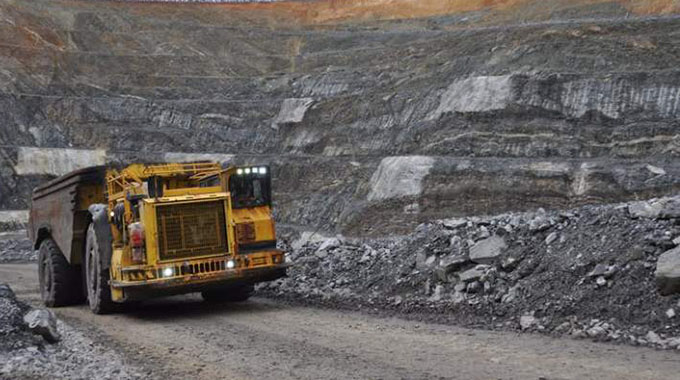
ZIMBABWE’S decision to ban the export of unprocessed lithium may feel dramatic, but it is, in truth, long overdue. For years, the country has watched as vast shipments of lithium-bearing spodumene concentrate left its borders — 1,128 million tonnes in 2025 alone — and returned only limited value to the local economy.
By halting the export of raw minerals and lithium concentrates with immediate effect, the Government is finally pushing back against a pattern that has kept Zimbabwe on the margins of the global battery mineral boom.
The authorities have made their frustrations clear: too many leakages, too many irregularities, and too much money slipping through the cracks.
The Ministry of Mines has openly cited these malpractices as a key reason for the clampdown, emphasising that the suspension is firmly in the national interest. This is not simply a punitive measure.
It is a reset — an attempt to ensure that the country’s mineral wealth actually benefits Zimbabweans. New rules now require mining companies to demonstrate proper compliance and show viable beneficiation plans before they can export anything at all.
That alone suggests the Government is serious about transforming mining from a raw material extraction sector into a driver of industrial growth.
If anyone doubts whether such a bold step can pay off, they need only look abroad. Indonesia is perhaps the most striking example. When Jakarta banned nickel ore exports in 2020, critics warned the policy would backfire.
They could not have been more wrong. Between 2017 and 2024, Indonesia’s export value of processed nickel products jumped from US$3,3 billion to US$33,9 billion — a tenfold leap powered entirely by domestic value addition.

By forcing companies to build smelters locally, Indonesia not only attracted billions in new investment but also inserted itself firmly into global stainless steel and battery material supply chains. Its approach is now widely cited as a model of how resource rich nations can reshape their economic destiny through strategic intervention.
Africa, too, offers valuable lessons. Botswana’s diamond story is well known: for decades, the country insisted on domestic sorting, valuation, cutting and polishing of its diamonds, ensuring value was added at home rather than overseas.
This long-term commitment helped turn Botswana from one of the poorest countries in the region into a stable, middle-income state, with its diamond sector funding schools, hospitals, infrastructure, and public services. Botswana’s success is not an accident. It is the direct result of a national insistence that minerals should uplift the nation, not simply benefit foreign buyers.
Zimbabwe’s lithium industry now stands on the same threshold. Battery minerals are the backbone of the global green energy transition, and lithium sits at the centre of that revolution. Simply exporting unprocessed ore means forfeiting the most lucrative stages of the value chain.
By demanding local refining and processing, Zimbabwe is positioning itself not as a raw material supplier but as a participant in the manufacturing of battery-grade products, components, and possibly even fully-fledged energy storage technologies in the long term.
The economic ripple effects could be dramatic. Processing minerals locally creates more and better paying jobs than raw extraction. It stimulates wider industrial growth — from engineering services to transport and energy infrastructure — and keeps more capital circulating within the national economy.
It also increases Government revenue, which in turn strengthens the country’s ability to invest in health care, education, roads and public services. Crucially, stronger domestic processing also helps close the door on illicit mineral trading, a long-standing problem that the new regulations explicitly aim to tackle.
Of course, this transition will not happen overnight. Building processing capacity requires investment, skills development, infrastructure and consistent policy enforcement. But the direction is unquestionably correct. Indonesia and Botswana show that countries willing to take control of their mineral destiny can fundamentally reshape their future. Zimbabwe’s ban is not a gamble — it is an assertion of sovereignty, ambition and strategic clarity.