

 admin
admin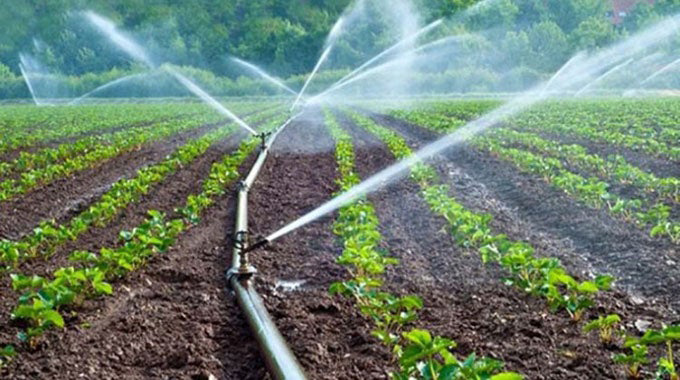
Sukulwenkosi Dube-Matutu
Bulawayo Bureau
THE rehabilitation of the Bambanani Irrigation Scheme in Mangwe District is 80 percent complete and the Government expects to complete the project before summer cropping time.
Once operational, the project is expected to usher in massive food production and downstream community industrial impact.
Already two centre pivots have been installed at the irrigation scheme and more rehabilitation works are underway.
With 131 hectares of land, the irrigation scheme has been lying idle for about 15 years until recently when the Second Republic came into being and initiated the process of reviving the facility.
The rehabilitation of the irrigation scheme is one of the key projects under the Small Holder Irrigation Revitalisation Programme (SIRP), which feeds into the accelerated rural industrialisation drive.
US$800,000 was allocated towards the project and the tender was awarded to Forster Irrigation Company, which is based in Bulawayo
In an interview, Matabeleland South acting provincial agricultural director for rural development services, Mr Mkhunjulelwa Ndlovu, said their target was to place 104 hectares under summer cropping.
He said once operational, Bambanani Irrigation Scheme will go a long way in addressing issues of food and nutrition security as well as employment creation.
“There have been some delays in completing the rehabilitation works but the target is to ensure that we plant something for the summer cropping season at Bambanani Irrigation Scheme,” said Mr Ndlovu.
“This irrigation scheme will go a long way in ensuring food and nutrition security not only in the district of Mangwe, but the entire province. It will also birth industrial activity and help eradicate poverty.
“The target is to ensure that farmers produce at the irrigation scheme and also process their produce in their area. We want to establish a complete value chain in their area. This will create employment for many people, eliminate poverty, and ensure food and nutrition security,” he said.
Mr Ndlovu said once operational, the Bambanani Irrigation Scheme will boost agricultural development in the province. He said the province needs supplementary irrigation or full irrigation as it is located in the dry region.
Bambanani village head, Mr Thomas Tshuma, said community members were looking forward to having a crop this year. He said the irrigation scheme is big and many households would benefit from it.
He said the community was relieved that it was not being left out of the Government’s development agenda.
“People really need this irrigation scheme to be operational because it will help to eradicate poverty and food challenges being faced in the area. The land had been lying idle for a very long time and we are relieved that things are taking shape,” said Mr Tshuma.
“We would like to appeal to the Government to avail the necessary resources so that the work is done on time. We would also like to thank the Government for taking heed of the people’s plight for the irrigation scheme to be revived.”
Bambanani Irrigation Scheme was established in 2004 and operated partially for four years before it collapsed. Some of the works done at the irrigation scheme include the construction of a night storage dam pump house, installation of night storage dam booster pumps, water pipes installation, pressure regulating valves for each sprinkler, and installation of two centre pivots. Outstanding works include repairing the spillway road, and connection of dam pumps onto the delivery line.
The Government has been working with various partners is rehabilitating irrigation schemes that have been lying idle in Matabeleland South Province in order to improve food and nutrition security and ensure the attainment of Vision 2030. Some of the irrigation schemes that have been rehabilitated in the province include Makwe, Guyu- Chelesa, Sebasa, Silalatshani, Tshikwalakwala just to name a few. SIRP was launched in November 2017 to assist the revitalisation of irrigation schemes across the nation through rehabilitation of infrastructure.
It is a Government-led programme funded by International Fund for Agricultural Development (IFAD).
Under the Second Republic, the Government is prioritising the revival of the agricultural sector through the development of irrigation schemes to alleviate food insecurity and poverty, particularly in rural communities.
Matabeleland South Province falls under agricultural regions four and five where dry land cropping is a major challenge because of poor rains.
This has made it difficult for farmers to engage in successful crop production. The province is, however, endowed with abundant underutilised water resources and good soils with vast potential for cropping under irrigation.



 Online Reporter