admin
admin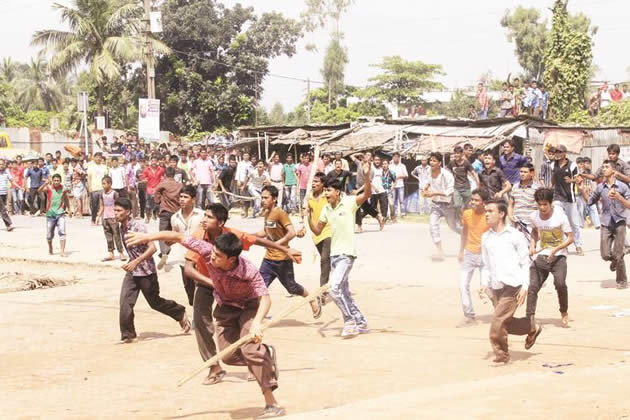

DHAKA. — Angry Bangladeshi garment workers blocked roads, set factories alight and clashed with police for a third day yesterday as protests demanding a minimum monthly wage of US$100 spread outside the capital. Abdul Baten, police chief of the Gazipur industrial district near Dhaka which is home to hundreds of factories, told AFP that “up to 200 000 workers” had joined the latest demonstrations.
His deputy Mustafizur Rahman said about 300 factories, which make clothing for top Western retailers such as Walmart, were shut yesterday to contain the violence as protesting workers attacked plants that stayed open.
“The situation is extremely volatile. Police fired rubber bullets and tear gas to disperse the unruly workers,” he told AFP, adding workers attacked more than a dozen factories with rocks.
Dozens of employees and several policemen were injured, he added.
Manufacturers said yesterday’s protests were some of the worst in the sector since 2010, when months of demonstrations forced the government and factory owners to agree to a minimum monthly wage of US$38.
Bangladeshi textile workers are among the worst paid in the sector worldwide, and often toil for 80 hours a week in factories which are vulnerable to fires and other accidents.
Protests over poor wages, benefits and working conditions are frequent but have gained in intensity since April when a factory complex collapsed, killing more than 1 100 people in one of the world’s worst industrial disasters.
Union leader Shahidul Islam Sabuj threatened to continue the protests, which were also staged on Saturday and Sunday, until wages are increased.
“US$100 is the minimum we have asked for. A worker needs much more than that to lead a decent life,” he told AFP.
Thousands of workers, many carrying sticks, blocked roads between the capital and the northern and western region, disrupting traffic for hours.
“Prices of all commodities have spiked, but there is no change to our salaries for years,” said a protesting worker in Savar, where April’s disaster occurred.
“We won’t leave the streets unless we are paid a minimum US$100 per month,” he told a local television station.
Impoverished Bangladesh is the world’s second-largest garment exporter, with apparel shipments accounting for 80 percent of its US$27 billion annual exports.
In June the government set up a panel to review salaries, but factory owners have rejected union demands for the US$100 rise.
Shahjahan Khan, a senior government minister, called for calm and urged the protesters to return to work on Tuesday. He was speaking after meeting representatives of manufacturers and unions to discuss the protests.
Thousands of workers also attacked a camp of a reserve police force 40 kilometres (25 miles) north of Dhaka, injuring three officers and breaking three rifles, the force’s senior officer Rafiqul Islam told AFP. — AFP.


 Online Reporter