Online Reporter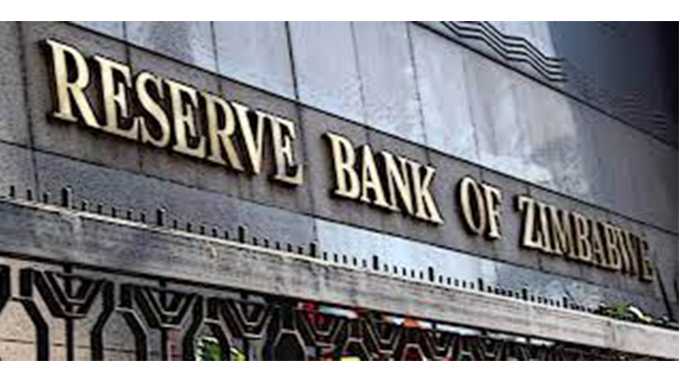
Nqobile Bhebhe, Senior Business Reporter
Shareholders of Zimbabwe’s financial services institutions are enjoying substantial returns, as banks consistently declare significant dividends following stellar performances that are driving profitability.
While banking institution shareholders are smiling all the way to the bank, there is concern about aspects of banks’ operations, which contribute a significant chunk of their profits.
While banks have admittedly been innovative and strategic to ride the waves of prevailing economic headwinds and drive profitability, they have also come under heavy criticism for their alleged excessive charges for banking services, which now contribute far more revenue than their core mandate of facilitating and providing loans. According to a breakdown of the banks’ source of income published in the central bank’s 2025 Monetary Policy Statement, at 22 percent of the total earnings, fees and charges came only second to revaluation of foreign currency assets, which accounted for 34,42 percent in 2024.
Banks made only 13,14 percent of their interest income from their supposedly core business of providing loans and advances.
This has contributed to waning confidence in the sector, forcing individuals and businesses alike to keep cash away from the banking system, diverting precious liquidity that could help oil the economy.
This has prompted the central bank to prescribe certain policy requirements to address issues in the sector that authorities believe have dented customers’ confidence.
Nonetheless, most banks have been declaring dividends ranging from hundreds of thousands to millions of US dollars, underscoring their solid financial performance, boosting investor confidence.
A dividend is a payment made by a corporation to its shareholders, usually as a distribution of profits.
When a corporation earns a profit or surplus, the entity can reinvest the profit in the business and pay a proportion of the profit as a dividend to shareholders.
For instance, Pan-African financial institution, Ecobank Zimbabwe, has proposed a dividend of ZiG139,58 million (US$4,39 million) for the period ending 31 December 2024.

FBC Holdings declared a final dividend of US$0,25 per share and ZiG 3,9 cents per share. “This is in addition to an interim dividend of US$0,25, which was paid in October 2024.
“The dividend is payable to shareholders registered in the books of the company at the close of business on April 17, 2025.
“The shares of the company will be traded cum-dividend on the Zimbabwe Stock Exchange up to the market day of April 14, 2025, and ex-dividend from April 15, 2025. The dividend payment will be made to shareholders on or about April 29, 2025,” the bank said.
CBZ Holdings has proposed a final dividend of US$10 million or US$1,61 cents per share, stating, “A separate dividend announcement with record and settlement dates will be published separately in due course.”
National Building Society (NBS) confirmed an interim dividend of US$420 000, which was declared and paid to its shareholder, the National Social Security Authority (Nssa), through the Accident Prevention and Workers’ Compensation Scheme (APWCS) and the Pension and Other Benefits Scheme (POBS).

Similarly, POSB reaffirmed its commitment to shareholder value.
“At the Annual General Meeting held on July 25, 2024, a dividend of US$589,341 was declared and paid to the shareholder, reaffirming our commitment to delivering value while supporting future growth initiatives.”
Commenting on the development, banker, Mr Clifton Dube, said the dividend declarations underscore the robust financial health of Zimbabwe’s banking sector and its ability to deliver strong returns to investors while sustaining economic growth.
“In recent years, Zimbabwe’s banking sector has demonstrated remarkable resilience amid economic volatility, currency fluctuations, and inflationary pressures. The sector has remained profitable, with several banks posting strong financial results driven by increased lending activity, diversified income streams and prudent cost management.
“Notably, the adoption of digital banking platforms has expanded financial inclusion and operational efficiency. Regulatory oversight by the Reserve Bank of Zimbabwe has also contributed to improved capitalisation and liquidity ratios across the sector.
“The consistent declaration of dividends by leading banks not only reflects strong balance sheets but also signals growing investor confidence in the sector’s long-term stability and potential for growth.”
While banks continue to post super profits, other stakeholders have raised the alarm over what they describe as “exorbitant” bank charges that have become a major burden on individuals and businesses alike.
The local banking sector is currently grappling with a host of challenges, including limited financial products, steep account maintenance and transaction fees, minimal international transacting capacity, and high interest rates. These concerns have fuelled growing public frustration and disillusionment with formal banking systems.
Customers have also reported poor customer service, including erratic network availability for digital platforms and unexplained transactions on customers’ accounts, raising questions about the integrity and security of certain financial institutions’ online platforms.
In a recent intervention aimed at boosting confidence in the domestic currency, the RBZ directed banks to increase interest on savings and time deposits. It also ordered the removal of all transaction fees for payments valued at US$5 and below, or the equivalent in the new Zimbabwe Gold (ZiG) currency.
Despite these measures, data from the RBZ’s latest Monetary Policy Statement reveals a concerning trend: banking fees accounted for 22 percent of banks’ income, while income from lending — the traditional core function of banks — stood at just 13,46 percent.
Economic commentator, Mr George Nhepera, told Zimpapers Business Hub that while the financial sector remains strong and well-capitalised, there is an urgent need for introspection.
“It is disheartening to see our local banks making most of their income from bank charges and commissions instead of the core business of lending,” he said. “This has been raised as a matter of regulatory concern by the central bank, including the public at large.”
He warned that excessive charges function much like taxes, eroding both individual and corporate account balances and weakening trust in the banking system.
“Bank charges have, in general, the same net effect as taxes on people and businesses. If they are high and exorbitant, as is the case now, they reduce available bank balances, leading to a lack of confidence and frustration in using the banking system,” Mr Nhepera said.
Economist, Ms Alice Chikonzi, said that to address the issue of excessive profits driven largely by non-core banking activities such as fees and commissions, financial authorities could adopt a multifaceted approach aimed at restoring balance, promoting financial inclusion and stimulating productive lending.
“Authorities could introduce incentives for banks to focus more on lending to the productive sectors of the economy, such as agriculture, manufacturing and SMEs.
“This might include risk-sharing schemes, interest rate subsidies or tax incentives for loans tied to economic development.
“Facilitating the entry of more fintech players and smaller banks could help disrupt the dominance of a few large institutions. Increased competition often leads to innovation, lower fees and improved customer service.”
She said by reorienting the banking sector toward its core function, mobilising savings and extending credit, financial authorities can help build a more resilient, inclusive and development-driven financial system.