

 admin
admin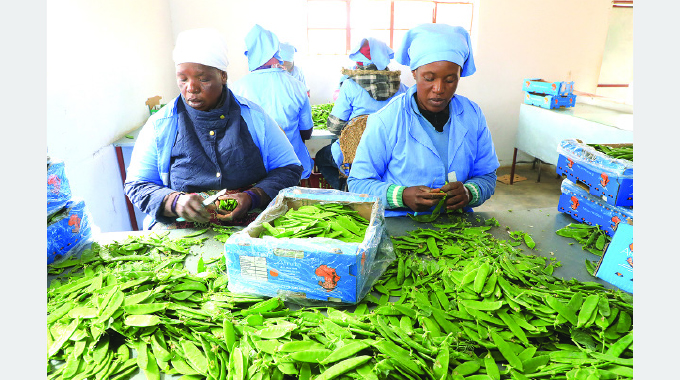
Edgar Vhera-Agriculture Specialist Writer
BANKS assigned by the Reserve Bank of Zimbabwe (RBZ) to administer the US$30 million Horticulture Export Revolving Fund have released the requirements farmers must meet to access the fund and the repayment modalities to sustain.
The facility is meant to boost the country’s export earnings.
To qualify for the programme, farmers need to be growing an export-oriented horticulture crop, with established export markets and/or export contracts and farming track record.
The banks shall use the project proposal and cash flows to evaluate potential funding for a farmer, NMB Bank head-business banking Mr Erasmus Bhunu explained.
FBC head-group marketing and public relations, Mr Roy Nyakunuwa explained that the fund attracted interest rates ranging between eight and 11 percent per annum for working capital and between nine and 12 percent per annum if it is capital expenditure.
As horticulture production is broad with some crops being annuals and others perennials, the loan repayment period becomes critical for farmers to determine whether they can apply for the loan or not.
As an example, it will be folly for a citrus grower to get a loan that is required to be paid over 12 months when they are only able to start getting their products on the market, in the case of oranges after four to five years.
“The working capital tenor is up to 12 months while capital expenditure funding is up to 36 months depending on each crop’s cash cycle with the other pointing to a maximum repayment period of seven years.
“The fund is being availed for all horticultural crops like cherry peppers, peas, avocados, citrus, blue berries, strawberries and macadamia nuts that are exported.
“Other key stakeholders such as those doing the logistics and sourcing markets can also benefit from it,” observed Mr Nyakunuwa.
The banks have since concurred that there was a lot of enthusiasm around the facility and had started receiving applications from interested farmers with disbursements expected to start by end of September. The participating banks are administering different portions of the US$30 million fund.
The introduction of the facility comes on the backdrop of an outcry by potential horticulture exporters who have been pestering the RBZ for the scheme’s roll-out modalities with the latter referring them to the Ministry of Finance.
Zimbabwe Farmers Union (ZFU) secretary-general, Mr Paul Zakariya, however, revealed that their members were still not aware of the requirements to access the fund.
“Government’s announcement of the US$30 million fund was mooted as something that farmers were expecting a long time ago and its announcement last week brought smiles to their faces.
“Banks seem to take long to come up with the requirements for loan accessing in terms of beneficiaries, interest rates and amount applicable per farmer and so on,” Mr Zakariya said.
Horticulture Development Council (HDC) chief executive Mrs Linda Nielsen, added that CABS and AFC Holdings were also administering the fund together with NMB and FBC.
She explained that it was the prerogative of the participating banks to put a cap on the maximum amounts of loans that an individual/company can get.
The HDC at its inaugural horticulture investment forum in November 2021 set a target of reaching a US$1 billion horticulture export earnings by 2030 with an annual growth of 30 percent.
The figure was, however, reviewed upwards to US$2 billion annually by 2030 during a recent HDC business breakfast meeting attended by farmers and funders.
“This fund alone will not be enough to meet this target but it is a welcome development, as it will go a long way in increasing production towards this target and hopefully attract further investment – both foreign and domestic, either into this fund or sector,” she said.
Mrs Nielsen further revealed that the horticulture sector needed a significant level of investment on farm level, as well as large-scale infrastructure development.
“The US$30 million facility will go a long way in attracting more investment into the sector especially as we work collaboratively to increase the ease of doing business.”
Mrs Nielsen commended the Government for increasing horticulture exporters’ foreign currency account (FCA) retention from 60 to 75 percent saying this was a welcome move and a sure way of enhancing exporters’ income.
“Government’s recent reduction in surrender requirements from 40 percent to 25 percent will go a long way in boosting both local and foreign investment.
“Industry will continue to work with Government on the ease of doing business and opening up of new markets. Market diversification will be key for the country to maintain competitiveness in the sector,” continued Mrs Nielsen.



 Online Reporter