admin
admin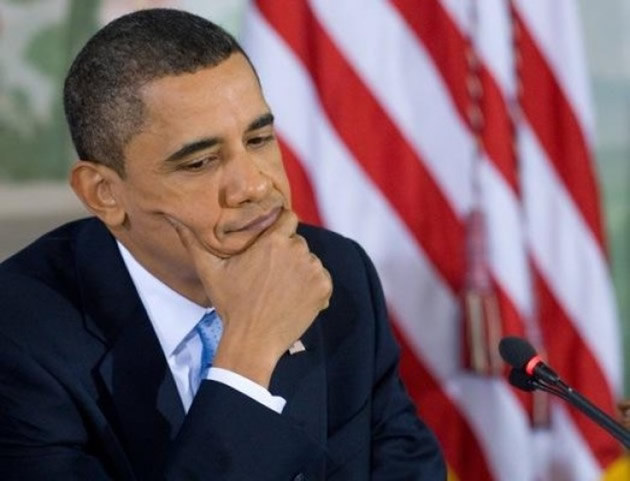
WASHINGTON. — Democrats have suffered a crushing political defeat in the US midterm elections, losing control of the Senate, with their Republican opponents on the verge of securing their largest majority in the House of Representatives since the 1940s.
President Barack Obama’s party awoke yesterday to the political equivalent of a pounding hangover; a wave of defeats more numerous and deeper than many Democrats had feared.
Republicans gained at least seven Senate seats from Democrats, cementing the GOP’s power base on Capitol Hill and boosting the party’s standing before the 2016 presidential elections.
On a night of few positives for Democrats, Republicans also outperformed them in most of the 36 governors’ races, clinching stunning victories in Democratic strongholds including Massachusetts, Maryland and Illinois.
“This is ugly,” one top Democrat involved in the party’s election strategy told the Guardian in the early hours of yesterday morning. “It is so much worse than we expected.”
Nearly two-thirds of voters interviewed after casting ballots said the country was seriously on the wrong track. Only about 30 percent said it was generally going in the right direction.
The defeat is a major blow to the president, whose low approval ratings contributed heavily to his party’s electoral drubbing.
Obama, an already isolated and unpopular president, must now see out his remaining two years in the White House with his Republican opponents controlling both branches of Congress.
The extent of the rout will also be a cause for concern for Hillary Clinton, the heir-apparent for the Democratic presidential nomination, who, along with her husband, former president Bill Clinton, stumped for several of the party’s Senate candidates who lost badly.
By the early hours of yesterday, Republicans were assured of 52 seats in the upper chamber, making Mitch McConnell — who easily saw off a well-funded challenge in his home state of Kentucky — the new Senate majority leader.
“The message from voters is clear: they want us to work together,” Harry Reid said in a statement, shortly after his demotion to Democratic minority leader. “I look forward to working with Sen McConnell to get things done for the middle class.”
Democrats lost seats in West Virginia, Montana, South Dakota, Arkansas, Colorado, Iowa and, perhaps most surprisingly, North Carolina, where Democrats were confident Senator Kay Hagan would hold on.
Republicans, in contrast, held on to all the seats they were defending, including close races in Georgia and Kansas.
Votes had not been counted in Alaska while in Louisiana the race was pushed into a runoff election that will take place in December. Although the outcome of those two races remains uncertain, the Republican challengers, in both cases, are favoured to unseat Democratic incumbents.
If that happens, the GOP will have picked up nine seats, a higher tally than even the party’s most optimistic forecasters had expected.
In the House, Republicans already enjoyed a comfortable 233-199 majority. That lead has now been extended yet further, with the GOP appearing on course to achieve a net gain of at least 12 seats, which would match or even exceed its largest majority since Harry Truman was president more than 60 years ago.
No result will be more unnerving for Democrats with an eye on the 2016 presidential race than Colorado, where the incumbent senator, Mark Udall, was comfortably dispatched by Republican Cory Gardner, a candidate Democrats tried and failed to paint as a rightwing extremist. – The Guardian/AP.


 Online Reporter