Online Reporter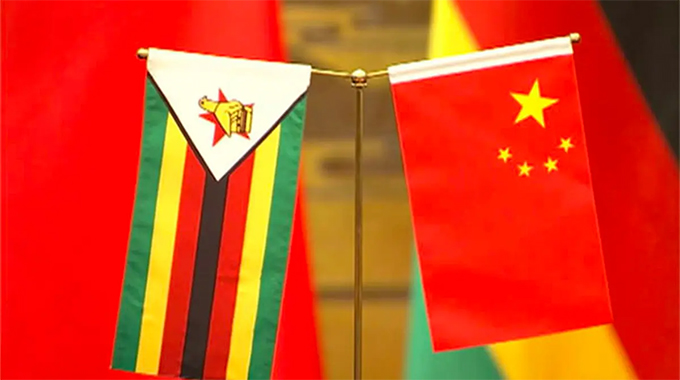
Tichaona Zindoga
FROM time to time, there are reports — and now social media videos — that surface showing distressing violence occurring within Chinese companies, mines or factories.
Often, we do not have the full and proper context — and these incidents are usually blown out of context and amplified by social media.
While there were previously several such videos and reports purporting the ill-treatment of local workers by Chinese supervisors or managers at shopfloor level, there is a recent upward trend of Zimbabweans meting violence against Chinese people.
This is sometimes put as “instant justice” over unpaid money or retaliation of some kind by local workers, and even communities.
The increase in the incidence of such occurrences is a cause for concern.
If these events are seen through the lenses of relations between Chinese people and locals; or investors and their workers, there is a genuine case that needs to be candidly addressed and a growing cancer that must be treated before it eats the whole body of foreign business and investments in Zimbabwe.
Chinese companies are the largest foreign investor bloc in Zimbabwe, having invested billions into the local economy post-2000, when Zimbabwe adopted the Look East Policy on the back of deindustrialisation and capital flight following imposition of sanctions by the West.
China has been a consistent source of direct foreign Investment (DFI) and figures from the Zimbabwe Investment and Development Agency (Zida) have consistently shown Chinese investment money flowing to Zimbabwe, with China contributing more that the next competition combined.
It is unsurprising therefore that the biggest investments in the country have all come from China — from steel and lithium plants and beneficiation to energy projects.
Yet, it is undeniable that not all investors are the same: some are huge and wealthy Fortune 500 companies with a presence in China and other markets, while others are medium, small or micro.
Even individuals with money come to try their luck in Zimbabwe.
This implies that the way these entities behave in Zimbabwe will be markedly different in terms of maturity and approach to investment and industrial relations.
Further, too, how people and management behave also differs.
This immediately cautions us not to paint Chinese people or companies with the same brush or engage in stereotyping.
Yet, there is need to address the elephant in the room.
While investment has flowed in from China, giving us factories, power stations and mines, there has not been enough infrastructure of understanding, trust and friendship built between Chinese enterprises and the communities in which they operate.
Chinese companies often operate within the law — and Zimbabwe’s laws are excellent in their own right.
Any disputes could be easily resolved within organisations or within the confines of national laws and labour regulations.
The failure and breakdown in internal processes and the spillover into the public domain is a symptom of a much larger phenomenon — the lack of friendship and trust between the two peoples outside worker-management-investor relations.
It is not a secret that there are two different communities of Chinese and Africans in those mines, factories, shops and projects — and there have not been sufficient efforts to bring them closer together.
The cruel irony is that long-term success of Chinese businesses in Zimbabwe will not be determined solely by production figures or profitability.
It will also depend on the quality of relationships they cultivate with workers, local communities, regulators, traditional leaders and the broader Zimbabwean society.
While there have been significant efforts by Chinese companies, particularly the bigger ones, to become exemplary corporate citizens, isolated incidents involving labour disputes, environmental concerns, cultural misunderstandings and communication failures occasionally flare-up.
This makes investment in social relations not simply a matter of corporate social responsibility but a strategic business imperative.
There is need to look beyond traditional business approaches to build understanding and social cohesion, and trying new strategies that make the environment more friendly and socially sustainable.
This should not be regarded as asking more of the investors who would already have spent lots of money in investing and logistics, among other things.
One would imagine that the investors would simply want to dig and make money to recoup their investments.
However, things may not be as simple as that.
At political level, China and Africa — and Zimbabwe and China as a shining example — have excellent relations based on mutual respect, mutual benefit and cultivation of the spirit of sincerity, real results, amity and good faith.
The overarching theme of China-Africa relations is building an all-weather community with a shared future.
The disjuncture between the ideals of diplomacy and politics, and how the Chinese and African peoples interact on the ground, shows a strategic failure, which experts, including us in the media, could help find a solution to.
It does not help Zimbabwe and China to have lofty and beautiful relations on paper when our people fight in the mines and factories.
At the same time, genuine concerns about compliance to labour legislation, taxation requirements, environmental standards, occupational safety regulations and corporate governance rules must be addressed without fear or favour.
Chinese enterprises may also invest in creating structured programmes to develop local managers, engineers, technicians and executives capable of assuming leadership positions.
Such investment builds confidence among local communities while ensuring long-term sustainability of business operations.
Finally, communication remains another area requiring attention.
Internal communications and public relations should be improved, especially regular dialogue sessions meant improve workplace relations, build bridges and create team spirit.
Chinese investors and their organisations could also do well to partner local industry to develop voluntary codes of conduct, facilitating peer learning and recognising companies that demonstrate excellence in labour relations, environmental protection and community engagement.
Positive competition encourages higher standards across the entire investment community.
Ultimately, friendship cannot be codified or legislated but must be cultivated through everyday interactions characterised by mutual respect, openness and existence of trust.
Mines and factories should be sites of mutual respect, win-win cooperation and building a sustainable and friendly community with a shared future for Zimbabwean and Chinese people together.
*Zindoga is a journalist and director of Ruzivo Media & Resource Centre Trust, whose pioneering work is focused on advancing Zimbabwe-China relations.