

 admin
admin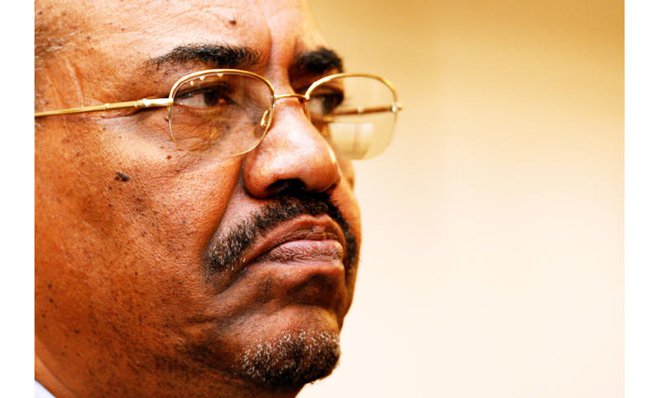

Khartoum — Sudanese President Omar al-Bashir is to appoint a prime minister, reinstating a post abolished after he came to power in a 1989 Islamist-backed coup, officials said on Wednesday.
The delegation of certain powers to a prime minister would fall in line with reforms proposed by a national dialogue held between Bashir’s government and some opposition groups.
Bashir himself had abolished the post of premier after he led a bloodless coup almost three decades ago against then premier Sadiq al-Mahdi with the help of Islamist leader Hassan al-Turabi.
But on Wednesday, a top aide to Bashir told the Sudanese parliament that the president will now appoint a prime minister to head his government.
“The president’s proposal forms part of changes to be made in the country’s constitution based on recommendations from the national dialogue,” said Al-Rashid Haroon.
A prime minister is expected to be appointed within the next two months, officials said.
“This is a positive step because the prime minister will have some of Bashir’s powers,” Al-Noor Ahmed, editor of leading Sudanese daily Assayha, told AFP.
“The prime minister will also be accountable to parliament, which is different because the president is not.”
Ahmed hoped the post of prime minister would go to an “outsider” and not a member of Bashir’s National Congress Party.
“It would be better if the prime minister’s powers are defined in the new constitution and not by the president,” he added.
Earlier this month, Bashir concluded a year-long national dialogue aimed at resolving the insurgencies in Sudan’s border regions and healing the country’s faltering economy.
He launched the dialogue in October 2015 but the talks were boycotted by most mainstream opposition and armed groups.
On October 10, Bashir submitted a “national document” which will serve as a framework for a new Sudanese constitution.
The document has been signed by the government and some small opposition and rebel groups which took part in the talks.
Sudan currently has a transitional constitution adopted in 2005, ahead of the country’s north-south split in 2011 following two decades of civil war. — AFP.


 Online Reporter
 Blessing Chizhande