Chronicle Editor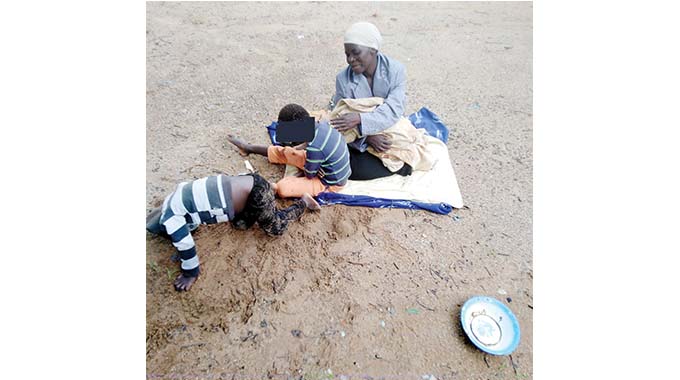
Leonard Ncube, Victoria Falls Reporter
A decent shelter, food and clothes are some of the basic human rights that should be enjoyed by all citizens.
The rights can be extended to include access to basic services such as education, healthcare and safe drinking water.
According to the 1948 United Nations Universal Declaration of Human Rights, there are about 30 human rights although a majority of them sometimes seem invisible.
For people living in the streets, most of these rights have constantly eluded them for reasons such as lack of sources of income, lack of family, discrimination by mainstream society and others.
There are scores of citizens living on the streets in many urban areas and these include children, adults, people living with disabilities, the sick and orphans.
There are also numerous reasons for them to be on the streets and some grew up on the streets until they got married and now have children born on the streets. One such couple is visually impaired Mr Maxon Nyathi (52) and his wife Ms Rebecca Shoshore who doesn’t know her age. The couple has been living on the streets in Victoria Falls for about seven years and used to sleep on shop verandahs at the Chinotimba Bus Rank.
Mr Nyathi and Ms Shoshore now have three children born on the streets. The eldest girl is aged four years and her brother is aged three and the last born is a girl who is less than three months old.
The couple recently started renting a room in Chinotimba after the birth of the third child but Mr Nyathi said they are contemplating going back to the streets because they are struggling to raise US$20 for rentals and water.
Mr Nyathi begs in the city centre while his wife and three children will be sitting near Ngqondongqondo shops where they also beg for alms from strangers. They meet in the evening to share whatever they would have gathered during the day before they go to their base.
Mr Nyathi is originally from Siachilaba in Binga while his wife is from Norupiri in Masvingo.

The two met on the streets in Victoria Falls about seven years ago and started staying together as husband and wife resulting in the birth of the three children. Mr Nyathi said life is unbearably hard on the streets. He said he would have wished to go to his rural home with his family for Christmas holiday but cannot raise transport money for his wife.
Mr Nyathi said some transport operators usually allow him to travel without paying because of his condition but he would need to pay for his wife.
His tale is a touching story as he lost sight while in Grade One after suffering from measles and smallpox. “We only met,” he said when asked how he met his wife.
He said his family sometimes sleeps on empty stomachs because of lack of food.
“My parents died when I was a kid and left me and my sister who is in Binga. I sometimes visit her and would love to go there now but unfortunately I can’t go with my wife and children because she has to pay for transport,” he said.
It costs between US$10 and US$15 per person to travel from Victoria Falls to Binga.
“I wasn’t born blind. I was fit and healthy as a small boy until I was five years old. They said I fell sick with measles and smallpox at the same time and they couldn’t take me to hospital because it was far and they had no money.
There was no clinic nearby at that time and the condition deteriorated until I lost my sight,” narrated Mr Nyathi.
Smallpox and measles are contagious diseases commonly found in children and mostly begin with fever and headache and cause eruption of the skin and rash particularly on the face, arms and legs that leaves pockmarks.
They are preventable through a vaccine.
Mr Nyathi said he does not remember if his children had been immunised.
The Covid-19-induced lockdown and incessant rains have worsened the situation for the couple, just like several others on the streets as fewer people now help them.
The two children sometimes join other kids for lunches provided by the Victoria Falls Covid-19 Taskforce and some churches.
“These days we hardly go out because of the rains and that means hunger for us. Yesterday we didn’t have relish and my family just cooked isitshwala and ate with salt,” said Mr Nyathi.
Asked if he and his wife have ever considered using contraception, Mr Nyathi said: “We don’t have sex every time. When a child is born we wait for six months to protect the child. We don’t have condoms because they are expensive in shops and I don’t have money to buy.”
His wife said health officials gave her family planning pills when she delivered her little baby.
“They gave me family planning pills at hospital and that was the first time for me to see them. I am not going to have another child, these are enough. Things are tough. If we had food we would be home because as you can see it is raining and we are being soaked in the rain while there is no one passing by,”she said.
Ms Shoshore said her parents and two brothers mysteriously died when she was in Grade One.
She said she has a surviving sister who is in Masvingo.
Ms Shoshore said she started living on the streets as a small girl because none of her parents’ relatives were willing to take care of her and her sister.
“I dropped out of school at Grade One when my parents died. My two brothers also mysteriously died a few months later and our relatives couldn’t take care of us hence I started living on the streets. Right now we struggle to raise money for rent, food and clothes for our children. This little one needs diapers and soap but I can’t buy that and I use pieces of cloth as napkins for her. My daughter should go to school next year but we don’t have money for fees,” said Ms Shoshore.
Some concerned residents have been calling on health authorities to force people living on the streets to use contraceptives to reduce the number of children born on the streets.
However, health expert Professor Solwayo Ngwenya who is a gynaecologist and acting Mpilo Central Hospital chief executive officer said it is unlawful to force people to use any method of birth control.
“Obviously such people are very deprived, have problems and are not economically active but unfortunately they have a right to life and a right to sexual reproduction. It is therefore unlawful to force anybody to take contraception as we will be impinging on their rights.
“The only sensible way forward is for Social Welfare to get involved and help remove them from the streets as well as educate them on the importance of using contraceptives as opposed to forcing them,” said Prof Ngwenya. – @ncubeleon.



 Online Reporter