admin
admin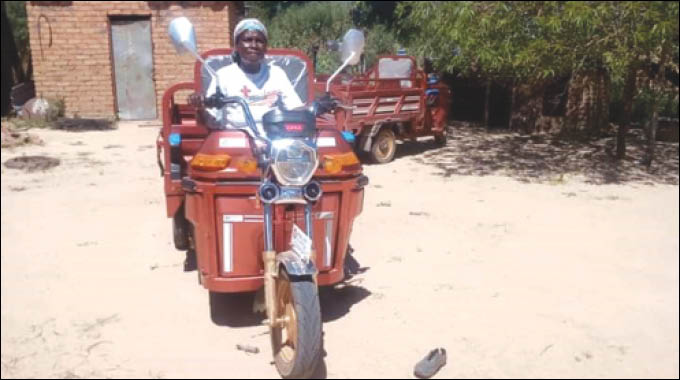
Hazel Marimbiza
THE physical act of getting to school is undoubtedly one of the biggest barriers to education in Zimbabwe’s rural areas.
In areas where schools are distant, for many young girls, the task of going to school has always been a nightmare. Some girls walk barefoot for more than 10 kilometres in each direction while many girls drop out of school due to the lengthy distances they have to walk to attend school.
However, a new initiative spearheaded by Mobility for Africa which offers battery-powered tricycles to rural schoolgirls will see a lot of girls’ lives transformed by reducing the heavy burden of walking to school for long distances.
The initiative, a partnership between China’s Tsinghua University Lifelong Learning Lab, Midlands State University Incubation Hub and Mobility for Africa along with Solar Shack, seeks to find a viable way to bring off-grid sustainable transport to rural communities.
“Mobility for Africa mobilises people through the power of tricycles. We envision a world where distance is no longer a barrier to independence and livelihood. The initiative is a remarkable project, which should be celebrated and supported. Providing tricycles to school girls empowers and protects them, and guarantees their school attendance, as an African saying goes, if you educate a man you educate an individual, but if you educate a woman you educate a family (nation),” said Felicity Tawangwa, the director of Mobility for Africa.
She added: “This is a social enterprise that is partnering with China to introduce electric tricycles whose batteries are recharged using solar energy — an abundant resource in Zimbabwe. We believe that by transforming the way girls move in rural areas from point A to point B, their literacy levels can be improved.
So far the tricycles have been donated to Marondera and Hwedza rural areas and girls in that area expressed great joy in receiving the tricycles.
Fifteen-year-old Chipo Chizirika, a beneficiary of the scheme, has commended the life-changing initiative.
“Before we got the tricycles, I used to sleep at 9pm and wake up as early as 4.30am to do the domestic house chores early in the morning before going to school. It normally took over an hour to reach school. I didn’t think I would finish my studies. I know most people were waiting for me to drop out and become pregnant or get married like everyone else. Education isn’t taken seriously for girls but at least now I’ve got easy transport,” said Chizirika smiling


 Online Reporter