Online Reporter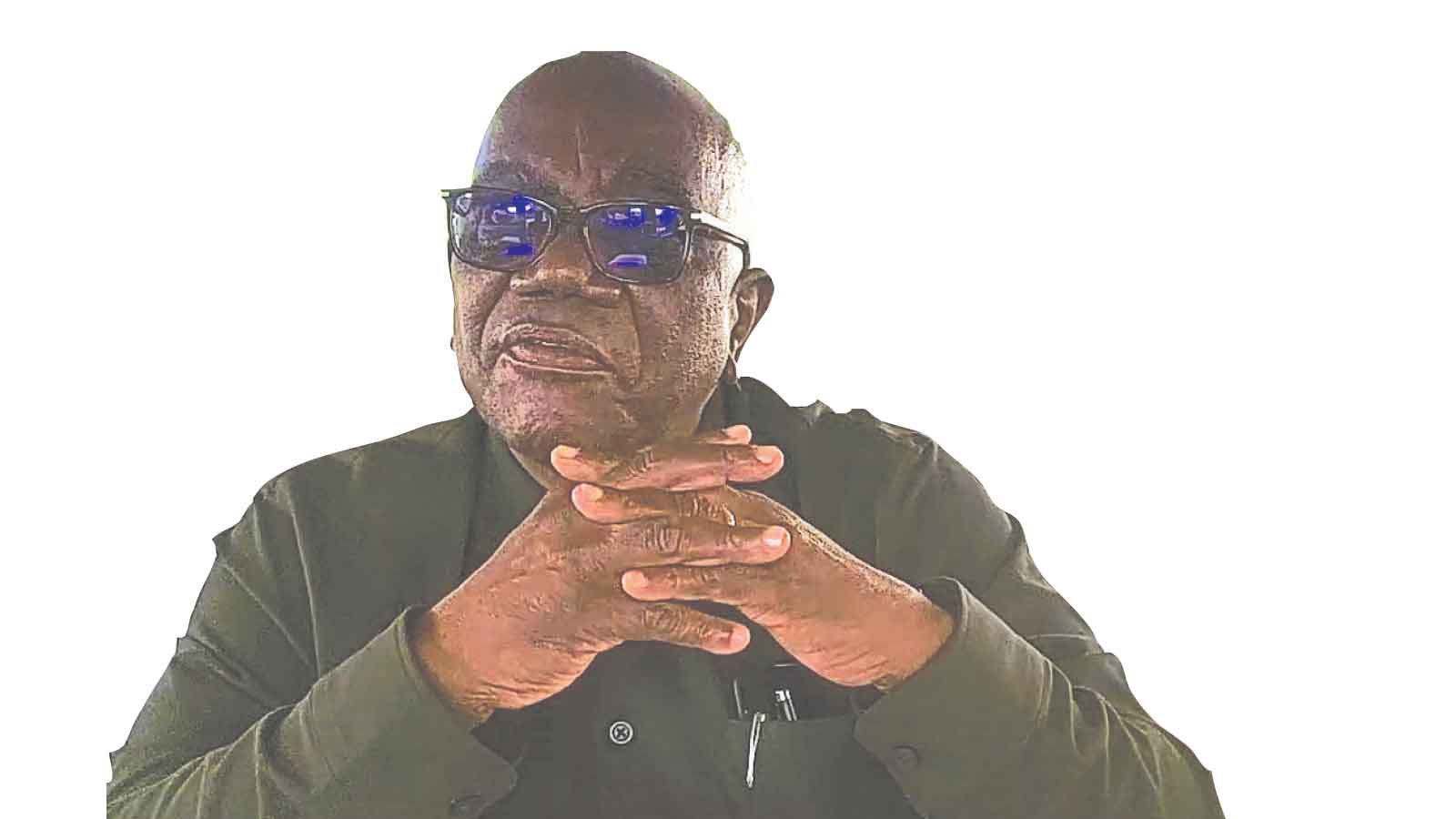
In the last instalment, Lieutenant-General (Retired) MICHAEL NYAMBUYA, whose Chimurenga name was Cde Mike Mutare, highlighted how the masses served as a vital cog in the quest for Zimbabwe’s independence. He also detailed the training orientation stages they underwent in Mozambique and recounted several famous battles in which he fought. In this week’s account, the distinguished politician, military officer and liberation war fighter chronicles to our Society Editor PRINCE MUSHAWEVATO some of the strategies that ultimately led to Zimbabwe’s independence.
***************
Q: You indicated that you managed to establish several liberated zones in your area of operation. What did this mean?
A: As I indicated, once we achieved control, we established liberated zones.
From those secure bases, we then transitioned to mobile, semi-conventional warfare, which was a serious progression in our fighting strategy against colonial rule.
I think the best demonstration of how the Zimbabwe African National Liberation Army (ZANLA) transitioned from a guerrilla movement was the Battle of Mavonde.
It was the first time the Rhodesians saw ZANLA in the trenches — not running away or retreating, but standing to fight.
That marked the second phase of semi-conventional and conventional warfare.
As you know, at Mavonde, the Rhodesians were defeated; they actually could not dislodge ZANLA from the area.
That battle took place during the period leading up to the Lancaster House talks.
Q: Was there any special training done before this particular encounter?
A: We had comprehensive training. On my part, we did not use any foreigners at all. We had comrades who had come from Mgagao, Tanzania, mostly leading the training and we were able to train others.
Like I said, from Tembwe, I became a commander — specifically the base commander of Mapinduzi.
It was at Mapinduzi, together with Comrades Yauya Hondo, Rido Mpofu, Keith Nyika, Mako and others, that we were able to train other comrades.
Q: Were you part of the team that was at Mavonde for the battle?
A: No, I was not at Mavonde; I was at the front. However, we were monitoring very closely what was happening there.
I think I must also mention a number of other issues.
In pursuance of the principle of being fish in water, one of the most important developments in Tangwena (Sector) was the support we received from missionaries.
In Hwedza, we had Mount St Mary’s at Rusunzwe. The priest-in-charge there was the late Father Paschal (Slevin), a very, very supportive person for the struggle, alongside Sister Dr Theresa Koble, the resident doctor at the Hwedza hospital.
They would actually travel kilometres at night to attend to wounded and sick comrades.
Sister Bridget was also involved.
This shows the extent to which we had support from missionaries — white missionaries, for that matter.
In fact, Mount St Mary’s was so well known for providing this kind of assistance that it was eventually closed in 1978 because of the support they were rendering to the comrades.
Q: You can carry on.
A: We also had a very important development which took place in 1978.
The Mozambicans were being attacked by RENAMO, the Mozambique National Resistance group.
That puppet organisation was formed by Rhodesian intelligence to destabilise Mozambique and they were being trained inside Rhodesia at that time. FRELIMO took a very conscious decision to deploy troops to fight alongside us and track down this training base.
We eventually realised it was somewhere in Odzi. I remember very well the FRELIMO team that came was led by Comrade (Paradzai) Zimondi, who was called Tonderai Nyika at that time. Together we went to Hwedza and tried to gather information on where they were being trained.
While we did not manage to pinpoint the exact location at the time, we knew they were training in Odzi (though I know where it was now).
This was a significant development and those comrades participated in some of the operations we conducted inside the country.
I must also mention how we managed to recruit high-profile people like Justin Nyoka.
He was a reporter for the BBC, and we managed to recruit him and take him to Mozambique, which greatly boosted our cause.
We also captured a white man named Pitling in Nyanga and took him with us to Mozambique. When it came to negotiations, that gave us some leverage.
Q: How did holding him hostage work in your favour?
A: When we wanted some of our people released, we were able to bargain using him as a chip.
You remember Cde Chinx Chingaira? I also recruited Cde Chinx, who played a key role.
He was gifted in singing and his music raised the morale of the comrades.
In his own way, he played a vital role in ensuring our spirits remained high.
I think those are some of the most important things that happened.
Q: Can we talk about the phases leading to independence? What were you doing then?
A: After subduing the Rhodesians, the Lancaster House talks finally yielded some results — not the best of results, but at least they enabled us to begin our journey to independence.
We were all sceptical about the talks; we did not think Lancaster House was going to be any better than previous negotiations, like the Victoria Falls talks on a train and the Geneva talks.
But this time, the negotiations resulted in a ceasefire. As I said, for us in Manica province and the Tangwena Sector, we had made great advances and were knocking on the door of Harare.
Cde Chiwenga, the current Vice President, was deployed at the time to ensure we moved our comrades to assembly points in Manica.
I remember he sent a letter from somewhere in Gandanzara giving me instructions to lead our comrades to the assembly point.
That was when I realised it was true — that we were finally heading to the assembly points.
We gathered our comrades and the biggest assembly point where we took them was Dzapasi.
I even had to move around with some Rhodesian policemen and soldiers to convince our comrades that this time, the peace and transition were for real.
Q: Did moving around with the Rhodesian police not create problems for you with fellow comrades?
A: It did. I remember one incident in December 1979 where some comrades thought I had sold out and they threw a grenade at us.
They questioned why I was moving around with Rhodesian policemen, thinking I had been captured and was now a sellout.
They did not know that this time the transition was for real. However, Dzapasi indeed became the biggest assembly point.
We had three bases at Dzapasi: Base One, Base Two and Base Three.
Base One was for the general recruits.
Base Two was for the trained personnel, and I commanded that base in the Foxtrot sector.
Finally, Base Three was for the female comrades, who eventually went to Manyene.
That was the ceasefire period.
It was a very difficult time because we still had a lot of deep mistrust.
We did not trust each other, and we were constantly worried that the Rhodesians wanted to massacre us while we were gathered in one place. It took a tremendous amount of effort to build trust between us and the Rhodesians.
Next week, in the final part of this series, Lt-Gen (Retd) Michael Nyambuya continues sharing his reflections on the final days of the struggle and the transition into independent Zimbabwe.