Online Reporter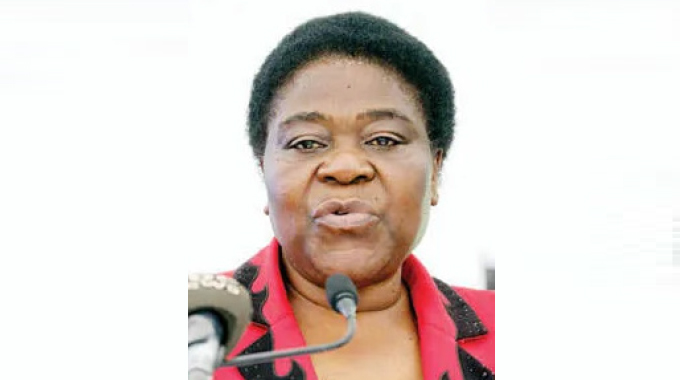
Raymond Jaravaza, [email protected]
The establishment of a water and sanitation utility in Bulawayo is intended to improve service delivery, attract funding and investment, enhance accountability reduce water shortages, and boost efficiency.
It is therefore not a move towards privatising water services.
This was clarified by the acting Director of Water and Sanitation, Engineer Kwanele Sibanda during a stakeholder consultative meeting held yesterday at the City Hall to discuss the proposed establishment of an independent water management utility.
The Bulawayo City Council (BCC) has proposed the formation of a Private Limited Corporate Organisation, aimed at unlocking external financing opportunities, with US$17 million earmarked to upgrade the city’s water infrastructure.
The initiative seeks to tackle long-standing infrastructure challenges and is expected to benefit from the technical expertise and resources of partners such as the Veolia Environment Institute (VEI).

The proposed utility would function as a specialised, professionally managed entity wholly owned by the City of Bulawayo to improve operational efficiency and service delivery.
The consultative meeting drew participation from a wide range of stakeholders including residents, civil society organisations, human rights lawyers and business community representatives.
Also in attendance were the Minister of State for Provincial Affairs and Devolution, Judith Ncube; Deputy Mayor Councillor Edwin Ndlovu; Town Clerk Mr Christopher Dube and the Permanent Secretary for Provincial Affairs and Devolution in Bulawayo, Mr Paul Nyoni.
Some residents expressed concerns that the establishment of the Water and Sanitation Utility was tantamount to privatisation — a move they feared would result in increased tariffs and make water services unaffordable for vulnerable groups.
Ms Nomalanga Vundla from Makokoba asked whether or not water tariffs will increase under the new utility arrangement.
“Water is a public resource and the right to access it is enshrined in our Constitution. I would like to know if the proposed utility will make water accessible only to those who can afford it,” she asked.
In response, Eng Sibanda explained that a financial feasibility study indicated that the utility’s viability does not depend on increasing water tariffs.
“Residents are encouraged to understand the need for a utility and the benefits it brings. Tariff hikes are not the basis for its sustainability,” she said.
Another resident raised concerns about the impact on pensioners and the elderly, who are already struggling to pay their rates.
Other attendees voiced strong opposition, claiming that the decision-making process has excluded the views of ordinary citizens.
Eng Sibanda insisted that the council is not privatising water services.
“The proposed utility will be owned entirely by the people of Bulawayo, with 100 percent shareholding by the City of Bulawayo.
“It will be professionally run to enhance service delivery and not to transfer ownership or control to private entities,” she said.
Eng Sibanda further clarified that the council is not entering into a public-private partnership or creating a charter. Instead, a private limited company will be registered solely to safeguard the utility from external threats such as hostile takeovers or dilution of control.
“This is not privatisation. The company’s shares will not be tradable. It will not be profit-driven but focused on delivering efficient and affordable water and sanitation services,” she said.
An eight-member board comprising public and council representatives will oversee the operations of the utility. A residents’ representative will also sit on the board to ensure public accountability.
“The City of Bulawayo will retain ownership of the utility’s assets and will delegate the management, operations and maintenance to the 100 percent council-owned company,” said Eng Sibanda.
She assured residents that the council will continue its pro-poor approach.

“Residents aged 70 and above can still approach the council for assistance. We offer discounted tariffs for vulnerable groups and that policy will not change with the creation of the new utility,” she said.
However, Eng Sibanda noted that setting up the utility may require tariff adjustments in line with prevailing economic conditions.
“If not properly structured, the utility could face risks of mismanagement or inefficiency. Initial setup costs and loan repayments could place strain on council finances. However, as of February 2025, the water and sanitation department has no outstanding loans,” she said.
The council continues to grapple with persistent water supply disruptions, ageing infrastructure, rising demand due to urban expansion and procurement delays, all of which make the establishment of a dedicated Water and Sanitation Utility a necessity, according to officials.