Peter Matika, [email protected]
BULAWAYO City Council’s commitment to gender-responsive budgeting has come under scrutiny after only four women attended a dedicated women’s meeting during consultations for the 2027 municipal budget.
The turnout was significantly lower than at other targeted meetings, with 48 people attending the youth consultation and 57 participating in the meeting for people with disabilities, according to the council’s 2027 budget speech.
The low attendance is striking given that women constitute 54 percent of Bulawayo’s population. The 2022 Population Census puts their number at 357 957, compared to 307 983 men.
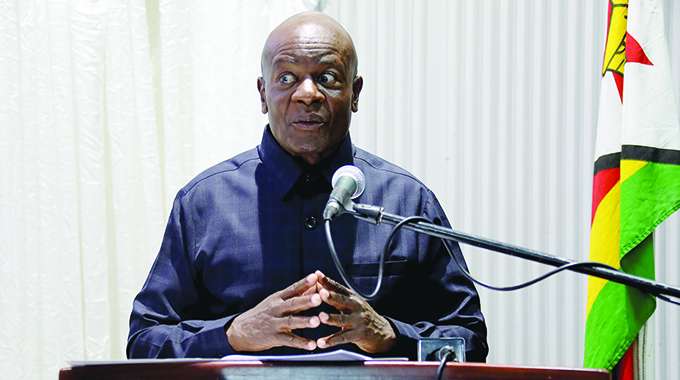
Deputy Finance and Development Committee chairperson Councillor Dumisani Nkomo said council recognised the importance of incorporating gender and disability considerations into municipal planning.
He said the local authority was committed to mainstreaming these considerations across its programmes, which cover water and sanitation, health, housing, education, waste management, environmental management, local economic development, youth empowerment and social services.

Clr Nkomo said the attendance figures raised questions about whether council’s consultation methods were reaching women whose needs and experiences should inform municipal spending priorities.
The local authority did not explain the poor turnout but acknowledged the need to improve participation in future engagements.
Clr Nkomo said council had publicised the consultations through social media, newspaper advertisements, community announcements and its website. “To improve participation, council plans to introduce online surveys, sex-disaggregated attendance registers and sign language interpretation to establish whether its consultation processes are reaching different groups,” he said.
However, broader consultation figures paint a different picture, with women accounting for 56 percent of participants during the first phase of engagements and 59 percent in the second phase.
“This demonstrates that women were represented in the wider budget consultation process, although the poor attendance at their dedicated meeting remained a concern.
“The distinction is important because the four people who attended the women’s meeting do not represent the total number of women who contributed through ward and general community consultations,” he said.
Clr Nkomo said the low turnout raised questions about whether women had sufficient opportunity to collectively articulate issues affecting them, rather than having their concerns absorbed into broader community discussions.
He said municipal decisions on water supply, sanitation, housing, public health, street lighting and transport infrastructure had direct implications for women’s daily lives.
“Unreliable water supplies, for example, can increase the burden of household water collection, while poorly lit streets and unsafe public spaces raise concerns about personal security. Council’s gender-responsive budgeting framework acknowledges that climate change and access to natural resources affect women, men, young people and people with disabilities differently, making inclusive participation essential,” Clr Nkomo said.
He said the budget process was guided by the Constitution, the National Gender Policy, the Sustainable Development Goals, the SADC Protocol on Gender and Development, council’s 2017 Gender Policy and the Persons with Disabilities Policies of 2026.
Members of the budget committee, sub-committees, councillors and management had also undergone capacity-building workshops on Gender Responsive Budgeting.
Clr Nkomo said the approach was not about creating a separate budget for women, but ensuring that gender equality and social inclusion were considered when municipal resources were planned, allocated, implemented and monitored.
He said council used English, Ndebele and Shona during consultations, alongside sign language interpretation. However, it acknowledged that it could not provide budget information in Braille for residents with visual impairments.
“The challenge now is to translate its gender-inclusion commitments into meaningful participation, particularly by reaching women in high-density suburbs, informal settlements and communities where access to consultation platforms may be limited,” he said.
Clr Nkomo said women’s organisations, community leaders and councillors also had a role to play in mobilising women and ensuring they were aware of opportunities to influence municipal planning.
“While the overall consultation figures suggest that women participated in the wider process, the attendance of just four people at their dedicated meeting is a concern council cannot overlook if its gender-responsive budgeting policy is to have practical meaning,” he said.