Sikhumbuzo Moyo, [email protected]
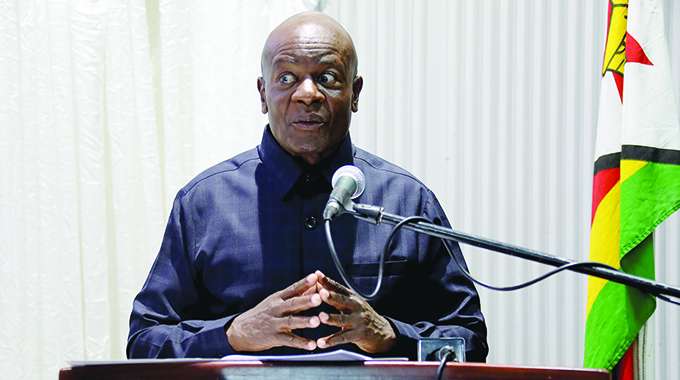
LOCAL Government and Public Works Minister Daniel Garwe has urged spatial planners and local authorities to put wetland protection at the centre of settlement planning, warning that uncontrolled development and environmental degradation threaten the sustainability of Zimbabwe’s cities and towns.
He said safeguarding wetlands was critical to building climate-resilient settlements, managing water resources responsibly and reducing communities’ exposure to flooding.
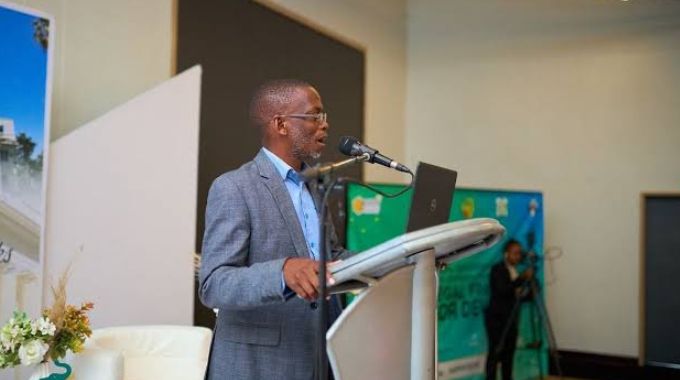
Addressing delegates at the Zimbabwe Institute of Regional and Urban Planners (ZIRUP) annual conference in Bulawayo last week, Minister Garwe said development planning must strike a balance between economic growth, population demands and environmental protection while safeguarding the interests of present and future generations.
He challenged planners to ensure that development blueprints translated into tangible results without compromising environmental sustainability or violating planning regulations.
Wetlands play a critical role in maintaining ecological balance through water retention and natural drainage making their protection essential as urban centres expand.
Minister Garwe said settlement planning should not be driven solely by the need to accommodate growing populations and infrastructure development but must also consider the long-term environmental consequences of decisions made by authorities and other stakeholders.
He said Zimbabwe’s cities and towns should not be defined by dirty environments, disorderliness, informal settlements and activities that violate the law.
The minister also called for an end to littering, saying environmental cleanliness should begin with individual responsibility rather than being left to local authorities.
He criticised motorists who throw rubbish out of their vehicles and urged residents to adopt responsible waste disposal practices.
He said communities had a collective responsibility to maintain clean surroundings and protect the environment, adding that transforming urban spaces required a change in attitudes and behaviour.
Turning to informal trading, Minister Garwe expressed concern over illegal vending and the proliferation of informal trading activities in urban centres, challenging local authorities to provide properly constructed and designated vending facilities.
He said vendors and small-scale business operators should be accommodated in decent trading spaces instead of operating from streets, where their activities could contribute to urban disorder.
The minister said the state of some streets could undermine the country’s tourism image, noting the need for cities to reflect the standards Zimbabwe wanted to project to international visitors.
While acknowledging that Bulawayo was cleaner and had less litter than Harare, he challenged the local authority to address street vending and maintain orderly public spaces.
On modern settlement planning, Minister Garwe urged planners to embrace Geographic Information Systems (GIS), satellite imagery and digital planning platforms to improve decision-making, monitor developments and strengthen transparency.
He said the technologies could help authorities make informed planning decisions and monitor land use to ensure developments complied with approved plans.
He cautioned that technology must be matched with professional competence, institutional capacity and integrity.
Minister Garwe said integrity should underpin the work of professionals involved in the built environment, including spatial planners, architects, engineers, quantity surveyors and construction contractors.
“The purity of the heart, the purity of character, the purity of behaviour, the purity of the language that we use, the purity of the planning that we do when we prepare plans for settlements, the purity of the designs that we produce as architects and engineers and the purity of the buildings that we build as contractors — all these begin in the mind,” he said.
He further emphasised that proper planning and sound leadership were essential to achieving the country’s Vision 2030 target of attaining upper-middle-income economy status.
“It is our responsibility now as Zimbabweans to turn the fortunes of our economy and steer it towards the direction we want, which is Vision 2030 of an upper-middle-income economy. Planners have a role to play in moving from plans to places, and those places are right here in front of us,” he said.
As patron of ZIRUP, Minister Garwe encouraged the institute to continue strengthening professional standards and working constructively with Government and local authorities to address challenges facing the country’s settlements.
He challenged planners to take ownership of the development process, saying their work shaped settlements long before development plans translated into physical structures.
He said Zimbabwe’s cities and towns should aspire to become modern, orderly, productive and well-serviced settlements capable of attracting people from across the world.