Chronicle Editor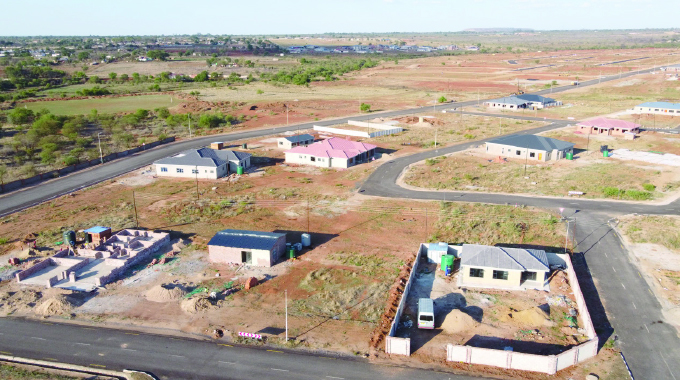
Sikhumbuzo Moyo, [email protected]
BULAWAYO City Council (BCC) has unveiled an ambitious plan to provide 500 000 housing units by 2034, addressing the city’s ballooning housing backlog.
With over 140 000 people on the housing waiting list, the initiative is part of the city’s 15-year master plan, running from 2019 to 2034.
The demand for housing in Bulawayo has driven stand prices beyond the reach of many, exacerbating the backlog, which has grown from 25 356 in 1998 to 140 150 today. Despite efforts by private land developers, only 5 045 stands were allocated for residential development over the past decade, falling far short of the city’s needs.
BCC’s masterplan identifies the need for 448 500 dwelling units by 2034 to cater to 90 percent of households, while the city currently has just 135 000 units. This leaves a shortfall of 177 400 homes.
However, the council acknowledged significant hurdles in achieving these goals, citing affordability and construction capacity as major challenges.
The council’s master plan aims to transform Bulawayo into a well-planned, functional, and attractive urban centre, portraying an image and character befitting its status as the country’s second-largest city.

The master plan is rooted in extensive consultations with stakeholders and communities, addressing key issues like housing, social amenities, and environmental sustainability
“Housing need in terms of this master plan is calculated on the basis that 10 percent of all households will not desire a separate dwelling. This is based on the view that some households prefer to share through extended family arrangements or would inherit from the family,” noted the council.
“If 90 percent of all households are to be provided with a separate dwelling unit then there will need to have 448 500 dwelling units by 2034. Given that present stock is presently 135 000 then land must be provided to accommodate 177 400 new dwellings.”
BCC admitted that it is difficult to see how this task can be accomplished either in terms of affordability for the poor, who constitute the overwhelming majority of the need, or in terms of construction capacity.
“The likelihood is that overcrowding will remain a problem for the foreseeable future,” said the council.
BCC said it has been agreed that there is insufficient land suitable for development purposes within the current area gazetted for the city council.
The master plan therefore makes proposals for the expansion of Bulawayo, which will result in the incorporation of land adjacent to the current city boundary.
The additional properties currently lie within the jurisdiction of Umzingwane and Umguza rural district councils.
“Land for housing constitutes the largest land needs of any master plan. While it is not possible that housing needs for all households can be met, it is important to estimate by looking at the total number of households,” read the council masterplan.
To meet the growing housing demand, BCC plans to expand the city’s boundaries to include land currently under the jurisdiction of Umzingwane, Umguza, Matobo, and Tsholotsho rural district councils. Areas such as Ntabazinduna, Esigodini, Nyamandlovu, Solusi, and Insukamini could be incorporated into Bulawayo.
The council aims to implement this expansion next year, guided by the Presidential Proclamation 15E of 2004, which allows metropolitan provinces to extend up to a 40-kilometre radius.

The City of Bulawayo has set the gazetting of the new boundaries as one of the priority projects in the implementation of its development phase set to take place next year.
BCC corporate communications manager, Mrs Nesisa Mpofu, recently explained that the incorporation process would require voluntary applications from property owners and approval from the rural district councils currently overseeing the areas.
Suburbs like Mbundane and Emthunzini, located at Bulawayo’s boundaries, have faced challenges due to a lack of social amenities and infrastructure. BCC previously refused to connect these areas to water and sewer systems, citing jurisdictional issues.
With the proposed expansion, BCC intends to provide proper planning and essential services to these areas, alleviating pressure on existing urban infrastructure.
Bulawayo Residents Association (Bura) chairperson, Mr Winos Dube, urged the council to explore innovative solutions to overcome economic and revenue constraints.
“BCC must think outside the box and leverage partnerships with private land developers. Through a memorandum of understanding, the council can mandate developers to allocate a percentage of serviced stands under council conditions, ensuring affordability,” he said.



 Online Reporter