

 Vusumuzi Dube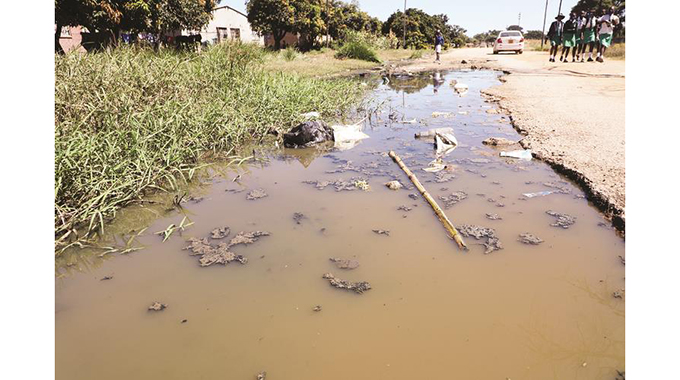
Sikhumbuzo Moyo, [email protected]
THE City of Bulawayo needs nearly US$500 million to effectively resuscitate its ageing sewer reticulation system, some of which was installed more than six decades ago, principal engineer for water and sanitation, Dumani Gwetu, has revealed.
The projected investment, outlined in a summary of costs for wastewater projects and interventions, covers critical areas including wastewater treatment works, outfall sewers, sewer reticulation replacement, pump station refurbishment and recycled water supply infrastructure.
Eng Gwetu revealed the figures, part of a 20-year masterplan drafted in 2012 during his recent presentation at the local authority’s two-day Trade Effluent and Water Recycling Indaba in Bulawayo.
The indaba, attended by industry representatives, policymakers, and technical experts, ran under the theme: “Innovation for Responsible Industry, Cleaner Environment and Water Security in Zimbabwe.”
The projections highlight the scale of funding required to rehabilitate ageing infrastructure, improve effluent management and expand recycling capacity amid increasing pressure on water resources.
“Wastewater treatment works account for the largest portion of the total budget, requiring an estimated US$193,2 million over the period under review. What is of importance to note is that since 2012, the city has only managed to use US$14 million due to largely strained financial inflows, among other factors,” said Eng Gwetu.
The City of Bulawayo has 10 wastewater treatment plants with a combined capacity of nearly 90ML per day, although the system is presently operating at less than 50 percent.
And out of the 18 sewer pump stations, only seven are operational, with experts attributing this largely to ageing, as most of the equipment is over 70 years old.
Eng Gwetu said as a result of the poor state of the reticulation system and other human-induced factors, the city was receiving between 80 and 110 sewer chokes reports per day, with its staff attending to between 48 and 96 of those reports depending on the number of vehicles available on the day and the season of the year.
According to Eng Gwetu, a sewer choke is a gradual restriction of flow caused by the accumulation of debris and foreign materials and there is still some seepage of wastewater.
“A blockage is a complete obstruction of the sewer line. No wastewater passes through the affected section, often resulting in overflow from manholes,” said Eng Gwetu.
He said a sewer reticulation system is designed to collect and convey wastewater safely to treatment plants and its key components include: sewer mains as primary conduits that transport wastewater, collector (or branch) mains as channels that gather wastewater from smaller lines and feed into main sewers, manholes as access points for inspection and maintenance and pump stations that are installed where gravity flow is not possible, lifting wastewater from low-lying areas to higher elevations so it can continue flowing toward treatment facilities.
Eng Gwetu said ideally, sewer systems operate under gravity. However, in low-lying areas, pump stations are necessary to maintain continuous flow.
Eng Gwetu said in 2012, under the city’s wastewater master plan, the sewer reticulation network measured approximately 1 465 kilometres.



 Bongani Ndlovu
 Online Reporter