

 Online Reporter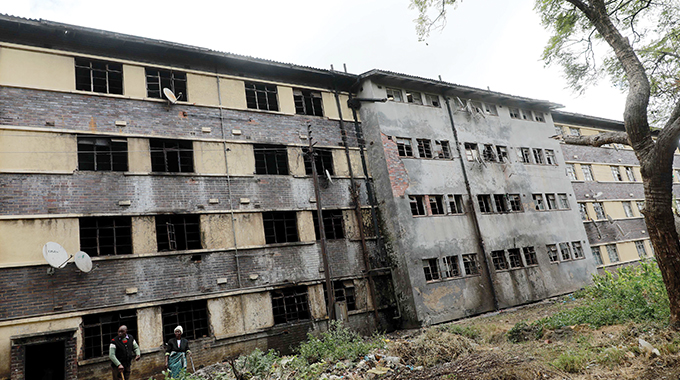
Raymond Jaravaza, [email protected]
RESIDENTS of the 168 units at Sidojiwe Flats in Bulawayo’s Sizinda suburb are enduring appalling conditions, as water and sewer reticulation systems have collapsed due to overcrowding.
Many windowpanes at the flats are broken and residents have resorted to using cardboards and plastics.
In some entryways, visitors are met with the stench of bat droppings and human waste as the toilets are blocked.
The three-storey residential hostel, owned by the Bulawayo City Council (BCC), has deteriorated significantly over the years due to neglect. The council has admitted in its latest minutes that the building is now unfit for human habitation.
The BCC says it is considering relocating tenants to other suburbs amid fears of an outbreak of diseases.
“The 168 units are occupied by families but no head count has been conducted to date. The situation at Sidojiwe Flats is very dire,” said the council.

“In 2004, Hostel One was closed and the occupants removed because the water and sewer reticulation systems had collapsed. There were no resources to upgrade the amenities at the time, and the occupants were relocated to other council rented properties.”
However, the council noted that the flats were later reoccupied by residents, who had lost their accommodation.
“Council reopened the hostels on humanitarian grounds to temporarily house part of the affected population,” it said.
“There was, however, no improvement in the living conditions of Sidojiwe residents. They were allowed back simply to shield them from the harsh weather.”
Council said it had attempted to relocate affected residents to Cowdray Park under the Garikai/Hlalani Kuhle housing scheme, where 120 stands were allocated to Sidojiwe tenants.
“Efforts will continue to be made to accommodate more residents, who are interested in the scheme and can afford the terms of sale. In the current budget year, council intends to construct 20 two-bedroomed units, to assist original beneficiaries, who could not relocate to Cowdray Park,” said the council.
Currently, residents pay between US$12 and US$36 per unit, depending on the size.
A health hazard is looming at the flats, warned Mr Cornelius Nyathi, a resident and former residents’ association chairperson.
He described the daily struggles of life in the dilapidated flats.
“I live in Block 3 at Sidojiwe Flats and have been here for 60 years, but I can’t remember the last time we had running water or working toilets,” he said.
“We don’t have functioning toilets, and some residents, especially children, just relieve themselves on the floor. Who can blame them?”
A resident who requested anonymity said she lives in a block housing over 60 families, all without running water.
“We have an NGO that supplies us with water weekly but it’s not enough. Sidojiwe Flats has three blocks with over 60 families. We need a consistent supply of water,” she said.
Several years ago, the Government declared Sidojiwe Flats unfit for human habitation describing the complex as a ticking health time bomb.
Authorities noted that the housing complex was overcrowded and failed to meet acceptable standards for human occupancy.


 Bongani Ndlovu