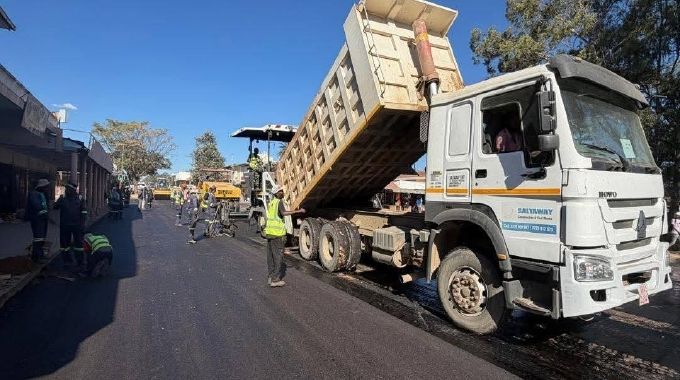
Mr Dube acknowledged that the construction works may temporarily inconvenience motorists, commuters and businesses operating within affected areas.
“However, some inconvenience is unavoidable and the City of Bulawayo sincerely apologises for any inconvenience caused. Motorists and members of the public are urged to exercise caution when approaching the affected areas, observe all warning signs and traffic control measures, and comply with designated diversion routes,” he said.
The works involve full reconstruction of damaged sections, rehabilitation of storm water drainage systems and resurfacing of roads that have deteriorated over the years.
According to council reports, BCC has allocated over US$1 million towards the rehabilitation of Lobengula Street and Third Avenue alone.
The latest developments come after recent rehabilitation works along Falcon Road in the Belmont Industrial area, where poor road conditions and potholes had long affected transportation and business operations.
Earlier this year, council also rehabilitated sections of Jason Moyo Street between Fourth and Fifth Avenues as part of efforts to restore key transport corridors within the city centre.
Bulawayo deputy mayor Councillor Edwin Ndlovu recently acknowledged the deteriorating condition of the city’s roads, saying council had adopted a structured rehabilitation strategy despite financial constraints and weather-related setbacks.
“Our road network is in a very poor state and the works department is attending to the roads,” he said.
Cllr Ndlovu said persistent rains had slowed progress in some areas while limited financial resources continued to affect the pace of rehabilitation works.
He, however, stressed that road rehabilitation remains one of council’s top priorities because of its importance to economic activity, public safety and service delivery.
The deputy mayor also raised concern over the increasing movement of heavy trucks within the CBD, saying overloaded vehicles were accelerating road deterioration.
The rehabilitation works are being implemented under ERRP2, which President Mnangagwa launched in 2021 after declaring the country’s road network a national disaster.
The programme was introduced to accelerate rehabilitation of highways, urban roads and feeder roads damaged by years of underinvestment, increased traffic pressure and extreme weather events.
Through ERRP2, the Government has partnered with local authorities and the Zimbabwe National Road Administration (Zinara) to upgrade transport infrastructure in line with Vision 2030 and the National Development Strategy 2 (NDS2).
In Bulawayo, Zinara funding allocations, together with Government infrastructure support, have helped council intensify rehabilitation works in industrial, residential and commercial areas.
Motorists, commuters and business operators have welcomed the progress on several roads within the CBD, saying the rehabilitation works are beginning to improve traffic movement and restore confidence in the city’s infrastructure.
Council has indicated that additional roads across the city will undergo rehabilitation as more funding becomes available through Zinara disbursements and ERRP2 support.