admin
admin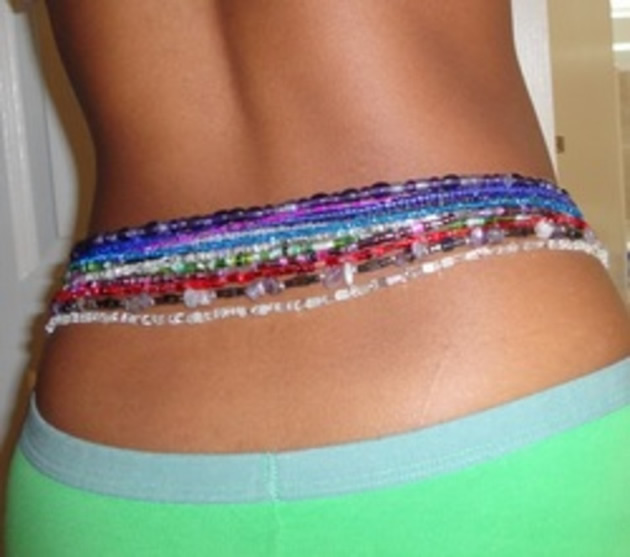
Tafadzwa Zimoyo Lifestyle Writer
Remember the time when Vanessa Chiyangwa, daughter to colourful character Phillip Chiyangwa, once hit the headlines for not just opening up on the use “virtues” of using sex-toys but also went an extra mile in opening a shop where these gadgets are sold? Many publicly expressed revulsion at the idea, saying it has its roots in the Western world, where sex is openly viewed as a form of recreation. In the traditional African culture the topic is considered taboo in most social settings.
Perhaps this is why most people are ignorant of the existence of sex toys whose origins seem to go far back into our history.
Research into the oral traditions surrounding waist beads makes it clear that they have always been a sex toy although they had other functions like protecting and enhancing a woman’s fertility.
Waist beads worn by women, commonly known as “chuma”, have been around since the Portuguese traders brought them into the country. They became such an integral part of a woman’s costume that the ancient people traded gold for the beads.
Traditionally, the colourful strings made up of the tiniest glass beads were earned, not just worn as a fashion statement as modern women do. Initiates were taken through lessons by elder women who taught them how to use the beads to enhance their physical love life.
The maximum number of strings that a woman could earn was seven. Once attached by the teachers, the strings of beads became a permanent adornment to the woman’s body and she would keep them there unto her grave.
An elderly woman who did not want to be identified says most marriages and relationships these days are failing because of the erosion of basic traditions which used to cement unions:
“That is the problem with these modern beads that one sees around the waist of almost every woman, young or old these days. They imply that the woman has learnt all the tricks and can move her waist in certain exciting ways, but in reality she knows nothing and has just bought the beads.
“Then the men on the other hand, are also just being left to grow up and learn about sex from their friends and the pornography that is so freely available these days. In the past, older men who were their maternal uncles or grandfathers would take them into the bush and educate them on how to please a woman.
“They were given herbs like mugondorosi. They would not just eat those things but would also be taught various bedroom skills and how to use the woman’s beads. Now these men just see a woman with beads and expect magic from her, but it is a game for two,” she explained.
A man called Admire Mashenu, popularly known as “Chuma man”, has become a hit among women in different spheres of life. The pubs, the streets, social gatherings, kitchen parties, baby showers, workplaces and the church have all become places of brisk business for the man.
The 32-year-old Mashenu started out as a stone sculptor and then turned to beading when he realised that a flourishing market awaited him.
Among his clients Mashenu lists a lot of prominent figures in the entertainment, social, political, economic pinnacles as well as ordinary women. He says his clientele reaches beyond our borders.
“I receive calls from as far afield as the United Kingdom, Germany, Senegal, Kenya and South Africa, among others. Some women have been phoning me after having seen their friends and relatives wearing zvuma (beads) during baby showers, kitchen top-ups, where lessons to do with bedroom issues are shared.”
Mashenu admitted that he does not observe the tradition whereby beads are given to women who would have gone through the traditional initiation process into the intricacies of bedroom etiquette.
“There are various types of zvuma (beads) that women can wear and these vary according to their talents, liking, tastes or aspirations. The one called mukanda is widely known for its role in the bedroom and for those who believe in traditional rituals associated with the mermaid or njuzu in Shona, they wear it in blue and white or colourless.
“The one called chinu is often oiled and this in its obvious form means that there should be smooth play between a man and a woman. If one is weak sexually, the oil can be mixed with certain herbs.
He says that there is more to the beads than just a sex toy.
“In the past, elders also used to use zvuma as a family-planning method, whereby the woman, when she felt that she wanted to have a child, could rip the string of the beads apart to tell her man that she wanted a child.
Mashenu – who sells up to 20 pairs of zvuma per day – is helped by his two daughters aged 13 and 10.
“They only know that they are making chuma, but you don’t know with kids, they might know what role these beads play in enhancing sex, although it is something that I have never openly told them.”
The beads can stretch up to five metres long and can go for up to $30.
But not all modern women and men believe in the professed sensuality of beads. Adult dancer Beverley Sibanda says they are not a part of her steamy arsenal:
“I don’t wear them and I don’t know anyone from where I come from who uses chuma. I have heard about them but do believe that good performance does not depend on accessories as it is natural,” she said.
Another woman who preferred her anonymity says that beads are overrated and part of the false myths that women feed each other at kitchen parties and other such gatherings.
“I got a set once because I had been led to believe that every man desires them and a woman is incomplete without them. My husband asked me to take them off and our sex life has been as great as ever over the years.
“But several friends of mine who swear by the beads have been divorced or are unhappy in their lives. I think marriage is about respect, mutual views and commitment. If that includes beads, it is fine, but they are not the panacea for all marriage woes.”
So just like any other toy, waist beads are a matter of preference not a must have for every woman and man out there.



 Online Reporter