admin
adminindustrial index advanced for the remaining days of the week to lead the key benchmark index to a marginal 0,6 percent weekly gain.
The industrial index gained 0,6 percent or 0.96 to points at 160,47 compared to week ending February 25 2011 while the mining index was 3,84 percent or 9,18 points higher at 248,24.
Weekly turnover was at US$8,17 million from about 99,4 million shares traded. Inflows continue concentrated in well-capitalised stocks. Beer and soft drinks maker, Delta and Econet accounted for about 25 percent to the total turnover.
Bears were on the rebound at early last week, as the equities market struggled to come out of the negative territory.
The industrial index came off 0,29 percent or 0.47 points on Monday, weighed down by losses in Meikles, Zimpapers and Aico.
The bearish trend continued on Tuesday as 16 counters traded in the red against four in the green. Consequently turnover for that day took a slump to just over US$1 million worth of trades on 9,1 million shares traded. Supporting the markets were trades in CBZ, Delta and Seed Co, which accounted for 66 percent of market turnover.
The mining index was flat as all resource counters traded unchanged. The industrial index recovered on Wednesday, supported by gains in Old Mutual, CFI, PPC and Turnall and Zimplow.
On the downward side were tobacco processor BAT which dropped US10c, Meikles, cable manufacturer Cafca, Radar and Steelnet.
Lone gainer, Hwange lifted the mining index of four trading shares as it gained 0,93 percent. Bindura and Falgold were unchanged.
The market closed higher on Friday on widespread gains. BAT added US10c to US160c, Hippo improved by US8c to trade at US138c.
The rehabilitation of infrastructure in sugar-producing areas is expected to boost sugar production by 30 percent to 450 000 tonnes, particularly in the Triangle and Hippo Valley areas.
Interfin was US5c higher at US35c, Meikles recouped US2c lost on Thursday to close at US53c. Innscor gained US0,65c to US64c.
Five counters fell by the wayside as Aico dropped US0,4c to US17,10c, PGI and Pioneer were both US0,10c lower at US3,50c and US0,80c respectively. Pelhams lost US0,03c and TPH slipped US002c to US7c.
The mining index was up a further 1,7 percent as Hwange recorded a new high of US77c after US3,50c gain. Bindura was slightly up at US14,60c while Falgold and Riozim were unchanged.
Money markets have remained inactive since the introduction of the multi-currency regime, which rendered monetary policy impotent, mainly due to low liquidity.
Short-term bankers’ acceptances are the main instrument in the money market in the absence of treasury bills. The trading of treasury bills has been virtually suspended in the interbank market.
The upside for the monetary system is the resumption of the Reserve Bank of Zimbabwe’s lender of last resort function from February 1, 2011, which is expected to improve confidence in the money and credit markets.


Online Reporter
- Herald
- July 30, 2026
- 8 views
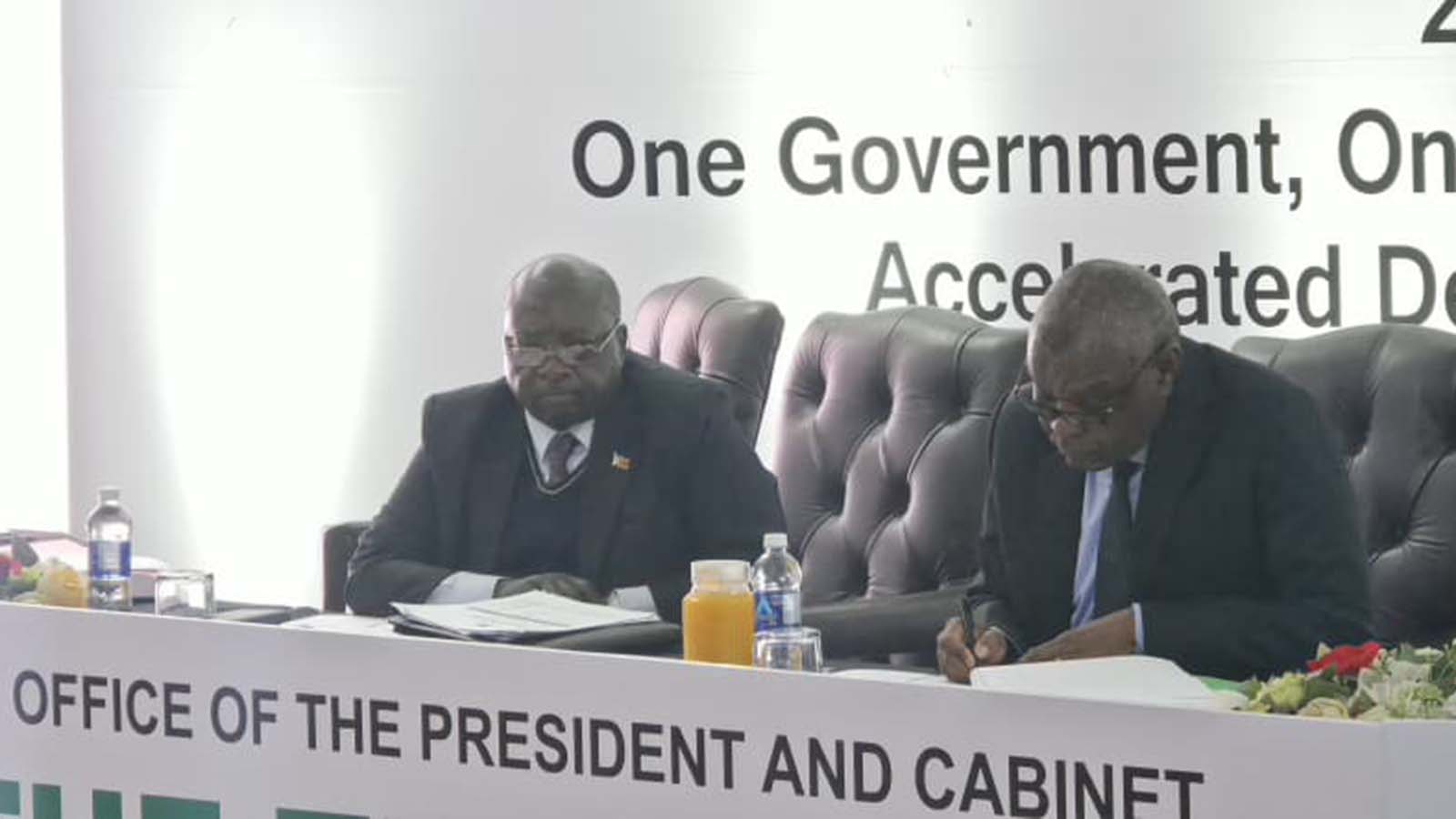
Government sets key priorities to accelerate Vision 2030
Conrad Mupesa Mashonaland West Bureau GOVERNMENT has identified a raft of strategic priorities that will drive Zimbabwe’s development under National Development Strategy 2 (NDS2), with renewed emphasis on policy innovation,…