

 admin
admin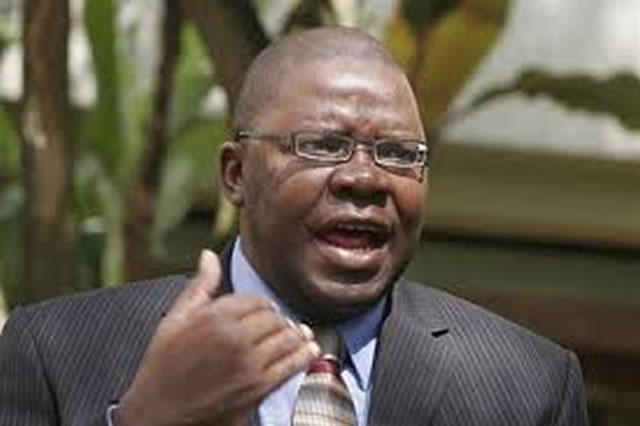
Oliver Kazunga Business Reporter
BEEF production in Zimbabwe is expected this year to improve marginally from an initial projection of 94 100 tonnes to 94 500 tonnes as farmers offload their livestock due to drought.Outgoing Finance Minister Tendai Biti in the recently announced mid-term budget attributed the growth in beef output to increased offtake from 3.5 percent to 6 percent as farmers offload stocks owing to the drought.
“Poor pasture management, particularly in communal areas, has decimated the national herd of cattle and goats, particularly in the Matabeleland, Midlands and Masvingo regions, following persistent droughts that have been experienced of late, coupled with increased veld fires and livestock diseases.
“Farmers have, therefore, been forced to sell some of their old and unproductive beasts in order to buy stock feeds for the remaining herd,” he said.
He said dairy output had been revised to 76.3 million litres in 2013, up from an initial target of 70 million litres.
However, the projection was still below an annual national demand of 96 million litres.
The growth in milk production was driven by increased support to farmers in the form of heifers, other inputs as well as working capital.
Presently, the national dairy herd stands at 26 000 cows with 223 registered dairy operators.
Presenting the 2013 national budget last year, Mr Biti noted that the economy exhibited signs of growth slow-down with the Gross Domestic Product (GDP) which was initially projected at five percent in 2013, having been revised downwards to 3.4 percent.
“Developments during the first half of 2013 indicate evidence of this stagnation, particularly through under-performance in the key sectors of agriculture and mining. Accordingly, agriculture growth has been revised downwards from 6.4 percent to 5.4 percent in 2013,” he said.
He said given the state of agriculture, the sector’s potential could be enhanced through increased funding, mechanisation, as well as irrigation development in the form of dams construction and infrastructure rehabilitation.
Agriculture has in the past been one of the major contributors to the GDP.


 Online Reporter
 derick.khumalo