Online Reporter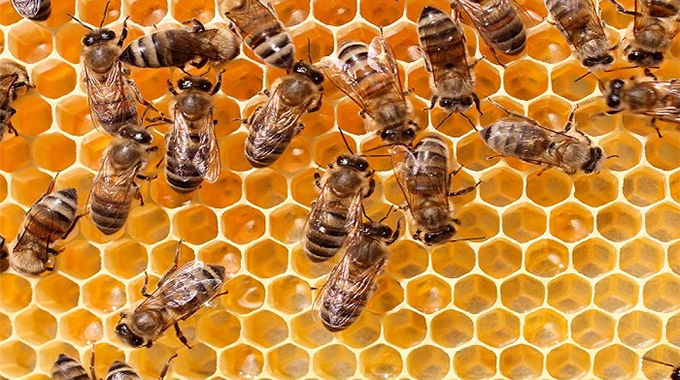
Business Reporter
CHIMANIMANI apiculture players are considering value addition of honey and its by-products to tap into high-paying markets.
Apiculture, or bee-keeping, is the practice of maintaining bee colonies, typically in artificial beehives, to harvest honey, beeswax, propolis, and other hive products, as well as for crop pollination
The Chimanimani initiative is part of the ZimBee Project, a US$1,6 million project launched in March 2025 by ZimTrade and partners, supported by France, to enhance honey production and Zimbabwe’s apiculture industry.
The project focuses on providing training, resources, and market opportunities for local producers to develop sustainable bee-keeping practices, improve honey quality, and increase competitiveness in the global market.
Away from honey production, they are exploring ways to utilise their honey to make other valuable products from bee-keeping.
The potential by-products include beeswax, which can be used in a variety of applications such as cosmetics, candles, floor polish, shoe polish, and hair care products.
Additionally, they would want to venture into propolis production, a product that is valued for its medicinal properties and can be used in health supplements and pharmaceuticals.
Diversification into these high-value products will allow Chimanimani apiculture players to increase their revenue streams, enhance competitiveness, and capitalise on growing demand for natural and organic products.
This strategic move can also contribute to sustainable livelihoods and economic growth in the region.
Apiculture is a rapidly growing sector with vast potential for income generation and economic development, particularly in rural areas where it can benefit grassroots communities.
Bee-keeping has considerable potential for income generation and improving livelihoods and promoting sustainable use of natural resources.
Given the importance of this sector, the Government, through ZimTrade, is prioritising bee-keeping in its development programmes, focusing on poverty alleviation, conservation, and sustainable resource management.
“We are grateful for the training to do organic honey for exports, which we are getting from Chimani Delights and ZimTrade. These organisations have grown to recognise the plight of farmers and they have chipped in. As Bee farmers, we now have a clear vision of where we are going.
“We have received training to value-add our products and we are hopeful that we will be able to do that in our clusters,” said Mr Briton Mutigwe, a bee farmer from Nyanyadzi.
Chimani Delights Manager Mr Moses Chimedza said the Chimanimani region was known for producing abundant honey, given the favourable rain patterns.
He said he was optimistic about the sector’s potential, especially in value-added products.
“Honey production, looking back in the previous years, we actually had a lot of honey coming from this land, and that was battered by the normal rainfall that we were receiving.
“We are, however, confident about the sector given the bounty of potential in making value-added products. Currently, we are making honey wine and some other products we are experimenting with,” said Mr Chimedza.
ZimBee project consultant Mrs Jacqueline Gowe said the programme was doing all it could to empower bee producers so that they increase capacity.
“We are looking forward to increasing the capacity of the farmers, improving their knowledge, because you will find in Chimanimani we have a lot of traditional bee-keepers here in Chimanimani.
“With the increase in yields, we look forward to being able to export. Currently, we don’t even have a correct database, how much honey we’re producing as a country. But from my missions out of Zimbabwe and looking at what the market requires, we really need to do a lot of work,” said Mrs Gowe.
Despite its potential, the apiculture sector in Zimbabwe faces significant challenges that include lack of organisation among bee-keepers, which hinders their ability to maximise benefits like increased production volumes and access to organised markets.
The absence of clear organisational structures among stakeholders has resulted in undesirable outcomes, including the inability of local bee-keepers to meet domestic demand for honey.
This shortfall has led to a contradictory situation where Zimbabwe imports honey from countries like China and South Africa to meet local demand.
To address this challenge, there is a need for concerted efforts to organise bee-keepers into larger groups, provide support structures, and enhance their capacity to produce high-quality honey and other bee products.
Doing so will allow the country can unlock the full potential of apiculture and promote sustainable economic development, particularly in rural areas.